

Subscribe To Our Newsletter!
Subscribe to the newsletter to stay up to date with the latest news and most useful
Newsletter
↑
Back to Top



Product Overview |
|---|
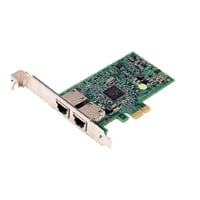
The Dell Broadcom 5720 2-Port Low Profile Network Interface Card offers dual gigabit Ethernet ports in a compact format, fitting well into small servers or workstations. It delivers dependable network connectivity by leveraging the Broadcom 5720 chipset and PCIe 2.0 interface, making it a solid component for stable wired network access in enterprise and data center environments. |
General Information |
|
|---|---|
| Brand | Dell |
| Part Number | 540-11057 |
Technical Information |
|
|---|---|
| Chipset/Controller | Broadcom BCM5720 (Broadcom 5720) |
| Virtualization Support | NetQueue, vNIC |
| Data Rate (Speed) | 1GbE |
| Data Center Bridging | No |
| Interface (Bus) | PCIe 2.0 x4 |
| Number of Ports | 2-Port (Dual) |
| OS Compatibility | Windows Server 2022, RHEL, VMware ESXi |
| Network Management | SNMP |
| Offload Support | PXE Boot, Wake-on-LAN (WoL), TCP Stateless Offload, Jumbo Frames |
| Bracket Height | Both Brackets Included |
Connectivity & Physical |
|
|---|---|
| Form Factor | Standard PCIe Card |
| Port Type | RJ-45 (Copper) |
| Cabling Type | Cat6a |
| Weight | 5.00 |
| Condition | Refurbished |
Miscellaneous |
|
|---|---|
| Assembly Required | Yes |
| Eco Friendly | Yes |
| Compliance Standards | WEEE, RoHS, CE, FCC, UL |
Product Description |
|---|
This Dell Broadcom 5720 2-Port Low Profile Network Interface Card provides reliable gigabit Ethernet connectivity for servers and workstations. It's commonly used in data centers and enterprise environments to enhance network performance and redundancy. Built for IT professionals and system administrators needing stable wired connections, this NIC is often found in Dell servers requiring efficient network access without taking up much physical space. Key Features
This NIC is typically deployed in server racks or compact computing setups where space is limited. It helps maintain consistent network throughput and provides failover capabilities by enabling multiple links. In practice, it ensures that critical systems stay connected with minimal downtime, making it a practical choice for network upgrades or replacements in various IT infrastructures. |
 Shipping Options
 International Delivery
Requires a UPS, FedEx, or DHL account. Customers may arrange pickup from our US warehouse.
International Delivery
Requires a UPS, FedEx, or DHL account. Customers may arrange pickup from our US warehouse.
 Payment Methods
We accept Visa, Mastercard, AMEX, Discover, and Wire Transfer.
Payment Methods
We accept Visa, Mastercard, AMEX, Discover, and Wire Transfer.
 Purchase Orders
We process purchase orders for government agencies, enterprises, data centers, and SMBs.
Purchase Orders
We process purchase orders for government agencies, enterprises, data centers, and SMBs.