

Subscribe To Our Newsletter!
Subscribe to the newsletter to stay up to date with the latest news and most useful
Newsletter
↑
Back to Top



Product Overview |
|---|
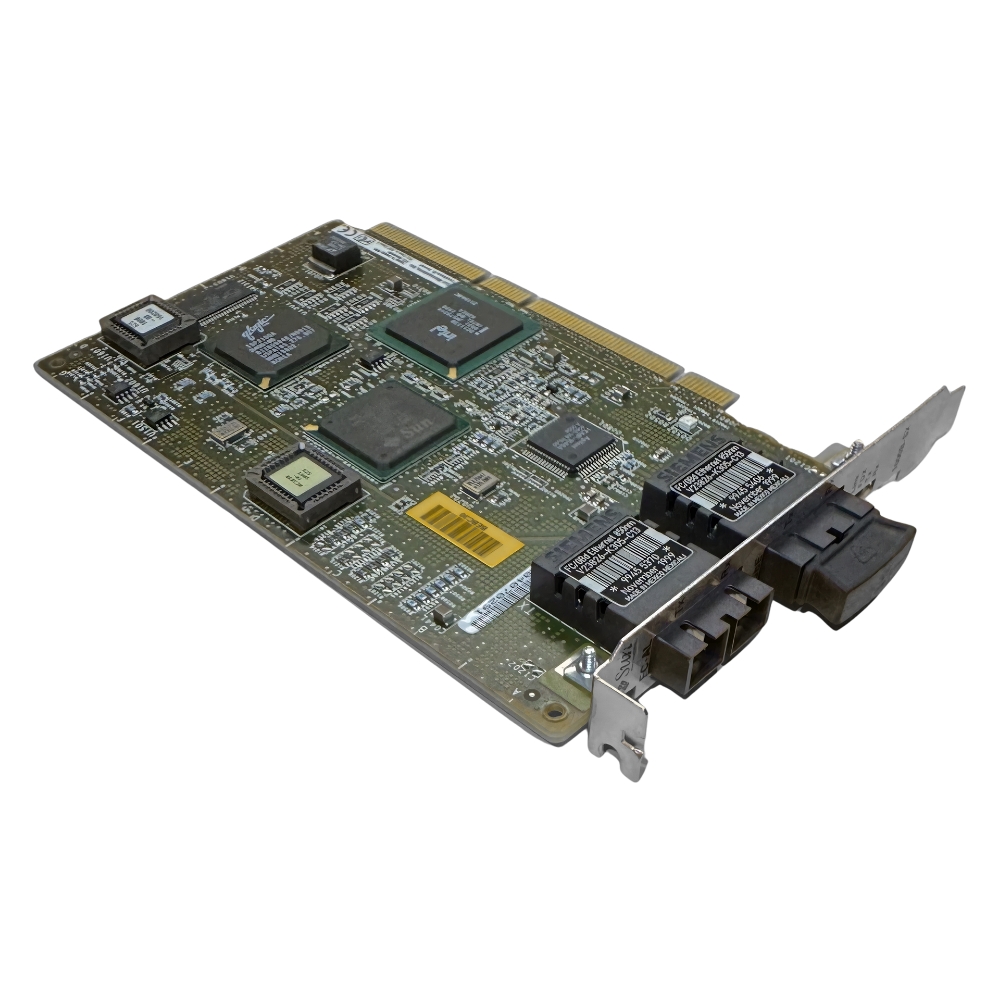
The 501-5426 Sun Gigabit Ethernet FC-AL/P card combines network and storage communication capabilities into a single interface, fitting naturally into Sun Fire V120 server configurations. It allows efficient data transfer across Ethernet and Fibre Channel networks, supporting both connectivity types without compromising reliability or speed. |
General Information |
|
|---|---|
| Brand | Sun |
Technical Information |
|
|---|---|
| Product Type | Server NIC |
| Data Rate (Speed) | 1GbE |
| Data Center Bridging | No |
| Number of Ports | 1-Port |
Connectivity & Physical |
|
|---|---|
| Weight | 3.00 |
| Condition | Refurbished |
Miscellaneous |
|
|---|---|
| Assembly Required | No |
Product Description |
|---|
The 501-5426 Sun Gigabit Ethernet FC-AL/P card provides robust network and storage interface capabilities for Sun Fire V120 systems. It is commonly found in server environments where combining high-speed Ethernet with Fibre Channel storage access is essential. IT professionals managing Sun servers often rely on this component to maintain efficient network communication alongside storage connectivity. Key Features
This adapter plays a vital role in environments requiring dependable network and storage integration. Its design emphasizes consistent performance and operational stability, making it well-suited for data centers and enterprise server setups where both networking speed and storage responsiveness matter. |
Use Cases |
|---|
This adapter is typically employed in enterprise data centers and server rooms running Sun Fire V120 servers, where integrating fast Ethernet with Fibre Channel storage networks is necessary. It benefits IT teams managing infrastructure that demands both network throughput and storage access without adding complexity. How It's Used:
By providing a dual-purpose interface, the 501-5426 helps streamline hardware configurations and maintain consistent communication paths. This promotes improved operational efficiency and scalability in setups where network and storage demands coexist. |
 Shipping Options
 International Delivery
Requires a UPS, FedEx, or DHL account. Customers may arrange pickup from our US warehouse.
International Delivery
Requires a UPS, FedEx, or DHL account. Customers may arrange pickup from our US warehouse.
 Payment Methods
We accept Visa, Mastercard, AMEX, Discover, and Wire Transfer.
Payment Methods
We accept Visa, Mastercard, AMEX, Discover, and Wire Transfer.
 Purchase Orders
We process purchase orders for government agencies, enterprises, data centers, and SMBs.
Purchase Orders
We process purchase orders for government agencies, enterprises, data centers, and SMBs.