

Subscribe To Our Newsletter!
Subscribe to the newsletter to stay up to date with the latest news and most useful
Newsletter
↑
Back to Top



Product Overview |
|---|
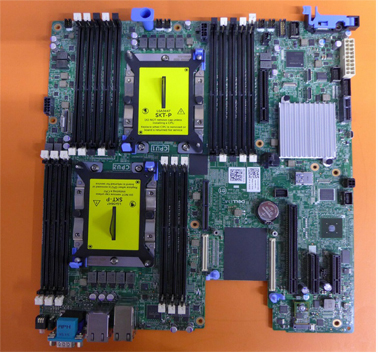
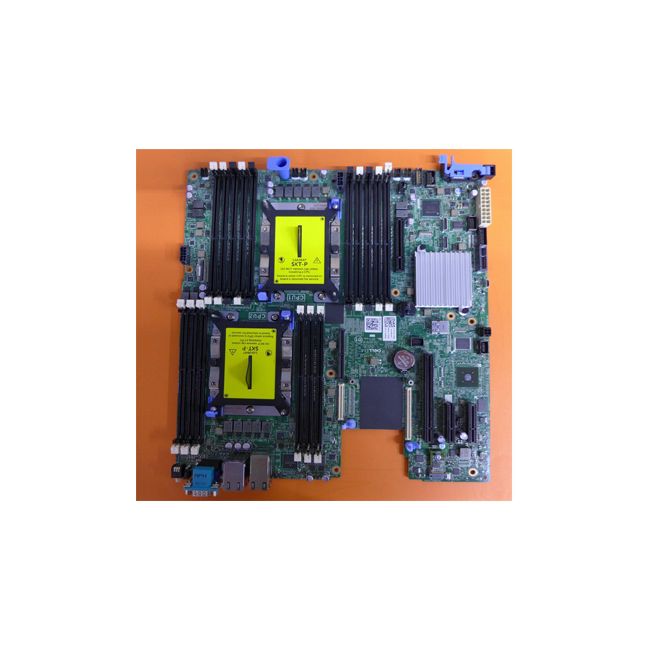
The Dell 4JN2K motherboard serves as the core component for EMC R440 servers, supporting powerful Intel Xeon processors and large memory capacities. It fits into the R440 chassis and provides essential connectivity and expansion capabilities needed for modern server operations. |
General Information |
|
|---|---|
| Brand | Dell |
| Part Number | 4JN2K |
Technical Information |
|
|---|---|
| Chipset | Intel C621 (Lewisburg) |
| Compatible Processors | Intel Xeon Scalable family (Skylake/Cascade Lake) - Silver, Gold, Platinum |
| Board Socket Type | LGA 3647 |
| Memory Slots | 12 (6 per CPU) |
| Memory Support | DDR4 ECC RDIMM, DDR4 ECC LRDIMM, up to 2666 MT/s (depending on CPU and memory type) |
| Storage Interfaces | SATA III, SAS, NVMe (via backplane/adapter) |
Physical Characteristics |
|
|---|---|
| Form Factor | Proprietary Dell PowerEdge R440 server motherboard (1U rack server) |
| Weight | 5.00 |
| Condition | Refurbished |
Miscellaneous |
|
|---|---|
| Assembly Required | Yes |
| Eco Friendly | Yes |
| Compliance Standards | WEEE, RoHS, cURus, CE, FCC, CCC, UL, TUV, cULus, CSA, cUL |
Product Description |
|---|
This Dell motherboard is built for the EMC R440 server, delivering a reliable foundation for enterprise-grade workloads. It handles heavy processing tasks by supporting Intel Xeon Scalable CPUs, making it suitable for data centers and business environments that require consistent uptime and scalability. Often found in server racks, this motherboard is chosen by IT professionals and system administrators who manage virtualized environments, databases, or cloud applications. Its design prioritizes compatibility and performance, ensuring smooth operation under demanding conditions. Key Features
The motherboard is typically deployed in enterprise server setups where reliability and efficient resource management are critical. It enables businesses to run multiple applications and services concurrently without bottlenecks. Its role in data centers and corporate IT infrastructure highlights its importance in maintaining system stability and supporting growth through hardware expansion. |
Use Cases |
|---|
The Dell 4JN2K motherboard is primarily utilized within data center environments where Dell EMC R440 servers are deployed for demanding computational tasks. IT administrators and enterprise architects benefit from its robust support for scalable processors and high-capacity memory, optimizing workload consolidation and virtualization initiatives. How It's Used:
By facilitating substantial memory and processor scalability, the 4JN2K motherboard ensures that servers maintain operational efficiency under intensive workloads. Its compatibility with expansion cards supports evolving infrastructure demands, making it a practical choice for organizations focused on scalable server performance and reliable data processing. |
 Shipping Options
 International Delivery
Requires a UPS, FedEx, or DHL account. Customers may arrange pickup from our US warehouse.
International Delivery
Requires a UPS, FedEx, or DHL account. Customers may arrange pickup from our US warehouse.
 Payment Methods
We accept Visa, Mastercard, AMEX, Discover, and Wire Transfer.
Payment Methods
We accept Visa, Mastercard, AMEX, Discover, and Wire Transfer.
 Purchase Orders
We process purchase orders for government agencies, enterprises, data centers, and SMBs.
Purchase Orders
We process purchase orders for government agencies, enterprises, data centers, and SMBs.