

Subscribe To Our Newsletter!
Subscribe to the newsletter to stay up to date with the latest news and most useful
Newsletter
↑
Back to Top



Product Overview |
|---|
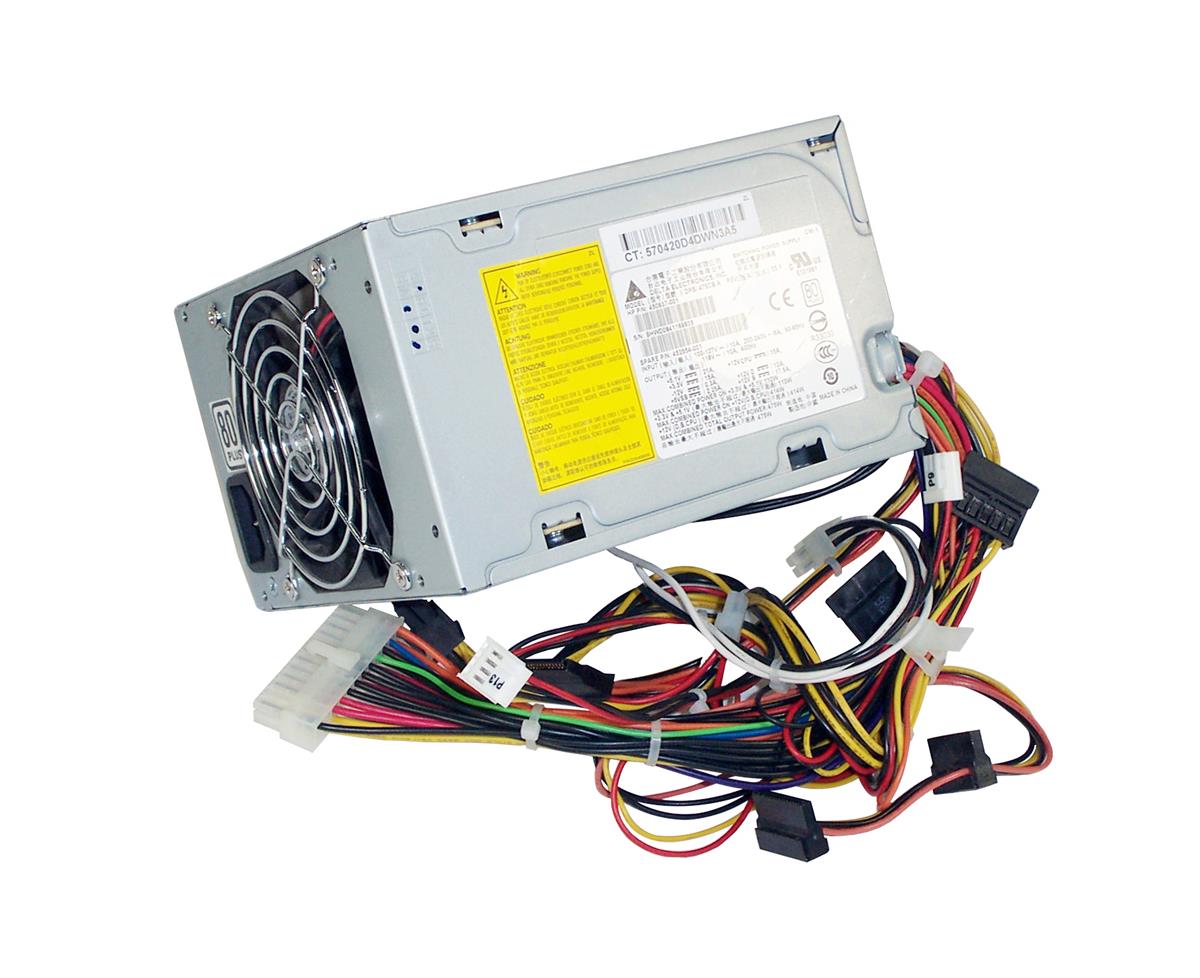
The HP 475-Watts 24-Pin 85 Percent Plus Efficient ATX Power Supply is designed to fit HP XW4600 and Z400 workstations, offering a reliable source of power tailored for these systems. It balances efficiency and performance to support demanding workstation tasks without unnecessary energy loss. |
General Information |
|
|---|---|
| Brand | HP |
| Part Number | 468930-001 |
| Product Type | Desktop Power Supply |
| Condition | Refurbished |
Technical Information |
|
|---|---|
| Input Voltage | 100-127V AC, 200-240V AC |
| Input Frequency | 50-60 Hz |
| Output | +12V,+5V,+3.3V,-12V,+5VSB |
| Max. Output Power | 475W |
| Efficiency Rating | 80 Plus |
| Hot Swappable | No |
| Redundant Support | No |
| Cooling Type | Active Fan |
| Modularity | Non-Modular |
| rail_design | Single 12V Rail |
| Number of Fans | 1 |
Compatibility |
|
|---|---|
| Form Factor | ATX |
| Compatible For | HP xw4600, HP Z400 Workstation |
Connectors |
|
|---|---|
| Connector Types | 24-pin ATX, 8-pin CPU, 6+2-pin PCIe, SATA, Molex |
Physical Characteristics |
|
|---|---|
| Weight | 3.00 |
Certifications and Environmental |
|
|---|---|
| Compliance Standards | WEEE, RoHS, CE, FCC, UL, cULus |
Product Description |
|---|
This 475-watt ATX power supply is built to provide stable and efficient power to HP XW4600 and Z400 workstation systems. It fits seamlessly into these models, delivering the necessary wattage for demanding professional tasks such as graphic design, video editing, or engineering workflows. Often found in workstations used by creative professionals and engineers, this power supply supports reliable system operation under heavy loads. Its 24-pin connection ensures compatibility with standard motherboard power requirements, making it a straightforward replacement or upgrade component. Key Features
This power supply typically powers desktop workstations found in offices and studios where reliability and efficiency are critical. It helps maintain system uptime and reduces the risk of power-related failures, contributing to smooth operation during complex workloads. |
Use Cases |
|---|
The HP 475-Watt 24-Pin 85 Percent Plus Efficient ATX Power Supply is primarily utilized within professional workstation environments where consistent and efficient power delivery is crucial. It is best suited for IT departments managing HP XW4600 and Z400 workstations in settings demanding balanced energy consumption and reliable hardware operation. How It's Used:
This power supply enhances operational consistency by delivering dependable energy with reduced waste, aiding organizations in maintaining workstation performance while managing overall power efficiency and thermal conditions within their technical infrastructure. |
 Shipping Options
 International Delivery
Requires a UPS, FedEx, or DHL account. Customers may arrange pickup from our US warehouse.
International Delivery
Requires a UPS, FedEx, or DHL account. Customers may arrange pickup from our US warehouse.
 Payment Methods
We accept Visa, Mastercard, AMEX, Discover, and Wire Transfer.
Payment Methods
We accept Visa, Mastercard, AMEX, Discover, and Wire Transfer.
 Purchase Orders
We process purchase orders for government agencies, enterprises, data centers, and SMBs.
Purchase Orders
We process purchase orders for government agencies, enterprises, data centers, and SMBs.