

Subscribe To Our Newsletter!
Subscribe to the newsletter to stay up to date with the latest news and most useful
Newsletter
↑
Back to Top



Product Overview |
|---|
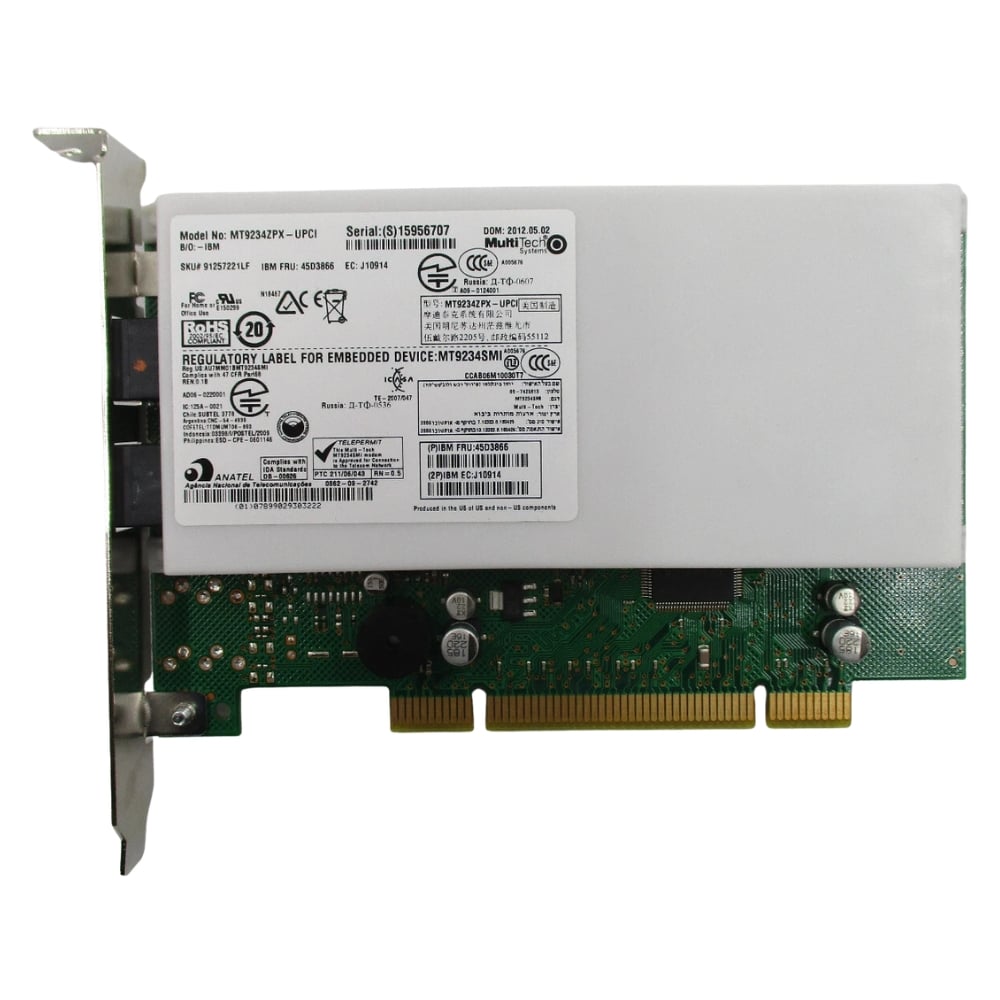
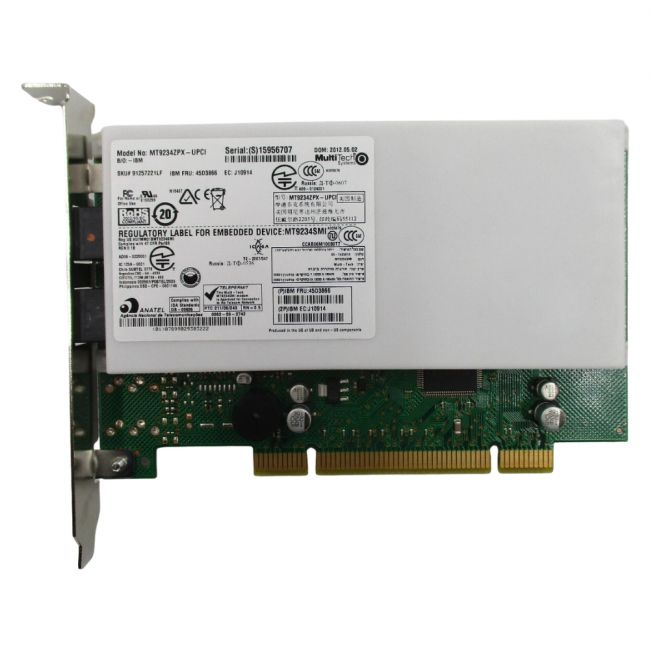
The IBM Internal Modem 45D3866 serves as a practical solution for users needing dial-up access through internal PC installation. It fits neatly inside IBM desktop systems and handles data communication over phone lines reliably, making it suitable for legacy networking and specific environments where modern broadband isn’t available. |
General Information |
|
|---|---|
| Brand | IBM |
| Part Number | 45D3866 |
| Alternate Part Number | 45D3866-02-CT |
Technical Information |
|
|---|---|
| Product Category | Modems |
Miscellaneous |
|
|---|---|
| Assembly Required | Yes |
| Eco Friendly | Yes |
| Compliance Standards | WEEE, RoHS, cURus, CE, FCC, CCC, UL, TUV, cULus, CSA, cUL |
Physical Characteristics |
|
|---|---|
| Weight | 3.00 |
| Condition | Refurbished |
Product Description |
|---|
The IBM Internal Modem 45D3866 is designed to provide dial-up connectivity for computers, allowing users to connect to the internet or other networks via traditional phone lines. Often found in office and home environments where broadband options may be limited, this modem is built to integrate seamlessly into IBM desktop systems. Engineers, IT professionals, and users needing a straightforward method for network access typically rely on this internal modem for its simplicity and compatibility. It delivers stable communication for tasks such as sending faxes, accessing remote servers, or conducting basic online activities. Key Features
Commonly deployed in settings where wired internet access is still necessary, this modem plays a vital role in legacy systems or specialized use cases. Its straightforward design helps maintain connectivity without the need for external devices or complex setups. |
Use Cases |
|---|
The 45D3866 IBM Internal Modem is used primarily to establish dial-up connections for data communication in legacy system environments. How It's Used:
These use cases highlight the modem's role in maintaining essential connectivity where modern networking solutions are not feasible or required. |
 Shipping Options
 International Delivery
Requires a UPS, FedEx, or DHL account. Customers may arrange pickup from our US warehouse.
International Delivery
Requires a UPS, FedEx, or DHL account. Customers may arrange pickup from our US warehouse.
 Payment Methods
We accept Visa, Mastercard, AMEX, Discover, and Wire Transfer.
Payment Methods
We accept Visa, Mastercard, AMEX, Discover, and Wire Transfer.
 Purchase Orders
We process purchase orders for government agencies, enterprises, data centers, and SMBs.
Purchase Orders
We process purchase orders for government agencies, enterprises, data centers, and SMBs.