

Subscribe To Our Newsletter!
Subscribe to the newsletter to stay up to date with the latest news and most useful
Newsletter
↑
Back to Top



| Product Overview |
|---|
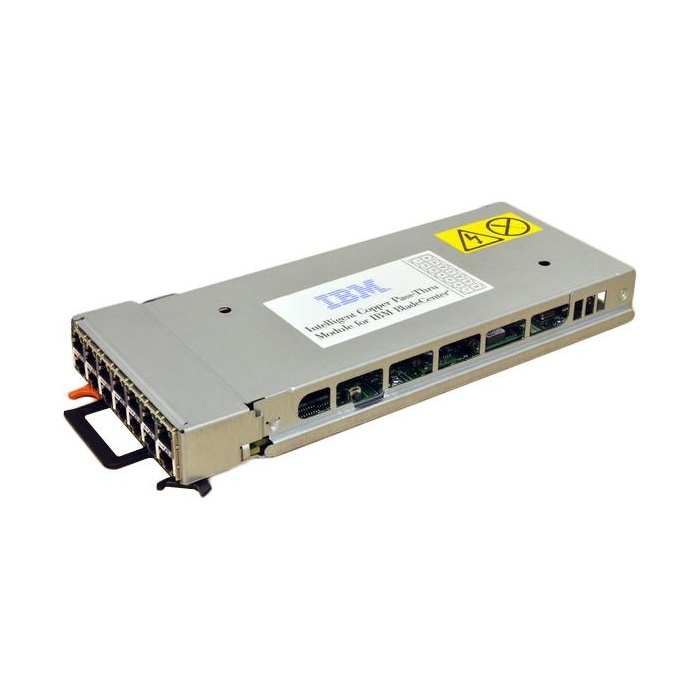
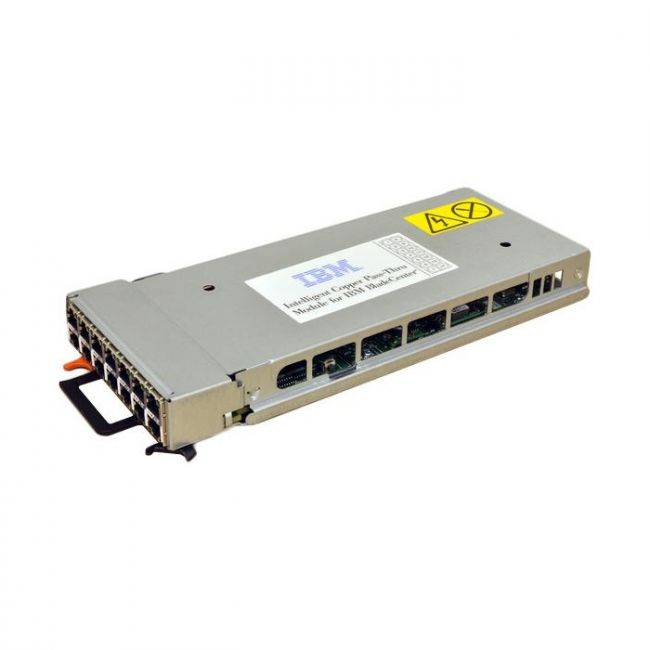
The 44W4486 IBM Copper Pass-Thru Module provides essential copper connectivity within IBM BladeCenter frameworks, offering a straightforward solution for internal data routing. It fits directly into the blade chassis to enable efficient signal transfer among server blades without additional external cabling. |
| General Information | |
|---|---|
| Brand | IBM |
| Technical Information | |
|---|---|
| Backplane Type | Midplane |
| Compatibility | IBM BladeCenter |
| Interface | Copper Ethernet (RJ45) |
| Miscellaneous | |
|---|---|
| Assembly Required | No |
| Compliance Standards | RoHS, CE, FCC |
| Physical Characteristics | |
|---|---|
| Form Factor | BladeCenter I/O Module |
| Weight | 3.00 |
| Condition | Refurbished |
| Product Description |
|---|
The 44W4486 IBM Copper Pass-Thru Module facilitates direct copper connectivity between blade server components inside the IBM BladeCenter chassis. It provides a streamlined pathway for data, helping to reduce cabling complexity and maintain signal integrity. Often found in data center environments, this module is built to support blade servers requiring reliable and efficient copper connections. IT professionals and system administrators typically use this hardware to optimize the physical layout and maintain high performance within blade server racks. Key Features
This module plays a practical role in maintaining effective internal communications inside blade chassis. Its reliable physical connections contribute to overall system stability and help reduce the complexity of blade interconnections. |
| Use Cases |
|---|
The 44W4486 module is primarily deployed within IBM BladeCenter setups where internal copper connectivity is critical. It benefits environments emphasizing dense server configurations and effective cabling management. How It's Used:
This module supports operational efficiency and scalability in dense server installations. Its role in maintaining clean, stable connections helps sustain performance over the lifespan of BladeCenter deployments. |
 Shipping Options
 International Delivery
Requires a UPS, FedEx, or DHL account. Customers may arrange pickup from our US warehouse.
International Delivery
Requires a UPS, FedEx, or DHL account. Customers may arrange pickup from our US warehouse.
 Payment Methods
We accept Visa, Mastercard, AMEX, Discover, and Wire Transfer.
Payment Methods
We accept Visa, Mastercard, AMEX, Discover, and Wire Transfer.
 Purchase Orders
We process purchase orders for government agencies, enterprises, data centers, and SMBs.
Purchase Orders
We process purchase orders for government agencies, enterprises, data centers, and SMBs.