

Subscribe To Our Newsletter!
Subscribe to the newsletter to stay up to date with the latest news and most useful
Newsletter
↑
Back to Top



Product Overview |
|---|
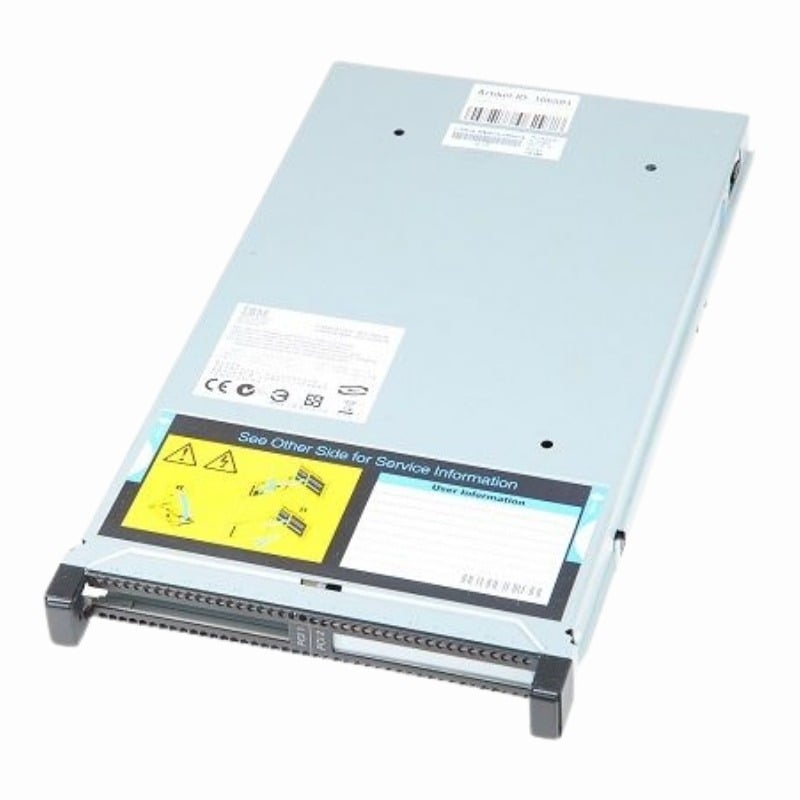
The IBM BladeCenter PCI I/O Expansion Unit II adds extra PCI slots to BladeCenter servers, expanding their ability to connect to more peripheral devices. It's commonly integrated in enterprise data centers to meet increasing demands for I/O capacity. This unit fits into existing server chassis and is designed to enhance flexibility without requiring major system changes. |
General Information |
|
|---|---|
| Brand | IBM |
| Part Number | 43W6871 |
| Product Type | Assembly |
Technical Information |
|
|---|---|
| Series | IBM BladeCenter PCI I/O Expansion Unit II (43W6871) |
| Compatibility | IBM BladeCenter chassis (PCI I/O expansion unit for IBM blade servers) |
Miscellaneous |
|
|---|---|
| Assembly Required | Yes |
| Eco Friendly | Yes |
| Compliance Standards | WEEE, RoHS, cURus, CE, FCC, CCC, UL, TUV, cULus, CSA, cUL |
Physical Characteristics |
|
|---|---|
| Weight | 5.00 |
| Condition | Refurbished |
Product Description |
|---|
The IBM BladeCenter PCI I/O Expansion Unit II is designed to increase the number of PCI slots available in your BladeCenter server environment. It allows for additional I/O cards to be installed, enhancing the system's capacity to handle complex workloads and diverse connectivity needs. Often found in data centers and enterprise server rooms, this expansion unit is built for IT professionals and system administrators who require scalable and flexible server configurations. It's a practical solution when your computing environment demands more peripheral support without replacing existing hardware. Key Features
This expansion unit is typically deployed in enterprise settings where server density and flexibility are critical. By adding extra PCI slots, it helps organizations adapt to changing technology needs without significant downtime or hardware overhaul. Its role is essential in environments where expanding I/O capacity is necessary to support growing workloads or specialized applications. |
Use Cases |
|---|
The 43W6871 IBM BladeCenter PCI I/O Expansion Unit II is primarily deployed in enterprise data centers and large-scale IT environments where increased PCI slot capacity is crucial. Organizations requiring enhanced peripheral connectivity and high-speed data transfer capabilities benefit from integrating this expansion unit to support complex workloads and virtualization. How It's Used:
This expansion unit enables IT administrators to scale their BladeCenter infrastructure efficiently, optimizing operational workflows and maintaining system performance under increasing I/O demands. Its seamless integration helps preserve investment in existing hardware while adapting to evolving enterprise workloads. |
 Shipping Options
 International Delivery
Requires a UPS, FedEx, or DHL account. Customers may arrange pickup from our US warehouse.
International Delivery
Requires a UPS, FedEx, or DHL account. Customers may arrange pickup from our US warehouse.
 Payment Methods
We accept Visa, Mastercard, AMEX, Discover, and Wire Transfer.
Payment Methods
We accept Visa, Mastercard, AMEX, Discover, and Wire Transfer.
 Purchase Orders
We process purchase orders for government agencies, enterprises, data centers, and SMBs.
Purchase Orders
We process purchase orders for government agencies, enterprises, data centers, and SMBs.