

Subscribe To Our Newsletter!
Subscribe to the newsletter to stay up to date with the latest news and most useful
Newsletter
↑
Back to Top



Product Overview |
|---|
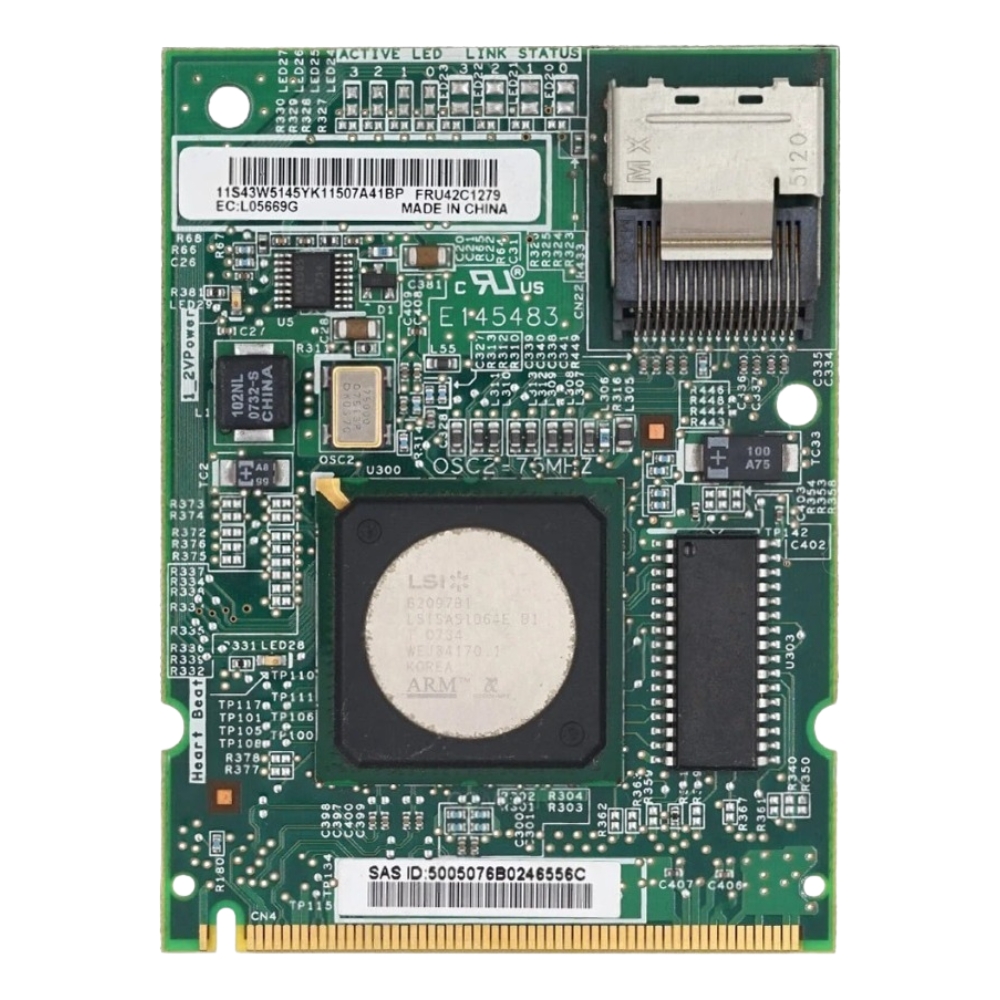
The IBM ServeRAID BR10IL SAS/SATA Controller manages multiple drives in IBM servers, providing RAID functionality to protect and optimize data storage. It's commonly used to oversee storage arrays where balancing performance and redundancy is important, fitting well into server setups requiring straightforward, dependable RAID control. |
General Information |
|
|---|---|
| Brand | IBM |
| Part Number | 43V7415 |
| Alternate Part Number | 43V7415-02-CT |
Physical Characteristics |
|
|---|---|
| Weight | 3.00 |
| Condition | Refurbished |
Miscellaneous |
|
|---|---|
| Eco Friendly | Yes |
Product Description |
|---|
The IBM ServeRAID BR10IL is a SAS/SATA RAID controller designed to manage multiple drives efficiently within server environments. It is commonly found in IBM server setups where dependable data storage and redundancy are essential. Built for system administrators and IT professionals, it helps simplify storage management while safeguarding data integrity. Key Features
This controller is typically deployed in small to medium-sized server environments where efficient storage control is necessary without added complexity. It helps maintain system uptime and data safety, making it a practical choice for organizations prioritizing reliable storage solutions. |
Use Cases |
|---|
The IBM ServeRAID BR10IL SAS/SATA Controller is commonly deployed in IBM server environments where reliable RAID management for a limited number of drives is required. It is ideal for IT administrators managing entry-level server storage solutions that balance data protection with performance in small to medium-sized enterprise infrastructures. How It's Used:
By providing dependable RAID control with support for multiple SAS/SATA drives, this controller fosters operational efficiency and ensures data resilience in focused server deployments. Its PCIe interface supports the throughput demands of modern workloads without complexity, allowing IT teams to maintain scalable storage configurations with confidence. |
 Shipping Options
 International Delivery
Requires a UPS, FedEx, or DHL account. Customers may arrange pickup from our US warehouse.
International Delivery
Requires a UPS, FedEx, or DHL account. Customers may arrange pickup from our US warehouse.
 Payment Methods
We accept Visa, Mastercard, AMEX, Discover, and Wire Transfer.
Payment Methods
We accept Visa, Mastercard, AMEX, Discover, and Wire Transfer.
 Purchase Orders
We process purchase orders for government agencies, enterprises, data centers, and SMBs.
Purchase Orders
We process purchase orders for government agencies, enterprises, data centers, and SMBs.