

Subscribe To Our Newsletter!
Subscribe to the newsletter to stay up to date with the latest news and most useful
Newsletter
↑
Back to Top



Product Overview |
|---|
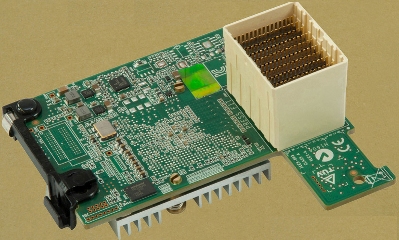
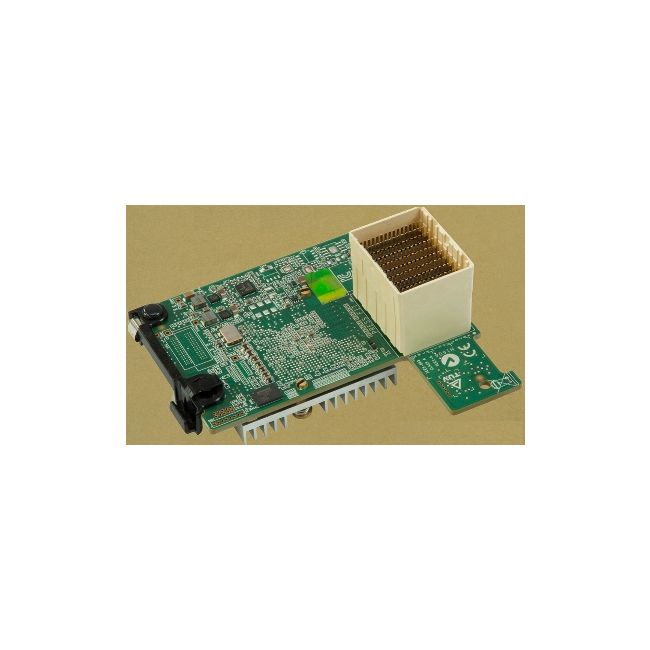
The Dell 430-4968 QME2662 16Gbps 2-Port Fibre Channel I/O Mezzanine Card delivers high-speed storage networking for Dell servers. It fits into the mezzanine slot to enable quick, reliable Fibre Channel connections, making it a practical choice for data centers and IT setups that depend on efficient and stable SAN links. |
General Information |
|
|---|---|
| Brand | Dell |
| Part Number | 430-4968 |
Technical Information |
|
|---|---|
| Protocol | Fibre Channel (FC) |
| Data Rate | 16Gbps |
| Port Count | 2-Port (Dual) |
| Bus Interface | Mezzanine (LOM) |
| Connector Type | SFP+ (LC) |
| Chipset / Controller | QME2662 |
| Network Topology | Point-to-Point, Switched Fabric (N-Port) |
Advanced Features & Compatibility |
|
|---|---|
| Management Features | NPIV Support, Boot from SAN, Selective LUN Masking, Full Fabric Support, Diagnostics (D_Port) |
| OS Compatibility | Windows Server 2019, Windows Server 2022, VMware ESXi 7.x, VMware ESXi 8.x, RHEL 8, RHEL 9, SLES 15 |
Physical Characteristics |
|
|---|---|
| Form Factor | Mezzanine (I/O Mezzanine Card) |
| Weight | 5.00 |
| Condition | Refurbished |
Miscellaneous |
|
|---|---|
| Compliance Standards | WEEE, RoHS, CE, FCC, UL |
Product Description |
|---|
This 16Gbps 2-Port Fibre Channel I/O Mezzanine Card is built for enhancing storage connectivity in enterprise servers. It provides fast and reliable Fibre Channel connections, commonly used in SAN environments where quick data transfer between servers and storage arrays is critical. Often found in data centers and IT environments, this card suits IT professionals and system administrators who need robust, low-latency storage access for virtualization, database management, or backup operations. Its mezzanine form factor allows straightforward installation within compatible Dell PowerEdge servers. Key Features
This card is typically deployed in enterprise storage networks where performance and uptime are vital. Its role in providing fast, stable connections helps maintain smooth data flow and supports demanding workloads. You'll often see it in environments running mission-critical applications where consistent storage access is key. |
Use Cases |
|---|
The Dell 430-4968 16Gbps 2-Port Fibre Channel I/O Mezzanine Card is typically used in enterprise IT environments requiring high-throughput, low-latency storage networking. It is well-suited for data centers and virtualization hosts where reliable SAN connectivity is essential for supporting mission-critical applications and large-scale storage clusters. How It's Used:
This mezzanine card enables scalable and resilient SAN configurations, improving operational efficiency by minimizing network bottlenecks. Its integration with Dell servers ensures streamlined deployment and maintenance, supporting evolving storage demands in complex IT environments. |
 Shipping Options
 International Delivery
Requires a UPS, FedEx, or DHL account. Customers may arrange pickup from our US warehouse.
International Delivery
Requires a UPS, FedEx, or DHL account. Customers may arrange pickup from our US warehouse.
 Payment Methods
We accept Visa, Mastercard, AMEX, Discover, and Wire Transfer.
Payment Methods
We accept Visa, Mastercard, AMEX, Discover, and Wire Transfer.
 Purchase Orders
We process purchase orders for government agencies, enterprises, data centers, and SMBs.
Purchase Orders
We process purchase orders for government agencies, enterprises, data centers, and SMBs.