

Subscribe To Our Newsletter!
Subscribe to the newsletter to stay up to date with the latest news and most useful
Newsletter
↑
Back to Top



Product Overview |
|---|
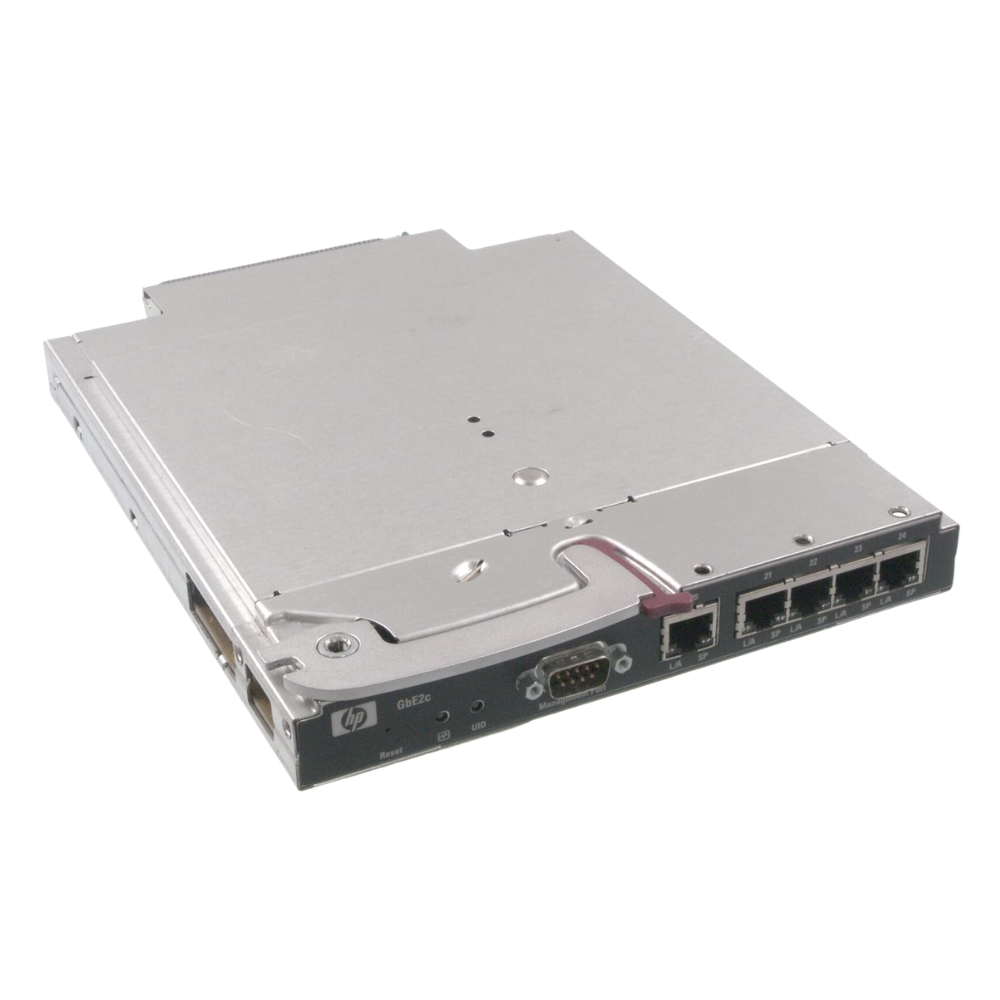
The 410917-B21 integrates multiple Ethernet ports to bridge external networks and internal server systems. It fits within HP server deployments, providing essential connectivity for diverse networking needs without excessive complexity. |
General Information |
|
|---|---|
| Brand | HP |
Technical Information |
|
|---|---|
| Product Type | Network Interface Card |
| Data Rate (Speed) | 1GbE |
| Data Center Bridging | No |
| Bracket Height | Internal/Mezzanine |
Connectivity & Physical |
|
|---|---|
| Form Factor | Mezzanine (LOM) |
| Port Type | RJ-45 (Copper) |
| Cabling Type | Cat6a |
| Weight | 3.00 |
| Condition | Refurbished |
Miscellaneous |
|
|---|---|
| Assembly Required | No |
Product Description |
|---|
The 410917-B21 provides a versatile network interface solution by offering a combination of external and internal Ethernet ports. Often found in HP server configurations, it delivers a balance between external network access and internal server interconnectivity. This network adapter is built for system administrators and IT professionals who manage data center and enterprise network infrastructures, supporting both external uplinks and internal connectivity for optimized network traffic flow. Key Features
With this adapter, reliable network connectivity is maintained across internal and external segments. Its design ensures consistent performance and operational stability in complex server environments, helping maintain efficient data flow and network reliability. |
Use Cases |
|---|
The 410917-B21 is typically deployed in data centers and enterprise server racks where consolidated external and internal network ports are required. IT professionals overseeing server infrastructure benefit from its combined connectivity options. How It's Used:
This product supports operational efficiency by consolidating network ports, simplifying cabling, and ensuring consistent throughput. Its role in scaling server connectivity helps maintain overall infrastructure performance without adding unnecessary complexity. |
 Shipping Options
 International Delivery
Requires a UPS, FedEx, or DHL account. Customers may arrange pickup from our US warehouse.
International Delivery
Requires a UPS, FedEx, or DHL account. Customers may arrange pickup from our US warehouse.
 Payment Methods
We accept Visa, Mastercard, AMEX, Discover, and Wire Transfer.
Payment Methods
We accept Visa, Mastercard, AMEX, Discover, and Wire Transfer.
 Purchase Orders
We process purchase orders for government agencies, enterprises, data centers, and SMBs.
Purchase Orders
We process purchase orders for government agencies, enterprises, data centers, and SMBs.