

Subscribe To Our Newsletter!
Subscribe to the newsletter to stay up to date with the latest news and most useful
Newsletter
↑
Back to Top



Product Overview |
|---|
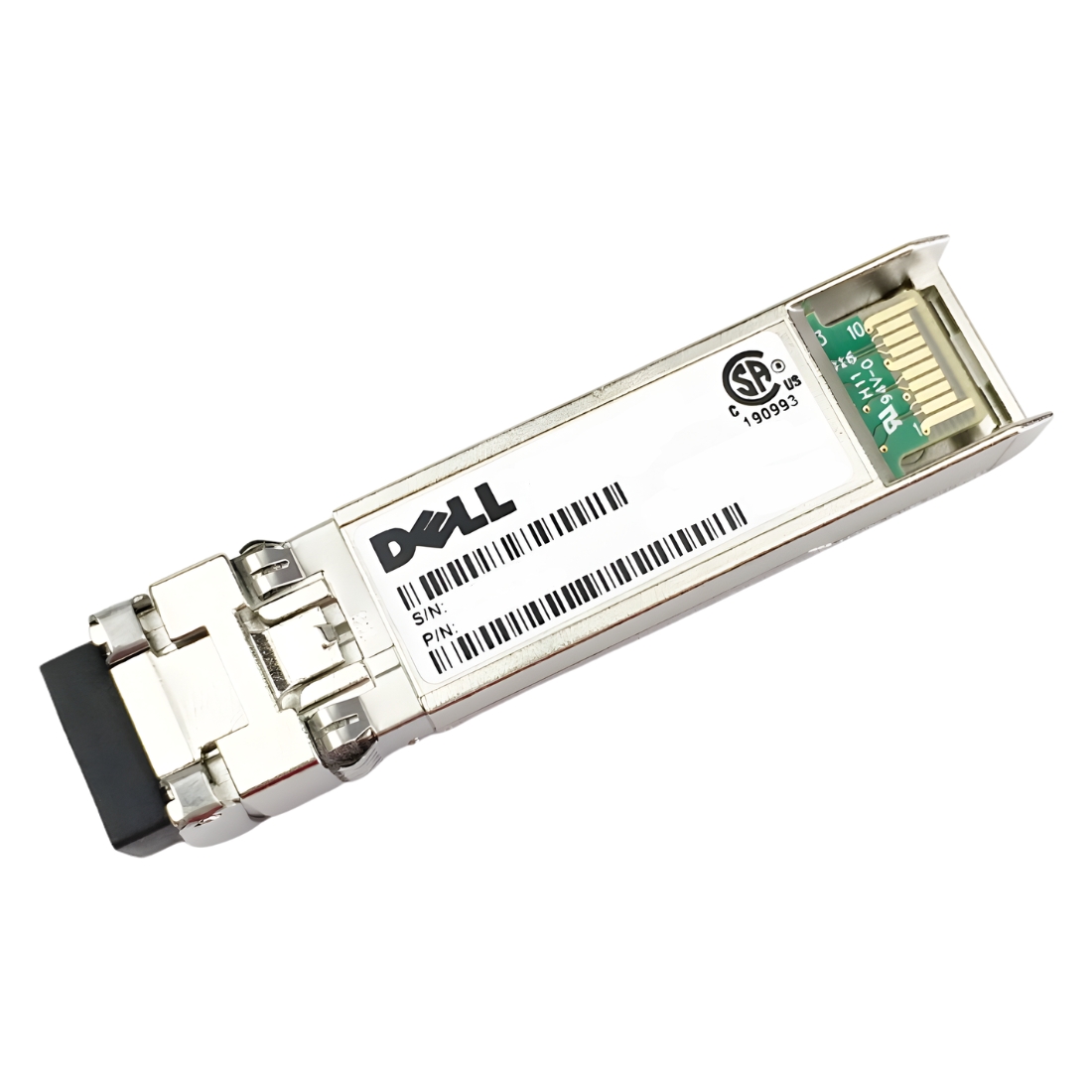
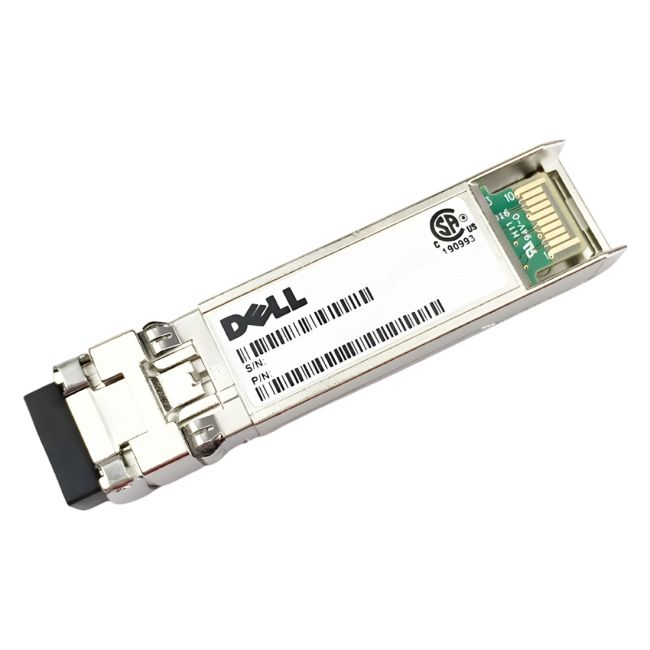
The 407-BBZT - Dell 25Gb/s SFP28 transceiver provides reliable 25Gb/s optical links over multimode fiber using an 850nm wavelength. It fits into SFP28 slots and supports up to 100 meters reach with duplex LC connections, making it a practical component for data center and enterprise network hardware requiring efficient optical connectivity. |
General Information |
|
|---|---|
| Brand | Dell |
Technical Information |
|
|---|---|
| Form Factor | SFP28 |
| Media | MMF |
| Type | VCSEL |
| Power Consumption | 1.0 W |
| Protocols | 25GBASE-SR |
| Connector | LC Duplex |
| DOM Support | Yes |
Physical Characteristics |
|
|---|---|
| Weight | 3.00 |
| Condition | Refurbished |
Product Description |
|---|
This 25Gb/s SFP28 transceiver module is built to deliver high-performance optical connectivity over multimode fiber. It is commonly found in data center environments and networking infrastructure where fast and reliable data transmission is essential. IT professionals and network engineers use this type of transceiver to connect switches, servers, and storage devices efficiently. Key Features
This transceiver plays a key role in enabling fast and consistent network performance. Its design balances data throughput and distance, making it dependable for various optical network setups. Reliability and ease of integration are central to its function in network environments. |
Use Cases |
|---|
The Dell 407-BBZT transceiver is typically deployed in data center and enterprise network infrastructures that require rapid and stable 25Gb/s optical links. It performs well in environments where multimode fiber is the medium and rack-level or row-level distances must be bridged efficiently. How It's Used:
This transceiver supports network scalability and performance by providing dependable optical links within common short-range fiber distances. Its role is vital in maintaining consistent data flow and adapting to evolving network demands without overcomplicating infrastructure. |
 Shipping Options
 International Delivery
Requires a UPS, FedEx, or DHL account. Customers may arrange pickup from our US warehouse.
International Delivery
Requires a UPS, FedEx, or DHL account. Customers may arrange pickup from our US warehouse.
 Payment Methods
We accept Visa, Mastercard, AMEX, Discover, and Wire Transfer.
Payment Methods
We accept Visa, Mastercard, AMEX, Discover, and Wire Transfer.
 Purchase Orders
We process purchase orders for government agencies, enterprises, data centers, and SMBs.
Purchase Orders
We process purchase orders for government agencies, enterprises, data centers, and SMBs.