

Subscribe To Our Newsletter!
Subscribe to the newsletter to stay up to date with the latest news and most useful
Newsletter
↑
Back to Top



Product Overview |
|---|
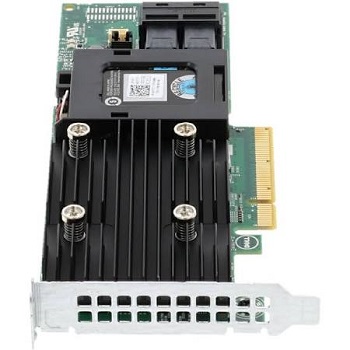
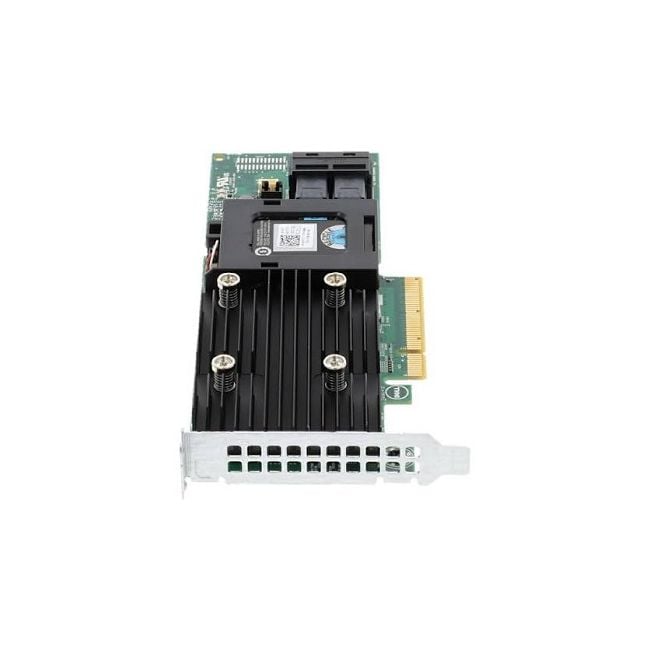
The Dell 405-AAET PERC H730P RAID controller manages multiple drives through its dual Mini SAS ports, delivering fast and reliable data access. It fits into servers using PCI-E 3.0 x8 slots and is designed to support various RAID levels, balancing redundancy and speed. This controller is a common choice for IT environments focused on maintaining consistent storage performance while safeguarding data integrity. |
General Information |
|
|---|---|
| Brand | Dell |
| Part Number | 405-AAET |
Technical Specification |
|
|---|---|
| Chipset | LSI SAS 3108 (Broadcom/Avago/LSI SAS controller series) |
| Host Interface | PCIe 3.0 x8 |
| Data Rate | 12 Gb/s per SAS lane |
| RAID Levels | 0,1,5,6,10,50,60 |
| Cache | 2GB NV Cache (NVRAM) with CacheVault / battery-backed cache |
| Ports | 2 |
| Connectivity | SAS (Serial Attached SCSI) |
| Compatibility | Dell PowerEdge servers (12Gb/s-capable models such as R730, R730xd, R720, R720xd, R630 and other compatible 12G PowerEdge systems) |
Physical Characteristics |
|
|---|---|
| Form Factor | PCIe 3.0 x8 add-in card (low-profile / half-height, full-height bracket included) |
| Weight | 5.00 |
| Condition | Refurbished |
Miscellaneous |
|
|---|---|
| Eco Friendly | Yes |
| Compliance Standards | WEEE, RoHS, cURus, CE, FCC, CCC, UL, TUV, cULus, CSA, cUL |
Product Description |
|---|
This Dell 405-AAET PERC H730P RAID controller handles data storage with reliability and speed. It’s often found in servers needing robust storage solutions that combine multiple drives for improved performance or redundancy. Built for IT professionals and system administrators, it simplifies managing large volumes of data across several hard drives. Key Features
This controller is typically deployed in enterprise-grade Dell PowerEdge servers where data integrity and speed are essential. It helps maintain smooth operation in environments handling critical workloads or large databases. Its role is vital in keeping storage systems efficient and reliable without frequent manual intervention. |
 Shipping Options
 International Delivery
Requires a UPS, FedEx, or DHL account. Customers may arrange pickup from our US warehouse.
International Delivery
Requires a UPS, FedEx, or DHL account. Customers may arrange pickup from our US warehouse.
 Payment Methods
We accept Visa, Mastercard, AMEX, Discover, and Wire Transfer.
Payment Methods
We accept Visa, Mastercard, AMEX, Discover, and Wire Transfer.
 Purchase Orders
We process purchase orders for government agencies, enterprises, data centers, and SMBs.
Purchase Orders
We process purchase orders for government agencies, enterprises, data centers, and SMBs.