

Subscribe To Our Newsletter!
Subscribe to the newsletter to stay up to date with the latest news and most useful
Newsletter
↑
Back to Top



Product Overview |
|---|
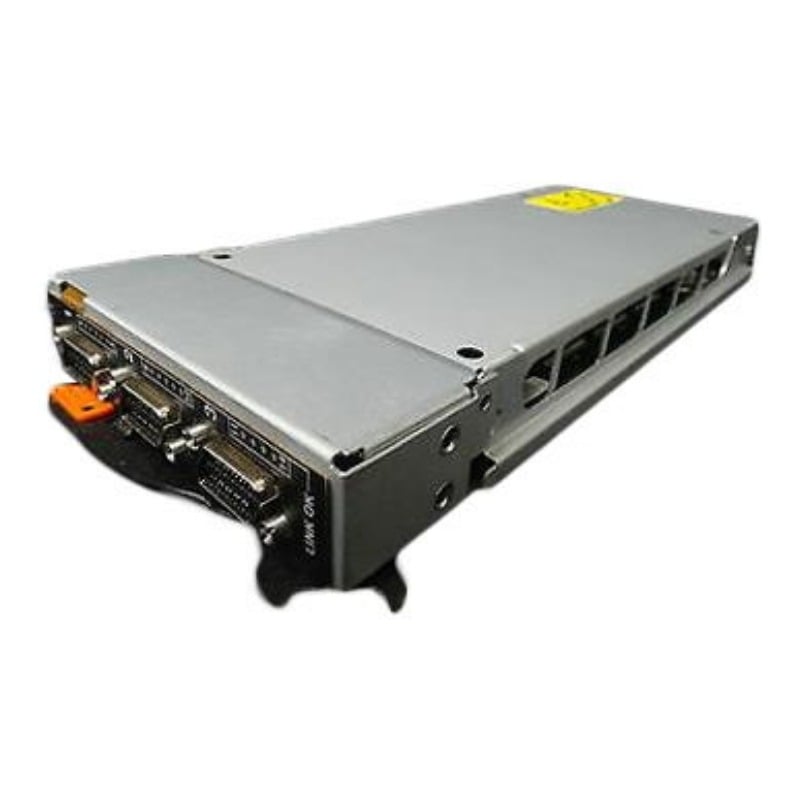
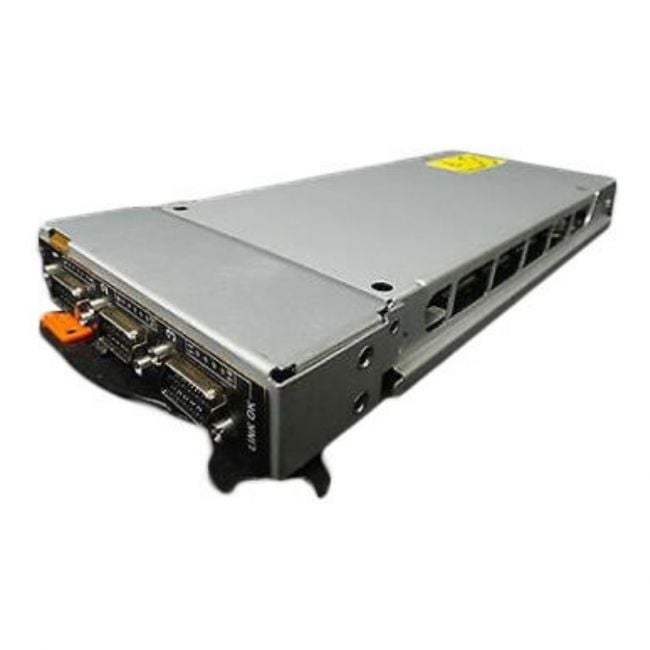
The IBM 39Y9323 EServer BladeCenter Copper Pass-Thru Module offers a straightforward networking solution for IBM BladeCenter H systems, enabling direct Gigabit Ethernet connectivity between blade servers and external networks. With 14 internal and 14 external ports, this unmanaged, rack-mountable module is ideal for enterprises seeking reliable and efficient network pass-through functionality. |
General Information |
|
|---|---|
| Brand | IBM |
| Part Number | 39Y9323 |
Physical Characteristics |
|
|---|---|
| Weight | 5.00 |
| Condition | Refurbished |
Product Description |
|---|
The IBM 39Y9323 EServer BladeCenter Copper Pass-Thru Module is a high-performance networking solution designed to provide direct Gigabit Ethernet connectivity for IBM BladeCenter H systems. This pass-thru module allows seamless communication between blade servers and external networking equipment without additional switching functionality. Featuring 14 internal Ethernet ports—one for each blade—and 14 external Ethernet ports, this module ensures direct, efficient network access for each installed blade. Its rack-mountable design makes it an easy-to-integrate solution for enterprise environments requiring unmanaged network connections with minimal configuration. Key Features
|
Use Cases |
|---|
The IBM 39Y9323 EServer BladeCenter Copper Pass-Thru Module is primarily utilized in data center environments running IBM BladeCenter H chassis. It is particularly suited for enterprise IT teams requiring direct, unmanaged Gigabit Ethernet connectivity between blade servers and external network infrastructure to streamline network traffic management and reduce latency. How It's Used:
This module enhances operational efficiency by offering a direct and reliable Ethernet path that simplifies network architecture within blade server environments. Its scalable design supports expanding data center needs by maintaining consistent network performance across increasing server counts. |
 Shipping Options
 International Delivery
Requires a UPS, FedEx, or DHL account. Customers may arrange pickup from our US warehouse.
International Delivery
Requires a UPS, FedEx, or DHL account. Customers may arrange pickup from our US warehouse.
 Payment Methods
We accept Visa, Mastercard, AMEX, Discover, and Wire Transfer.
Payment Methods
We accept Visa, Mastercard, AMEX, Discover, and Wire Transfer.
 Purchase Orders
We process purchase orders for government agencies, enterprises, data centers, and SMBs.
Purchase Orders
We process purchase orders for government agencies, enterprises, data centers, and SMBs.