

Subscribe To Our Newsletter!
Subscribe to the newsletter to stay up to date with the latest news and most useful
Newsletter
↑
Back to Top



Product Overview |
|---|
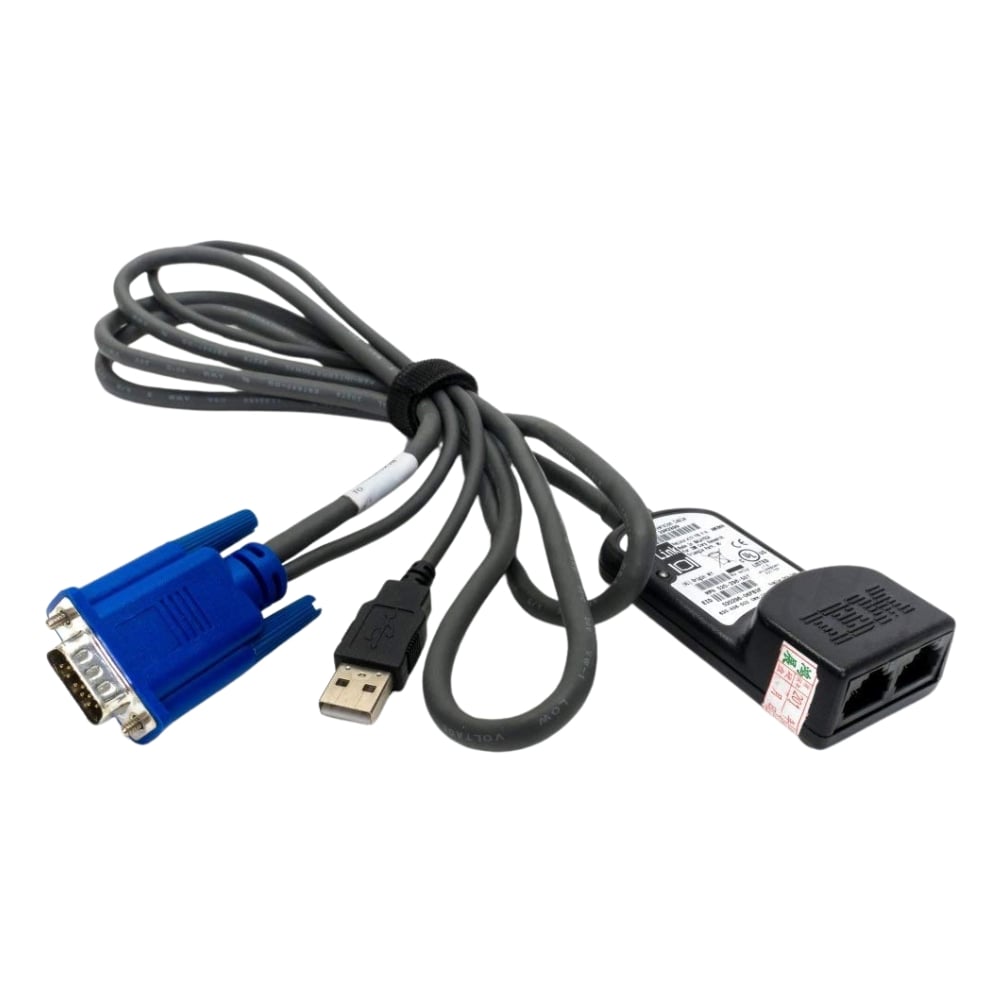
The IBM 1.5m KVM to USB Conversion Cable allows IT setups to connect KVM switches with USB-enabled devices, easing integration between older and newer hardware. It fits smoothly in environments where maintaining legacy KVM systems is necessary while expanding device compatibility. |
General Information |
|
|---|---|
| Brand | IBM |
| Part Number | 39M2899 |
| Alternate Part Number | 39M2899-12-CT |
Technical Information |
|
|---|---|
| Cable Family | KVM |
| Cable Type | KVM Cable |
| Cable Length | 1.5 m |
| product type | KVM to USB Conversion Cable |
| Product Category | KVM |
Physical Characteristics |
|
|---|---|
| Weight | 3.00 |
| Condition | Refurbished |
Product Description |
|---|
This 1.5-meter cable converts KVM signals to a USB connection, allowing older IBM KVM switches to interface easily with newer USB-based devices. Often found in data centers and IT environments, it bridges the gap between legacy hardware and current computer systems. Built for IT professionals managing mixed equipment setups, this cable ensures smooth control and management without needing to replace existing KVM infrastructure. Key Features
This cable is typically used in server rooms where older KVM switches remain in service alongside modern USB peripherals. It helps maintain operational continuity without costly hardware upgrades, making it a practical tool for IT maintenance and system integration. |
Use Cases |
|---|
The IBM 1.5m KVM to USB Conversion Cable is commonly utilized in IT environments where legacy KVM switches require integration with modern USB-based systems. It is especially valuable for data centers, enterprise IT departments, and server rooms aiming to extend the lifespan of existing KVM infrastructure while incorporating newer hardware. How It's Used:
This conversion cable enhances operational efficiency by bridging disparate hardware generations, reducing the need for costly KVM upgrades. It supports scalable IT infrastructure management by enabling seamless interoperability between legacy systems and current USB devices. |
 Shipping Options
 International Delivery
Requires a UPS, FedEx, or DHL account. Customers may arrange pickup from our US warehouse.
International Delivery
Requires a UPS, FedEx, or DHL account. Customers may arrange pickup from our US warehouse.
 Payment Methods
We accept Visa, Mastercard, AMEX, Discover, and Wire Transfer.
Payment Methods
We accept Visa, Mastercard, AMEX, Discover, and Wire Transfer.
 Purchase Orders
We process purchase orders for government agencies, enterprises, data centers, and SMBs.
Purchase Orders
We process purchase orders for government agencies, enterprises, data centers, and SMBs.