

Subscribe To Our Newsletter!
Subscribe to the newsletter to stay up to date with the latest news and most useful
Newsletter
↑
Back to Top



Product Overview |
|---|
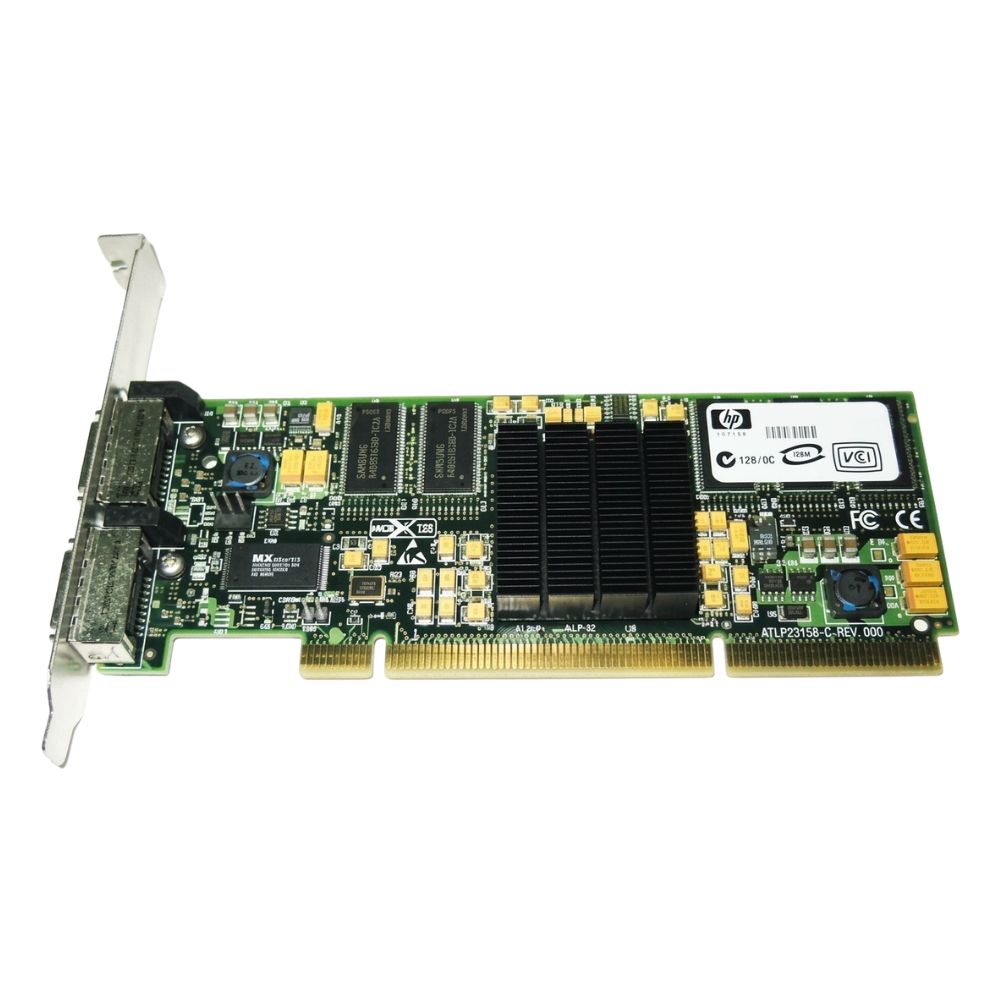
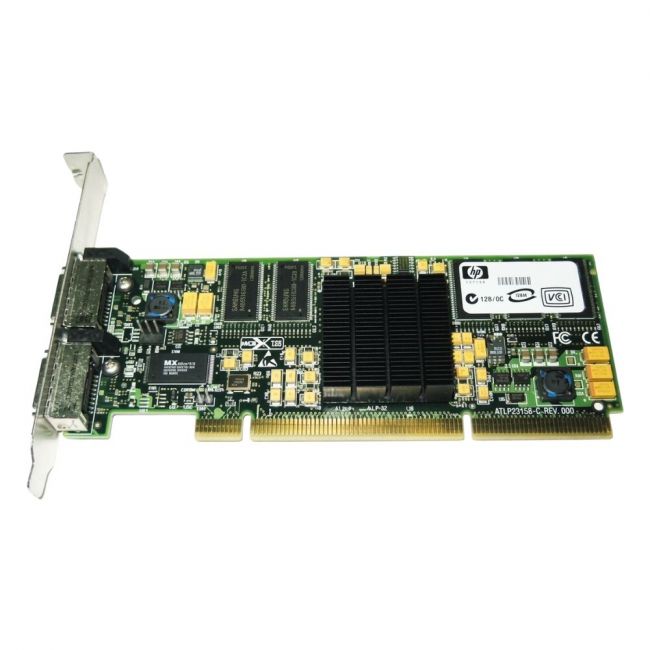
The 376158-B21 HP PCI-X Dual-port 4x Fabric Adapter is designed for HP servers needing enhanced fabric connectivity. It offers dual fabric ports via a PCI-X interface, supporting multiple data paths and improved network flexibility within compatible server systems. |
General Information |
|
|---|---|
| Brand | HP |
Technical Information |
|
|---|---|
| Number of Ports | 2-Ports |
| Port Type | SFP |
| Port Speed | 4 Gbps |
| Ports | 2 |
| Data Rate | 4 Gbit/s |
| Compatibility | HP ProLiant servers |
| Connector Type | SFP (LC) |
Physical Characteristics |
|
|---|---|
| Form Factor | PCI-X, Full-Height |
| Weight | 3.00 |
| Condition | Refurbished |
Miscellaneous |
|
|---|---|
| Assembly Required | No |
| Compliance Standards | RoHS, CE, FCC |
Product Description |
|---|
The 376158-B21 HP PCI-X Dual-port 4x Fabric Adapter provides dual fabric connectivity through a PCI-X interface, suitable for enhancing server networking capabilities. It is typically used in HP server environments that demand multiple fabric connections for data transfer and redundancy. IT professionals and system administrators use this adapter to expand server architecture with additional fabric ports, improving network configuration flexibility. Key Features
This adapter plays a key role in server setups requiring multiple fabric channels, allowing for improved network structure and operational continuity. Its dual-port capability facilitates alternative data paths, contributing to system uptime and performance consistency. |
Use Cases |
|---|
The 376158-B21 adapter is commonly deployed in HP server environments where dual fabric connections are necessary to ensure network redundancy and bandwidth aggregation. It is suitable for data centers and enterprise IT infrastructures requiring robust server networking. How It's Used:
This adapter helps maintain continuous network operations by providing dual fabric interfaces, allowing for load balancing and redundancy. It supports the operational needs of systems demanding consistent data flow and network availability. |
FAQ's |
|---|
|
 Shipping Options
 International Delivery
Requires a UPS, FedEx, or DHL account. Customers may arrange pickup from our US warehouse.
 Payment Methods
We accept Visa, Mastercard, AMEX, Discover, and Wire Transfer.
 Purchase Orders
We process purchase orders for government agencies, enterprises, data centers, and SMBs.