

Subscribe To Our Newsletter!
Subscribe to the newsletter to stay up to date with the latest news and most useful
Newsletter
↑
Back to Top



Product Overview |
|---|
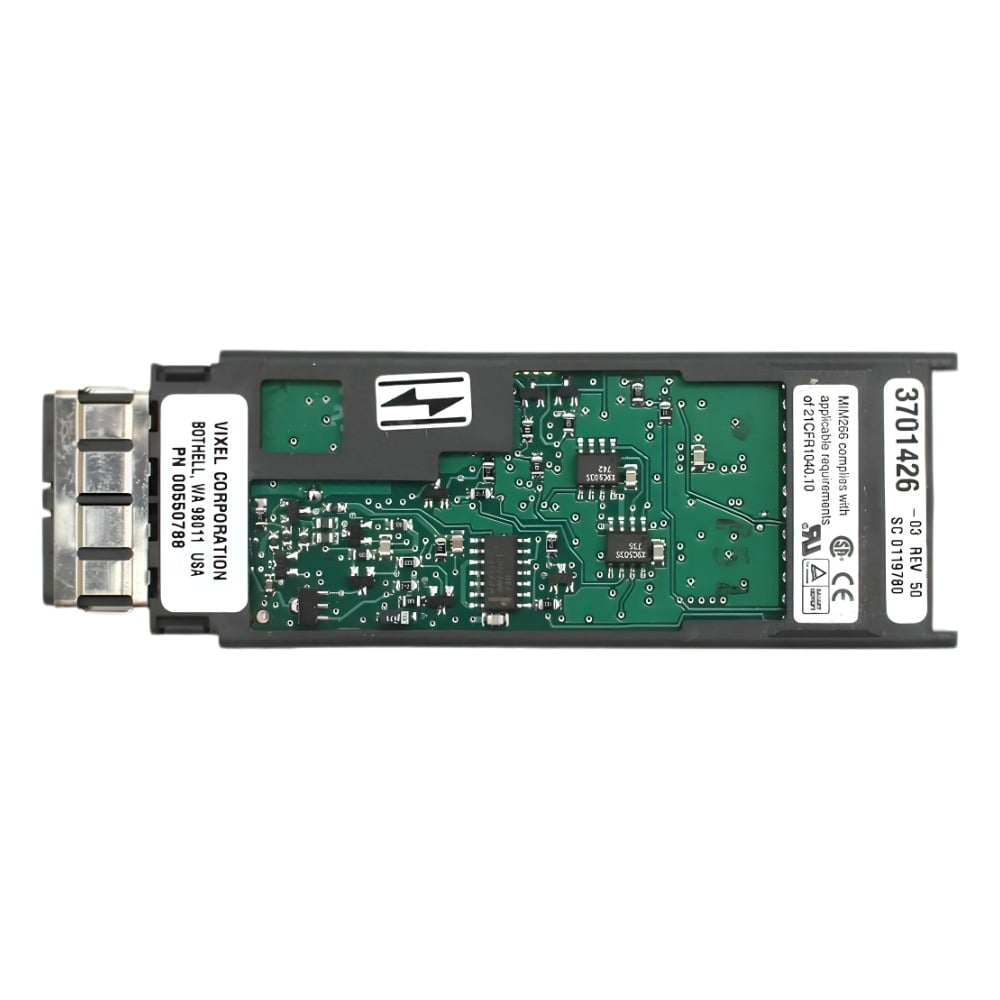
The 370-1426 Sun Fibre Channel Optical Module is a key component for enabling high-speed, optical Fibre Channel communication within data storage networks. It fits into Sun hardware platforms to support storage connectivity needs and enhance data transfer quality in enterprise environments. |
General Information |
|
|---|---|
| Brand | Sun Microsystems |
Technical Information |
|
|---|---|
| Protocol | Fibre Channel (FC) |
| Port Count | 1-Port (Single) |
| Generation | N/A |
| Connector Type | SFP+ (LC) |
| Network Topology | Point-to-Point, Switched Fabric (N-Port) |
Physical Characteristics |
|
|---|---|
| Form Factor | SFP Transceiver |
| Weight | 3.00 |
| Condition | Refurbished |
Miscellaneous |
|
|---|---|
| Assembly Required | No |
| Compliance Standards | RoHS |
Product Description |
|---|
The 370-1426 Fibre Channel Optical Module enables high-performance data transfer in storage area networks, offering optical connectivity suited for enterprise-grade infrastructure. It is often found in data center environments where reliable and fast SAN communication is critical. Users involved in storage management and network administration benefit from its robust design and compatibility with Sun systems. Key Features
This module plays a vital role in maintaining efficient storage network operations by ensuring swift and dependable data flow. Its design emphasizes reliability and performance without unnecessary complexity, making it a practical component in streamlined SAN architectures. |
Use Cases |
|---|
This optical module is primarily used in enterprise storage networks where high data throughput and reliable Fibre Channel connections are essential. It suits data centers and IT environments that require robust storage area network infrastructure with optimized optical links. How It's Used:
By integrating this module, organizations maintain operational efficiency and scalability within their storage networks. Its performance and compatibility help ensure consistent data flow across complex IT infrastructures. |
 Shipping Options
 International Delivery
Requires a UPS, FedEx, or DHL account. Customers may arrange pickup from our US warehouse.
 Payment Methods
We accept Visa, Mastercard, AMEX, Discover, and Wire Transfer.
 Purchase Orders
We process purchase orders for government agencies, enterprises, data centers, and SMBs.