

Subscribe To Our Newsletter!
Subscribe to the newsletter to stay up to date with the latest news and most useful
Newsletter
↑
Back to Top



Product Overview |
|---|
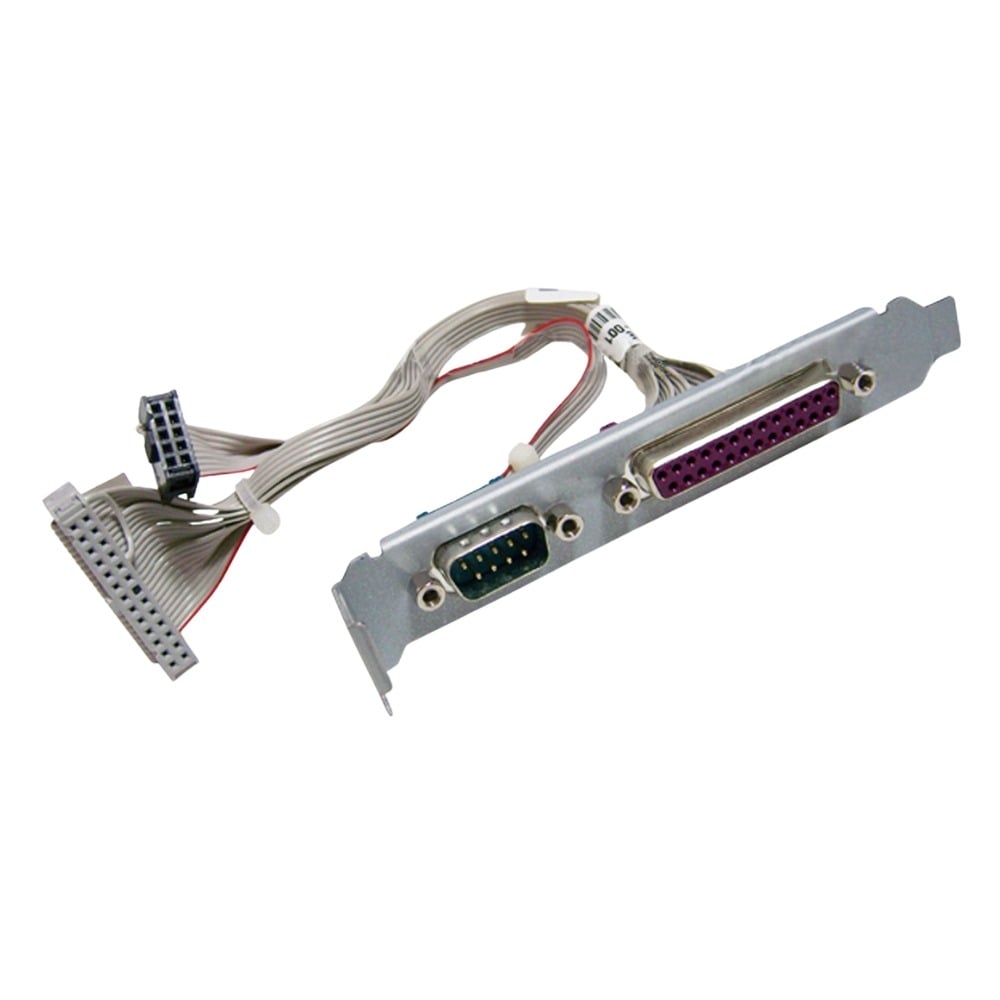
The 361670-001 HP Serial Parallel I/O Port with Cables provides both serial and parallel connection options to support a range of peripheral devices. It fits into compatible HP servers or workstations, offering a straightforward solution for integrating legacy interfaces where modern connectivity options are limited or unavailable. |
General Information |
|
|---|---|
| Brand | HP |
Technical Information |
|
|---|---|
| Cable Family | Console/Serial |
| Cable Type | Adapter Cable |
| Compatibility | HP ProLiant servers |
| product type | Serial/Parallel I/O port assembly with cables |
| Product Category | Cables |
Connectivity |
|
|---|---|
| Connector A | DB9 |
| Connector B | DB25 |
| Cable Connector Gender | Male to Male |
| Connector Type | DB9,DB25 |
Physical Characteristics |
|
|---|---|
| Form Factor | Bracket (rear I/O) |
| Weight | 3.00 |
| Condition | Refurbished |
Product Description |
|---|
This HP Serial Parallel I/O Port with Cables offers essential input/output interfaces for hardware requiring serial and parallel communication. Often found in enterprise servers and workstations, it facilitates data transfer and peripheral connections. Built for IT professionals managing hardware integration, the port balances legacy interface support with straightforward installation. Key Features
This component plays a vital role in maintaining legacy peripheral support and expanding device connectivity options. Its dependable design helps ensure consistent communication without compromising system stability. The included cables simplify installation and reduce downtime during hardware upgrades or replacements. |
Use Cases |
|---|
This product is typically integrated in environments where legacy serial and parallel ports remain necessary, such as specialized industrial equipment or older server setups. IT staff and system integrators working with hardware that requires these interfaces find it particularly useful. How It's Used:
By supporting these conventional interfaces, the product helps maintain operational continuity across diverse hardware setups. It ensures that critical data links stay functional while bridging older equipment with current infrastructure needs. |
 Shipping Options
 International Delivery
Requires a UPS, FedEx, or DHL account. Customers may arrange pickup from our US warehouse.
 Payment Methods
We accept Visa, Mastercard, AMEX, Discover, and Wire Transfer.
 Purchase Orders
We process purchase orders for government agencies, enterprises, data centers, and SMBs.