

Subscribe To Our Newsletter!
Subscribe to the newsletter to stay up to date with the latest news and most useful
Newsletter
↑
Back to Top



Product Overview |
|---|
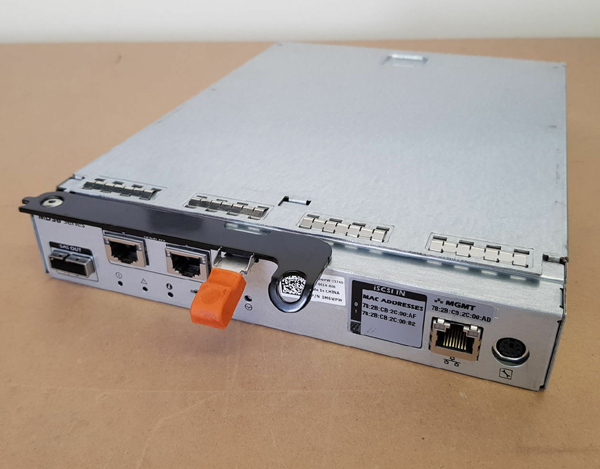
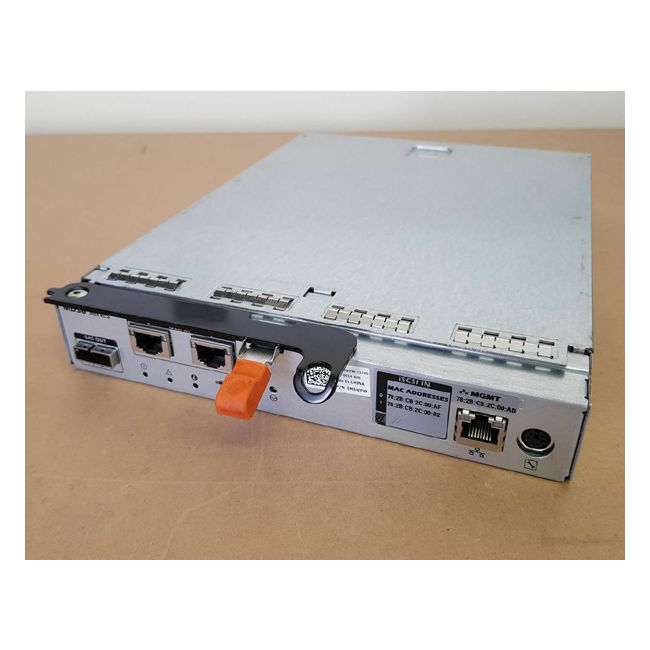
The 35CTT Dell Dual-Port iSCSI Storage Controller is a network interface device developed for Dell PowerVault storage arrays. It manages data communication over Ethernet using the iSCSI protocol, enabling reliable connection between storage and servers in networked environments. |
General Information |
|
|---|---|
| Brand | Dell |
| Part Number | 35CTT |
Physical Characteristics |
|
|---|---|
| Weight | 5.00 |
| Condition | Refurbished |
Product Description |
|---|
The 35CTT Dell Dual-Port iSCSI Storage Controller provides reliable network storage connectivity for PowerVault systems. It is commonly used in data centers and enterprise environments to facilitate fast and secure communication between storage arrays and servers. Built for IT administrators and storage managers, this controller helps optimize storage access and ensures data availability through dual-port redundancy. The device often appears in setups where iSCSI protocol is preferred for cost-effective storage area networks. Key Features
Typically, this controller is deployed in small and mid-tier data storage configurations where flexible network storage is required. It plays a key role in maintaining efficient storage access and minimizing downtime within business IT infrastructures. |
Use Cases |
|---|
The 35CTT Dell Dual-Port iSCSI Storage Controller is primarily utilized in enterprise storage environments where reliable and efficient data transfer over Ethernet is essential. IT administrators managing Dell PowerVault arrays benefit from its ability to enhance storage connectivity in medium to large-scale networks, including virtualization and clustered storage setups. How It's Used:
This controller enhances operational efficiency by delivering dependable network storage connectivity and scalability, enabling organizations to adapt storage deployments to evolving workload demands without extensive infrastructure changes. |
 Shipping Options
 International Delivery
Requires a UPS, FedEx, or DHL account. Customers may arrange pickup from our US warehouse.
International Delivery
Requires a UPS, FedEx, or DHL account. Customers may arrange pickup from our US warehouse.
 Payment Methods
We accept Visa, Mastercard, AMEX, Discover, and Wire Transfer.
Payment Methods
We accept Visa, Mastercard, AMEX, Discover, and Wire Transfer.
 Purchase Orders
We process purchase orders for government agencies, enterprises, data centers, and SMBs.
Purchase Orders
We process purchase orders for government agencies, enterprises, data centers, and SMBs.