

Subscribe To Our Newsletter!
Subscribe to the newsletter to stay up to date with the latest news and most useful
Newsletter
↑
Back to Top



Product Overview |
|---|
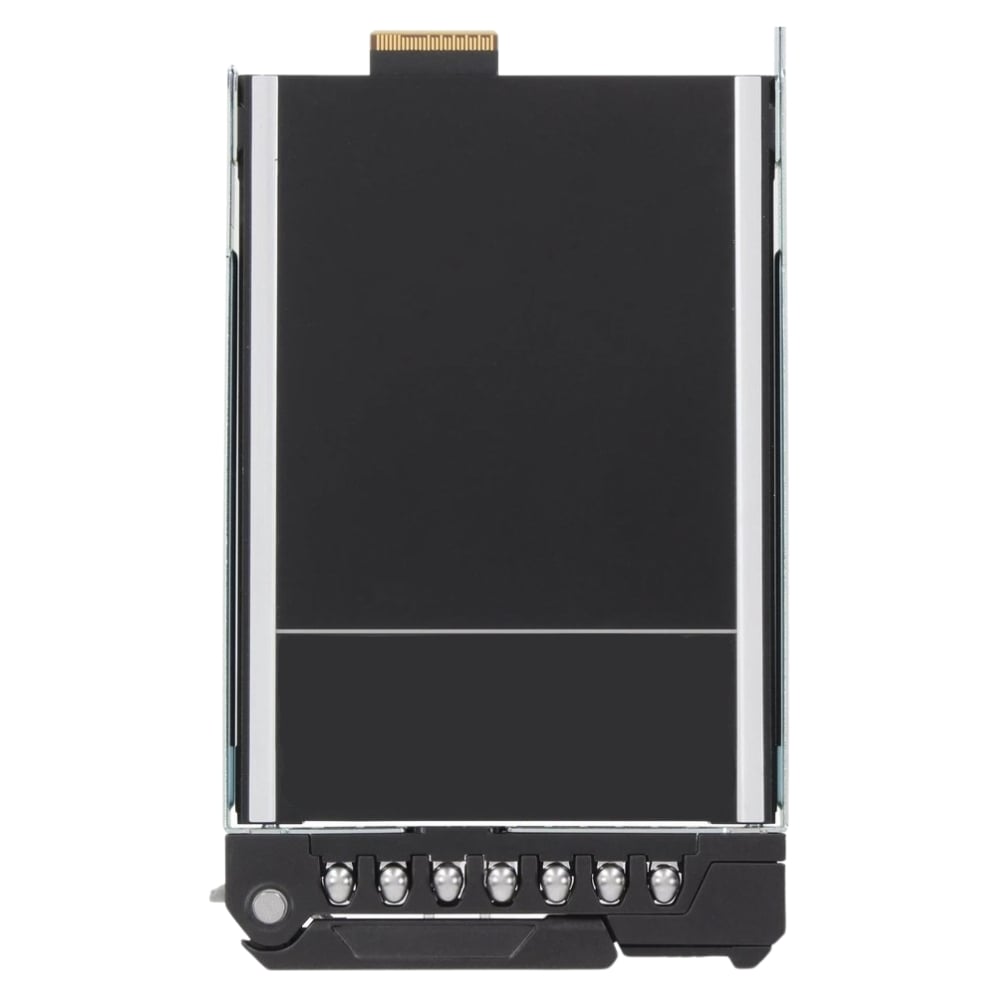
The 345-BKFR Dell 1.92TB NVMe PCIe Gen5 x4 E3.S Read Intensive SSD offers high-capacity storage with PCIe Gen5 interface support, utilizing the E3.S form factor optimized for read-intensive enterprise applications and delivering low latency and high input/output operations per second (IOPS). |
General Information |
|
|---|---|
| Brand | Dell |
| Part Number | 345-BKFR |
Technical Information |
|
|---|---|
| Capacity | 1.92TB |
| Form Factor | E3.S |
| Interface | PCIe Gen 5.0 x4 |
Physical Characteristics |
|
|---|---|
| Weight | 0.60 |
| Condition | Refurbished |
Product Description |
|---|
The 345-BKFR Dell 1.92TB NVMe PCIe Gen5 x4 E3.S Read Intensive SSD is built for environments requiring fast and reliable read performance. Commonly found in enterprise storage arrays and high-performance servers, this SSD fits into high-density storage configurations where read throughput is critical. Typically used by IT professionals managing data centers or cloud storage infrastructures, it provides improved read latency and throughput compared to previous generation drives. Its E3.S form factor supports efficient rack deployments where space and power efficiency are important. Key Features
This SSD delivers dependable and consistent read performance vital for storage clusters and virtualization environments. Its design balances speed with endurance, ensuring that systems relying on frequent data retrieval maintain operational stability over time. |
Use Cases |
|---|
Data center administrators deploying high-density server environments benefit from this drive's E3.S form factor and read-optimized performance for consolidating large datasets and accelerating data access across virtualized and cloud-native workloads. How It's Used:
In these environments, the combination of 1.92TB capacity, Gen 5.0 read performance, and the efficient E3.S form factor enables organizations to scale storage performance without proportionally scaling infrastructure footprint. |
 Shipping Options
 International Delivery
Requires a UPS, FedEx, or DHL account. Customers may arrange pickup from our US warehouse.
International Delivery
Requires a UPS, FedEx, or DHL account. Customers may arrange pickup from our US warehouse.
 Payment Methods
We accept Visa, Mastercard, AMEX, Discover, and Wire Transfer.
Payment Methods
We accept Visa, Mastercard, AMEX, Discover, and Wire Transfer.
 Purchase Orders
We process purchase orders for government agencies, enterprises, data centers, and SMBs.
Purchase Orders
We process purchase orders for government agencies, enterprises, data centers, and SMBs.