

Subscribe To Our Newsletter!
Subscribe to the newsletter to stay up to date with the latest news and most useful
Newsletter
↑
Back to Top



Product Overview |
|---|
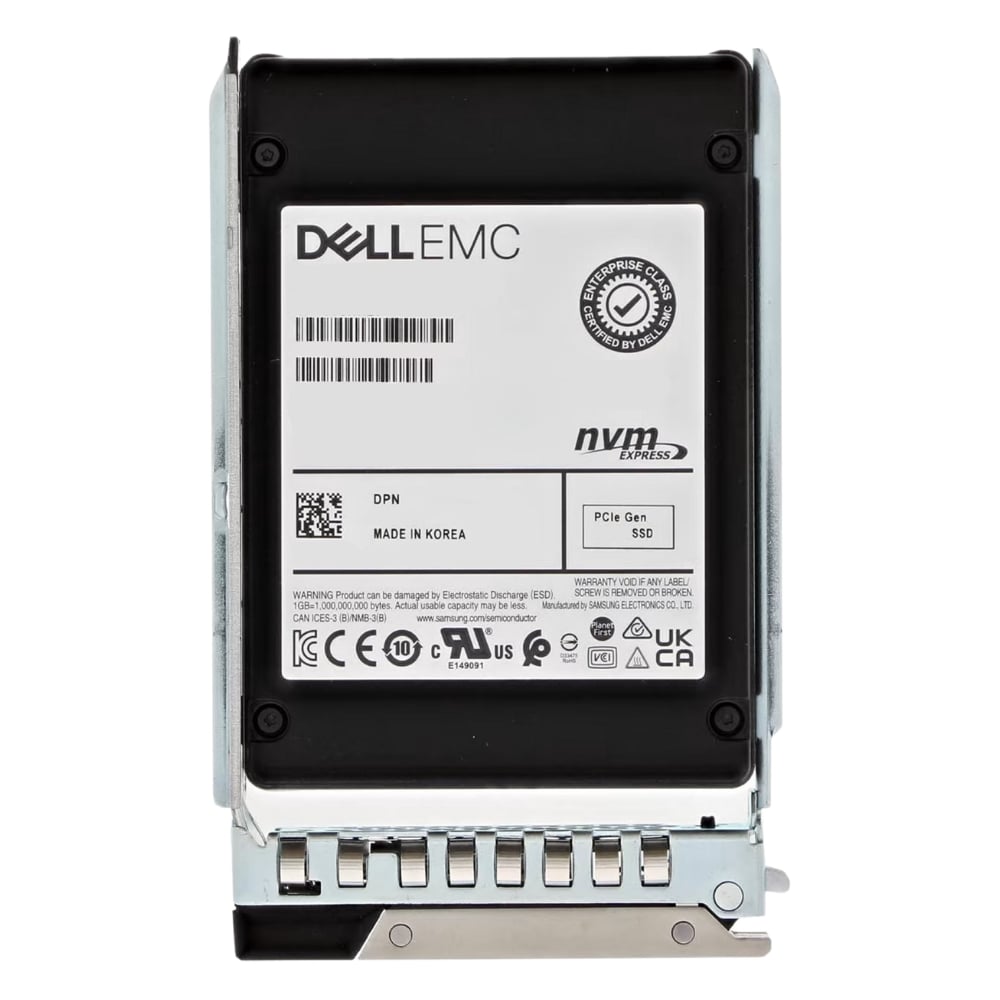
The 345-BJMM Dell 15.36TB NVMe PCIe Gen4 x4 U.2 2.5-inch SSD provides high-capacity, low-latency storage with PCIe Gen4 technology, optimized for enterprise-level data throughput and reliability. |
General Information |
|
|---|---|
| Brand | Dell |
| Part Number | 345-BJMM |
Technical Information |
|
|---|---|
| Capacity | 15.36TB |
| Form Factor | 2.5-inch |
| Interface | PCIe Gen 4.0 x4 |
| Hot Swappable | Yes |
| Hot Pluggable | Yes |
Physical Characteristics |
|
|---|---|
| Weight | 0.60 |
| Condition | Refurbished |
Product Description |
|---|
This 345-BJMM Dell SSD is built to provide substantial storage space combined with accelerated access speeds through its PCIe Gen4 x4 connection. Often found in enterprise-grade servers and storage systems, it caters to workloads that demand rapid data throughput and capacity in a compact 2.5-inch U.2 drive format. Commonly used in virtualization and high-performance computing environments, this SSD is designed for IT professionals seeking dependable and efficient storage solutions. Its form factor allows easy integration in rack-mounted setups and blade servers. Key Features
The drive's robust design and high throughput make it a reliable choice for maintaining system responsiveness in data-intensive applications. It balances large storage capacity with the speed required to support demanding enterprise operations. |
Use Cases |
|---|
This drive serves organizations deploying high-capacity storage solutions in enterprise data centers, cloud service providers managing large-scale virtualized environments, and businesses running database-intensive applications that demand both capacity and performance. Database administrators, virtualization engineers, and IT infrastructure teams working with large datasets benefit most from this storage solution. How It's Used:
Organizations leverage this SSD to reduce storage bottlenecks, improve application response times, and consolidate storage within existing server infrastructure while maintaining the performance levels required for demanding enterprise workloads. |
 Shipping Options
 International Delivery
Requires a UPS, FedEx, or DHL account. Customers may arrange pickup from our US warehouse.
International Delivery
Requires a UPS, FedEx, or DHL account. Customers may arrange pickup from our US warehouse.
 Payment Methods
We accept Visa, Mastercard, AMEX, Discover, and Wire Transfer.
Payment Methods
We accept Visa, Mastercard, AMEX, Discover, and Wire Transfer.
 Purchase Orders
We process purchase orders for government agencies, enterprises, data centers, and SMBs.
Purchase Orders
We process purchase orders for government agencies, enterprises, data centers, and SMBs.