

Subscribe To Our Newsletter!
Subscribe to the newsletter to stay up to date with the latest news and most useful
Newsletter
↑
Back to Top



Product Overview |
|---|
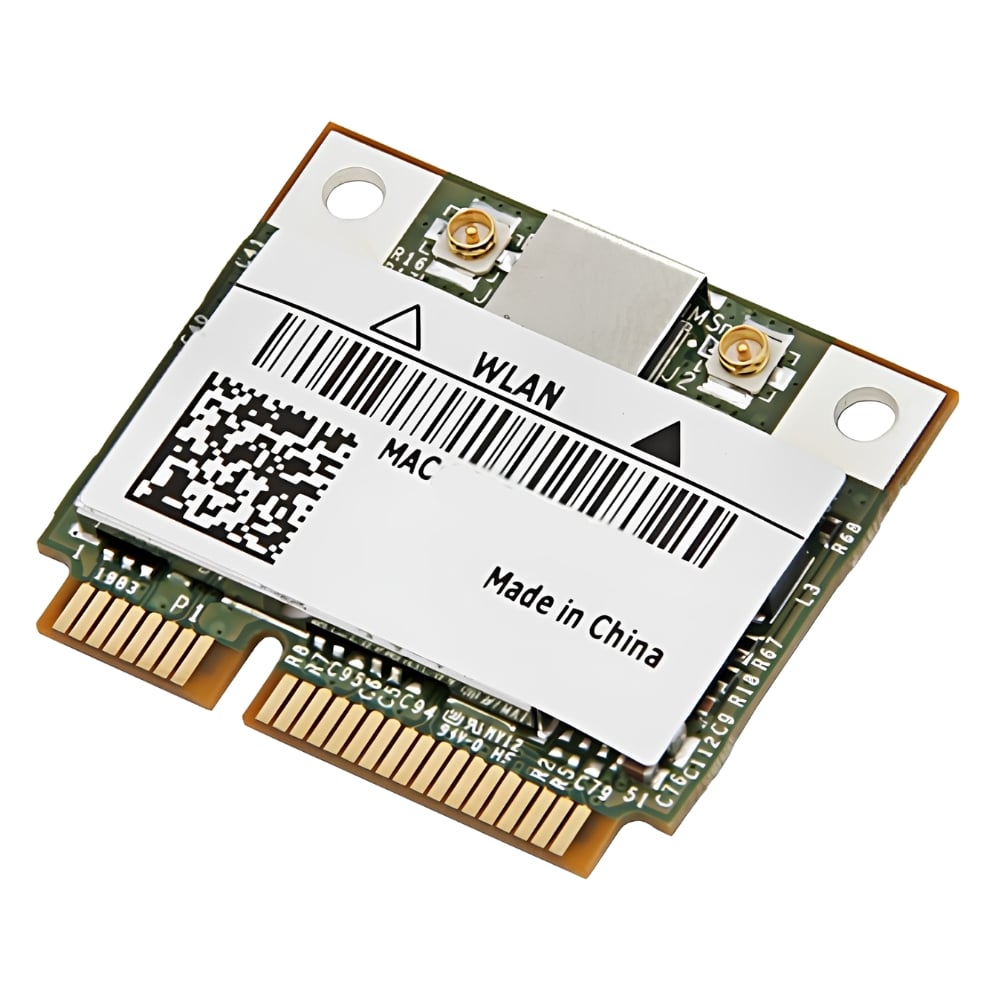
The 338906-001 HP W500 Mini PCI wireless LAN NIC delivers basic wireless connectivity using 802.11b/g protocols. It fits into small hardware slots where space and power efficiency are important. This NIC supports typical wireless networking needs without overcomplicating device design. |
General Information |
|
|---|---|
| Brand | HP |
Technical Information |
|
|---|---|
| Product Type | Wireless Network Card |
| Bracket Height | Internal/Mezzanine |
Connectivity & Physical |
|
|---|---|
| Form Factor | Mini PCIe |
| Weight | 3.00 |
| Condition | Refurbished |
Miscellaneous |
|
|---|---|
| Assembly Required | No |
| Compliance Standards | RoHS, CE, FCC |
Product Description |
|---|
The 338906-001 HP W500 Mini PCI wireless LAN NIC enables wireless network access following the 802.11b and 802.11g protocols. It is often found in laptops, embedded systems, or industrial devices needing modest wireless throughput and stable connections. Built for environments requiring straightforward wireless integration, this NIC offers essential connectivity without extra bulk. IT professionals and system integrators benefit from its compact size and compatibility with HP hardware. Key Features
This wireless NIC plays a practical role in providing dependable network access in space-sensitive devices. Its performance and form factor ensure it can be deployed without extensive redesign or added complexity. |
Use Cases |
|---|
The 338906-001 wireless NIC is primarily used where low-to-moderate wireless speeds suffice, such as in older laptops or embedded systems requiring wireless network access. It suits environments where basic connectivity is needed rather than high-bandwidth performance. How It's Used:
By supporting standard wireless protocols with a minimal footprint, this NIC helps maintain network availability and device versatility. It balances basic connectivity needs with system design constraints. |
 Shipping Options
 International Delivery
Requires a UPS, FedEx, or DHL account. Customers may arrange pickup from our US warehouse.
International Delivery
Requires a UPS, FedEx, or DHL account. Customers may arrange pickup from our US warehouse.
 Payment Methods
We accept Visa, Mastercard, AMEX, Discover, and Wire Transfer.
Payment Methods
We accept Visa, Mastercard, AMEX, Discover, and Wire Transfer.
 Purchase Orders
We process purchase orders for government agencies, enterprises, data centers, and SMBs.
Purchase Orders
We process purchase orders for government agencies, enterprises, data centers, and SMBs.