

Subscribe To Our Newsletter!
Subscribe to the newsletter to stay up to date with the latest news and most useful
Newsletter
↑
Back to Top



Product Overview |
|---|
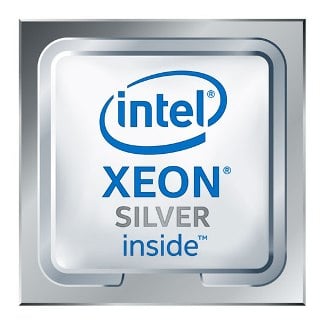
The Dell 338-BSTH Xeon Silver 4208 is a mid-range server processor designed to provide solid multi-core performance for business applications. It fits into Dell PowerEdge servers and is commonly used in environments where balanced processing power and energy efficiency are important. This processor handles a range of workloads, from virtualization to data processing, with features that support security and reliability without excessive complexity. |
General Information |
|
|---|---|
| Brand | Intel |
| Part Number | 338-BSTH |
Technical Information |
|
|---|---|
| Processor Family | Xeon Silver |
| # Of Cores | 8 Core |
| Total Threads | 16 |
| Max Turbo Frequency | 3.2 GHz |
| Base Clock Speed | 2.1 GHz |
| PCIe Version | PCIe 3.0 |
| Lithography | 14 nm |
| Socket Type | LGA 3647 |
| Cache | 11 MB |
| Thermal Design Power | 85 W |
Memory Specifications |
|
|---|---|
| Max Memory Size | 1 TB |
| Memory Types | DDR4-2400 |
| Max Memory Channels | 6 |
| Bandwidth | 115.2 GB/s |
Physical Characteristics |
|
|---|---|
| Weight | 5.00 |
| Condition | Refurbished |
Miscellaneous |
|
|---|---|
| Eco Friendly | Yes |
| Compliance Standards | RoHS, CE, FCC |
Product Description |
|---|
This Dell Xeon Silver 4208 processor is built to handle demanding workloads in data centers and enterprise servers. It offers 8 cores running at 2.1 GHz, allowing for smooth processing of multiple tasks simultaneously. Often found in mid-range servers, it balances performance and power efficiency to meet business needs. Ideal for IT professionals managing virtualization, database applications, or cloud services, this processor ensures reliable and scalable performance. Its architecture supports modern security and reliability features necessary in critical environments. Key Features
This processor is typically deployed in enterprise servers handling varied workloads from virtualization to database management. It plays a key role in maintaining smooth operations and can adapt to increasing demands without compromising stability. By integrating this CPU, organizations gain a dependable foundation for their IT infrastructure, balancing performance with efficiency in everyday server tasks. |
Use Cases |
|---|
The Dell 338-BSTH Xeon Silver 4208 processor is optimized for mid-sized enterprise servers, particularly in environments that demand consistent multi-threaded performance without excessive power consumption. It is well-suited for IT teams managing virtualization, database workloads, and application hosting within data centers or remote office settings. How It's Used:
This processor enhances operational efficiency by delivering dependable multi-core processing that scales with workload demands, supporting secure and robust server operations. Its compatibility with Dell PowerEdge platforms ensures integration within diverse IT architectures, facilitating manageable growth and workload diversification. |
 Shipping Options
 International Delivery
Requires a UPS, FedEx, or DHL account. Customers may arrange pickup from our US warehouse.
International Delivery
Requires a UPS, FedEx, or DHL account. Customers may arrange pickup from our US warehouse.
 Payment Methods
We accept Visa, Mastercard, AMEX, Discover, and Wire Transfer.
Payment Methods
We accept Visa, Mastercard, AMEX, Discover, and Wire Transfer.
 Purchase Orders
We process purchase orders for government agencies, enterprises, data centers, and SMBs.
Purchase Orders
We process purchase orders for government agencies, enterprises, data centers, and SMBs.