

Subscribe To Our Newsletter!
Subscribe to the newsletter to stay up to date with the latest news and most useful
Newsletter
↑
Back to Top



Product Overview |
|---|
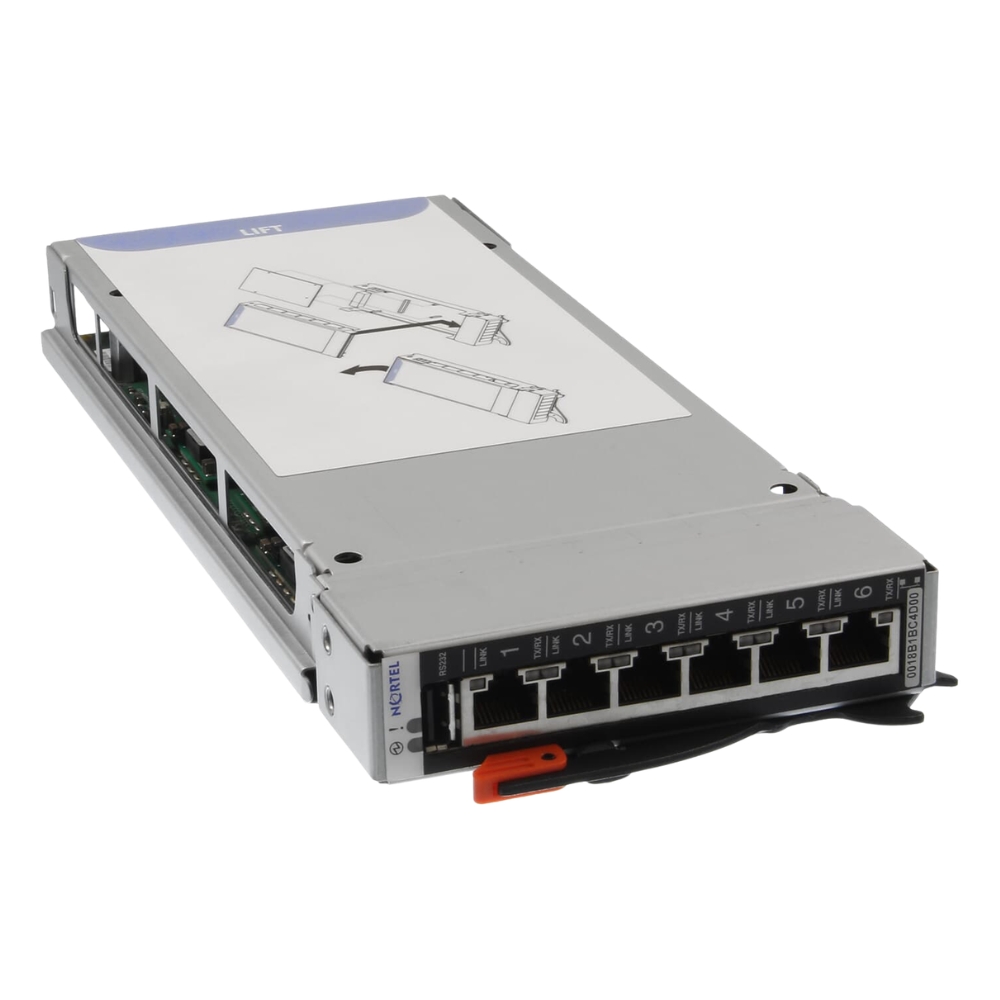
The 32R1861 IBM BladeCenter EL4512031 switch module provides six fiber-connected Gigabit Ethernet ports that slot directly into IBM BladeCenter chassis. It serves as a compact network switch designed to link blade servers internally, allowing for efficient data exchange within server racks. |
General Information |
|
|---|---|
| Brand | IBM |
| Part Number | 32R1861 |
| Condition | Refurbished |
| Alternate Part Number | 32R1861-02-CT |
Technical Information |
|
|---|---|
| Connector Type | SFP (mini-GBIC) fiber ports |
Physical Characteristics |
|
|---|---|
| Weight | 3.00 |
Miscellaneous |
|
|---|---|
| Eco Friendly | Yes |
| Assembly Required | Yes |
| Compliance Standards | WEEE, RoHS, cURus, CE, FCC, CCC, UL, TUV, cULus, CSA, cUL |
Product Description |
|---|
This 32R1861 IBM BladeCenter EL4512031 switch module provides six 1GbE fibre Ethernet ports tailored to integrate seamlessly with IBM BladeCenter chassis. It's commonly used to connect blade servers internally, offering reliable communication and network management within data centers. Built for IT administrators and data center professionals, this switch module is often found in setups where efficient, high-speed fiber networking is essential for server clusters and virtualization environments. Key Features
In practice, this switch module is deployed within enterprise data centers that rely on IBM BladeCenter infrastructure. It helps maintain organized network communication between servers, ensuring smooth operations and effective resource sharing. |
Use Cases |
|---|
The 32R1861 IBM BladeCenter EL4512031 switch module is utilized in environments requiring efficient and scalable network connectivity within IBM BladeCenter systems. How It's Used:
Through these applications, the switch module helps maintain effective network communication and resource sharing among blade servers in complex IT environments. |
 Shipping Options
 International Delivery
Requires a UPS, FedEx, or DHL account. Customers may arrange pickup from our US warehouse.
International Delivery
Requires a UPS, FedEx, or DHL account. Customers may arrange pickup from our US warehouse.
 Payment Methods
We accept Visa, Mastercard, AMEX, Discover, and Wire Transfer.
Payment Methods
We accept Visa, Mastercard, AMEX, Discover, and Wire Transfer.
 Purchase Orders
We process purchase orders for government agencies, enterprises, data centers, and SMBs.
Purchase Orders
We process purchase orders for government agencies, enterprises, data centers, and SMBs.