

Subscribe To Our Newsletter!
Subscribe to the newsletter to stay up to date with the latest news and most useful
Newsletter
↑
Back to Top



Product Overview |
|---|
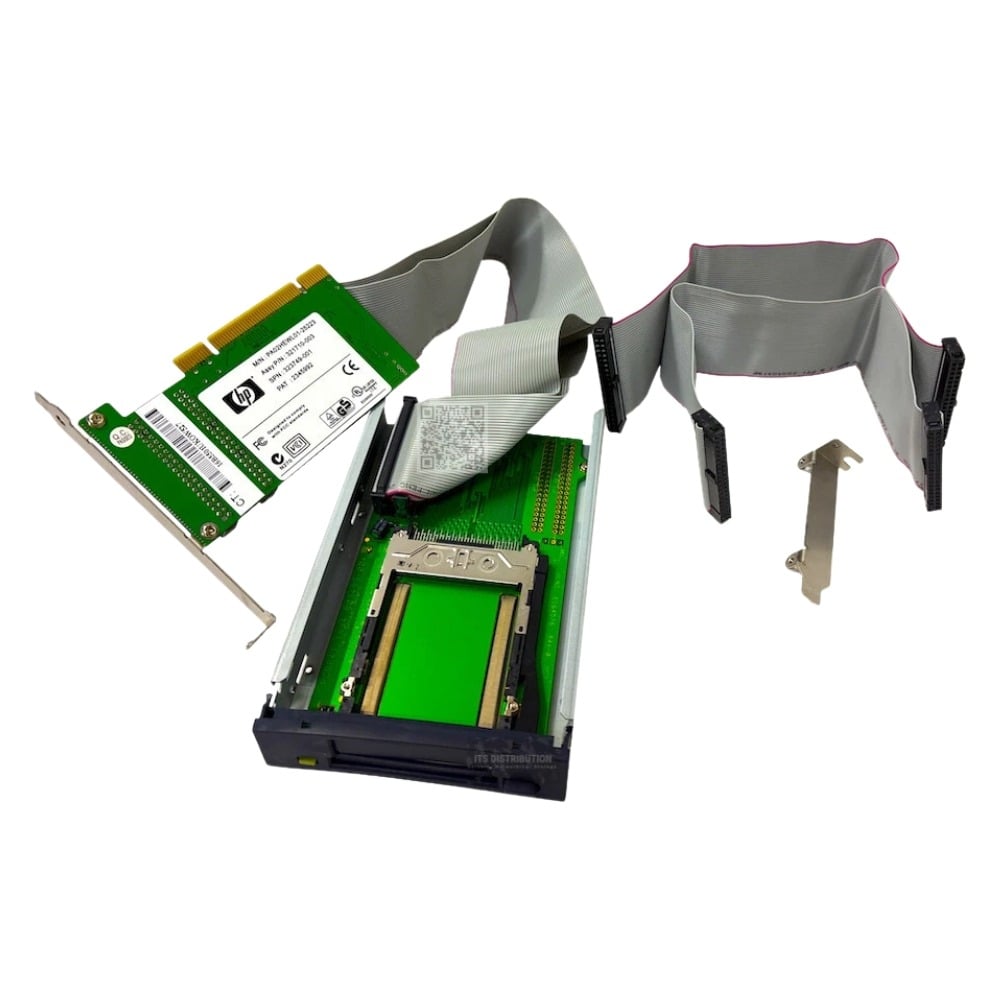
The 323749-001 - HP PCI to PCMCIA Adapter acts as a hardware interface combining PCI slot connectivity with PCMCIA card compatibility. It fits into desktop systems needing to support legacy PCMCIA cards, offering straightforward, stable performance without unnecessary features. |
General Information |
|
|---|---|
| Brand | HP |
Technical Information |
|
|---|---|
| Port Speed | 33 MHz (PCI/CardBus) |
| Ports | 1 PCMCIA slot |
| Data Rate | Up to 132 MB/s (CardBus), up to 5 MB/s (16-bit PCMCIA) |
| Compatibility | PCI (32-bit 33MHz) slot; PCMCIA (16-bit) and CardBus (32-bit) cards |
| Connector Type | PCI edge connector; PCMCIA Type II (CardBus) slot |
| product type | PCI to PCMCIA Adapter (CardBus/PCMCIA) |
| Product Category | Expansion Modules |
Physical Characteristics |
|
|---|---|
| Form Factor | Full-height PCI card |
| Weight | 3.00 |
| Condition | Refurbished |
Miscellaneous |
|
|---|---|
| Assembly Required | No |
Product Description |
|---|
The HP PCI to PCMCIA Adapter provides a bridge between modern PCI slots and older PCMCIA cards. It's often found in desktop systems where users need to maintain compatibility with legacy cards that use the PCMCIA form factor. Built for IT professionals and organizations managing mixed hardware environments, this adapter helps extend the life of existing PCMCIA-based peripherals. Key Features
This adapter plays a practical role in environments where older PCMCIA cards remain in use, providing straightforward functionality without added complexity. Its reliability and consistent performance make it a dependable option for bridging older technology with current hardware setups. |
Use Cases |
|---|
This adapter is typically employed in setups where legacy PCMCIA cards must interface with newer desktop computers. It is most useful in environments maintaining specialized or older peripheral devices that have not transitioned to modern connection standards. How It's Used:
By supporting older hardware in current PCI-based systems, this adapter helps maintain operational continuity. It ensures that legacy devices remain accessible and functional without disrupting standard desktop configurations. |
 Shipping Options
 International Delivery
Requires a UPS, FedEx, or DHL account. Customers may arrange pickup from our US warehouse.
 Payment Methods
We accept Visa, Mastercard, AMEX, Discover, and Wire Transfer.
 Purchase Orders
We process purchase orders for government agencies, enterprises, data centers, and SMBs.