

Subscribe To Our Newsletter!
Subscribe to the newsletter to stay up to date with the latest news and most useful
Newsletter
↑
Back to Top



Product Overview |
|---|
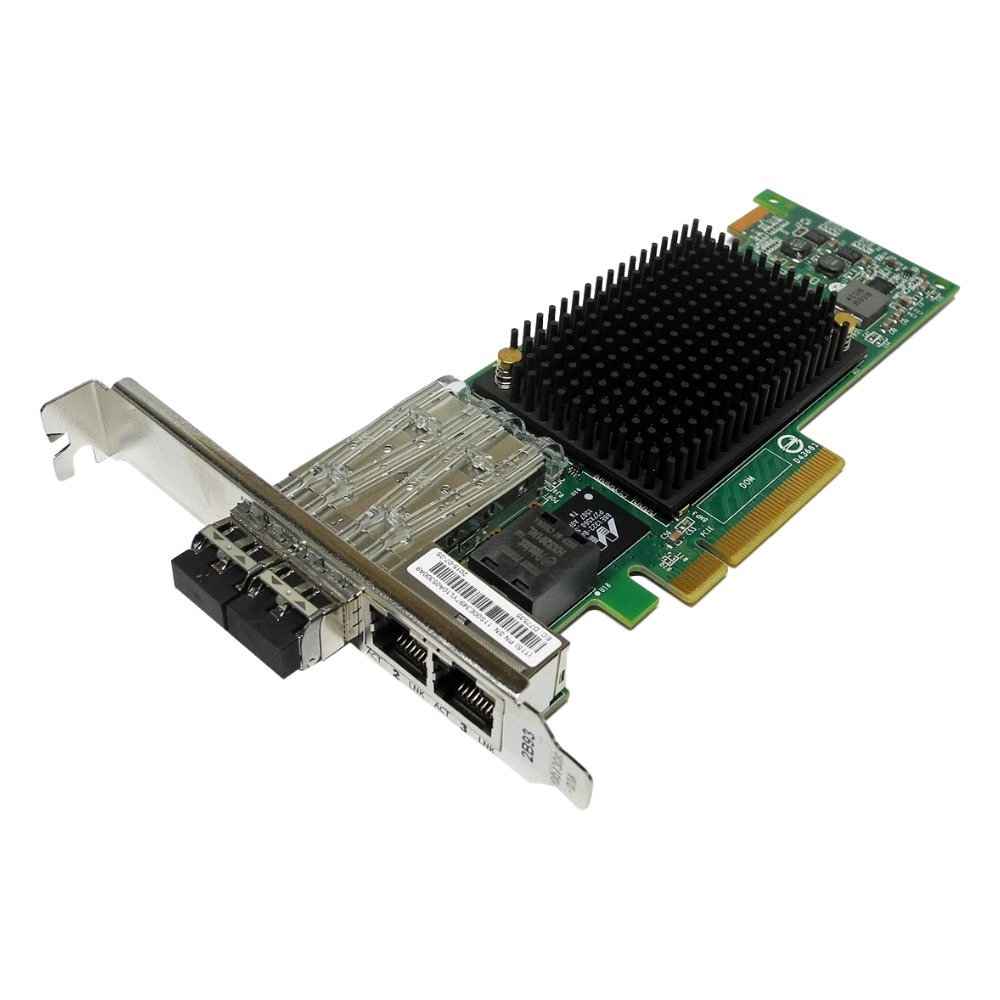
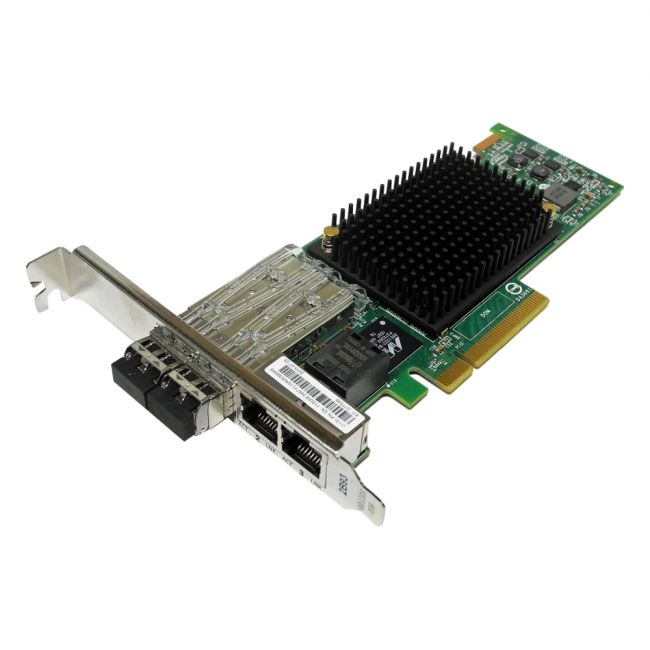
The 2B93 - IBM 4-Ports 10GbE SFP+ PCIe 2.0 x8 Low-Profile Network Adapter delivers multiple high-speed Ethernet connections through a compact, low-profile card. It fits into PCIe 2.0 x8 slots and is designed to enhance network capacity and flexibility in server or storage environments. |
General Information |
|
|---|---|
| Brand | IBM |
Technical Information |
|
|---|---|
| Product Type | Server NIC |
| Data Rate (Speed) | 10GbE |
| Interface (Bus) | PCIe 2.0 x8 |
| Number of Ports | 4-Port (Quad) |
| Bracket Height | Low Profile (Half Height) |
Connectivity & Physical |
|
|---|---|
| Form Factor | Low Profile |
| Port Type | SFP+ |
| Cabling Type | AOC |
| Weight | 3.00 |
| Condition | Refurbished |
Miscellaneous |
|
|---|---|
| Assembly Required | No |
| Compliance Standards | WEEE, RoHS, CE, FCC |
Product Description |
|---|
The 2B93 - IBM 4-Ports 10GbE SFP+ PCIe 2.0 x8 Low-Profile Network Adapter provides robust high-speed network connectivity. It is commonly found in data centers and enterprise server environments where multiple 10GbE links are required. Built for IT professionals and system administrators, this adapter supports bandwidth-intensive operations and enhances network throughput. Key Features
This network adapter plays a key role in improving connectivity and scalability within server infrastructures. Its reliable performance ensures consistent data flow, supporting demanding network workloads without compromising system stability. |
Use Cases |
|---|
The 2B93 network adapter is typically used in enterprise data centers and virtualized environments where high throughput and multiple 10GbE connections are essential. Network architects and system engineers benefit from its dense port count and compact design. How It's Used:
By enabling multiple 10GbE connections in a low-profile form, the 2B93 supports efficient network scaling and consistent performance across demanding IT infrastructures. Its design balances connection density with compatibility, making it a practical choice for dense server environments. |
 Shipping Options
 International Delivery
Requires a UPS, FedEx, or DHL account. Customers may arrange pickup from our US warehouse.
International Delivery
Requires a UPS, FedEx, or DHL account. Customers may arrange pickup from our US warehouse.
 Payment Methods
We accept Visa, Mastercard, AMEX, Discover, and Wire Transfer.
Payment Methods
We accept Visa, Mastercard, AMEX, Discover, and Wire Transfer.
 Purchase Orders
We process purchase orders for government agencies, enterprises, data centers, and SMBs.
Purchase Orders
We process purchase orders for government agencies, enterprises, data centers, and SMBs.