

Subscribe To Our Newsletter!
Subscribe to the newsletter to stay up to date with the latest news and most useful
Newsletter
↑
Back to Top



Product Overview |
|---|
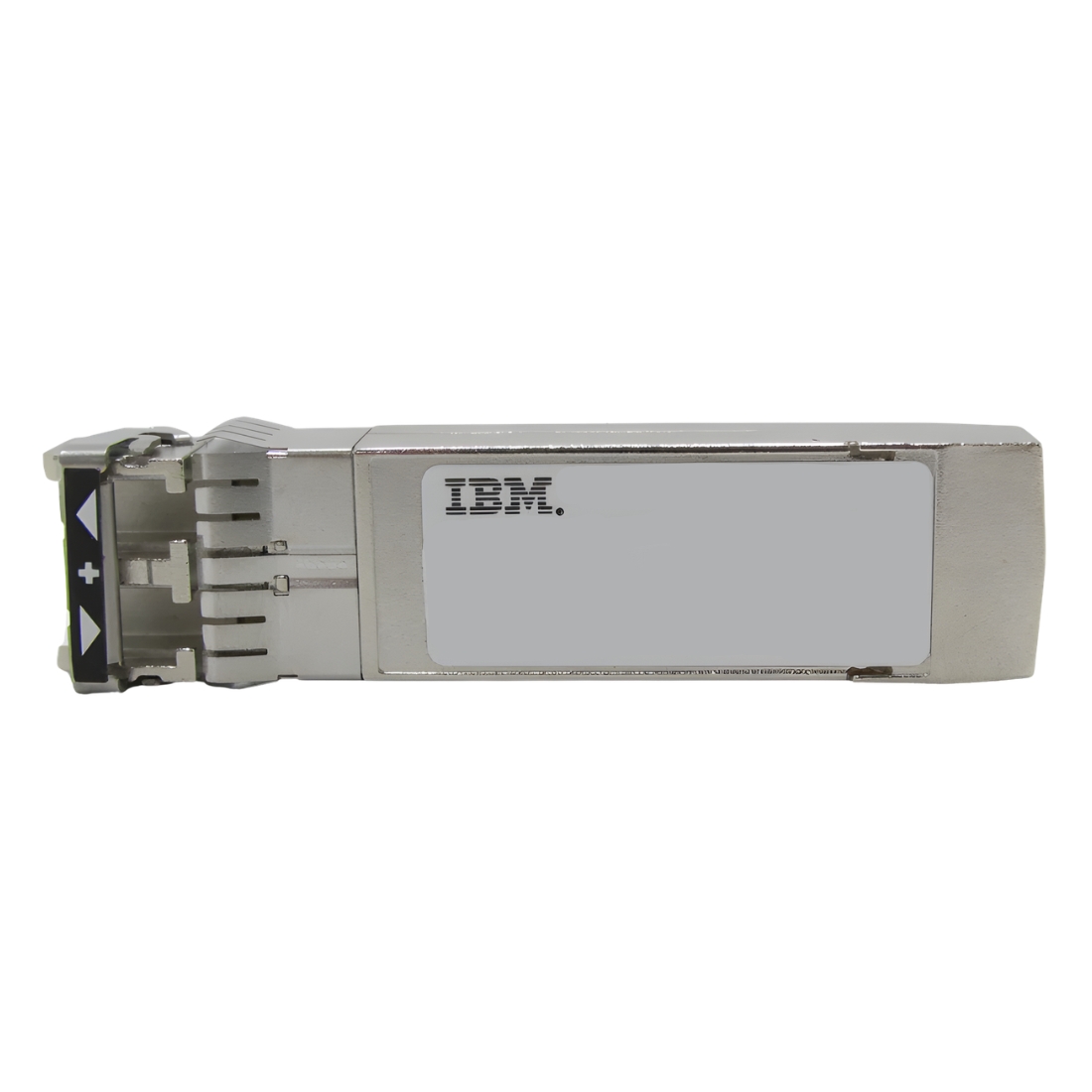
The 2801-2498 - IBM 8Gb/s SFP SW Transceiver enables high-speed optical connections in Fibre Channel networks, fitting neatly into IBM storage and networking gear. It’s designed to deliver steady 8Gb/s transmission over shortwave optical fibers, offering a compact and hot-swappable solution that supports efficient data center operations. |
General Information |
|
|---|---|
| Brand | IBM |
Technical Information |
|
|---|---|
| Form Factor | SFP |
| Media | MMF |
| Type | VCSEL |
| Protocols | Fibre Channel (8G) |
| Connector | LC Duplex |
Physical Characteristics |
|
|---|---|
| Weight | 3.00 |
| Condition | Refurbished |
Product Description |
|---|
The 2801-2498 is an 8Gb/s SFP shortwave transceiver designed to facilitate high-speed optical communication in Fibre Channel storage area networks. Often found in data centers and storage environments, it enables efficient and reliable data transfer over optical fiber connections. Built for IT professionals managing IBM storage systems and SAN infrastructures, this transceiver integrates seamlessly with compatible hardware to maintain robust connectivity. It’s commonly used in environments that demand consistent performance and uptime. Key Features
This transceiver plays a vital role in facilitating data flow within Fibre Channel networks, contributing to the overall stability and speed of storage communications. Its precise engineering supports demanding network conditions while reducing maintenance complexity. By providing a reliable optical connection, it helps maintain consistent network performance and supports the scalability requirements of evolving storage infrastructures. |
Use Cases |
|---|
This transceiver is primarily utilized in data center environments focused on IBM SAN implementations. It benefits network administrators and storage engineers who require dependable, high-throughput optical links for their Fibre Channel systems. Its design suits clustered storage arrays and rack-based network setups that demand minimal downtime. How It's Used:
By integrating this transceiver, organizations can maintain seamless communication within their storage networks, ensuring the smooth operation of critical data workflows. Its stable performance underpins scalable and efficient storage infrastructure management. |
 Shipping Options
 International Delivery
Requires a UPS, FedEx, or DHL account. Customers may arrange pickup from our US warehouse.
International Delivery
Requires a UPS, FedEx, or DHL account. Customers may arrange pickup from our US warehouse.
 Payment Methods
We accept Visa, Mastercard, AMEX, Discover, and Wire Transfer.
Payment Methods
We accept Visa, Mastercard, AMEX, Discover, and Wire Transfer.
 Purchase Orders
We process purchase orders for government agencies, enterprises, data centers, and SMBs.
Purchase Orders
We process purchase orders for government agencies, enterprises, data centers, and SMBs.