

Subscribe To Our Newsletter!
Subscribe to the newsletter to stay up to date with the latest news and most useful
Newsletter
↑
Back to Top



Product Overview |
|---|
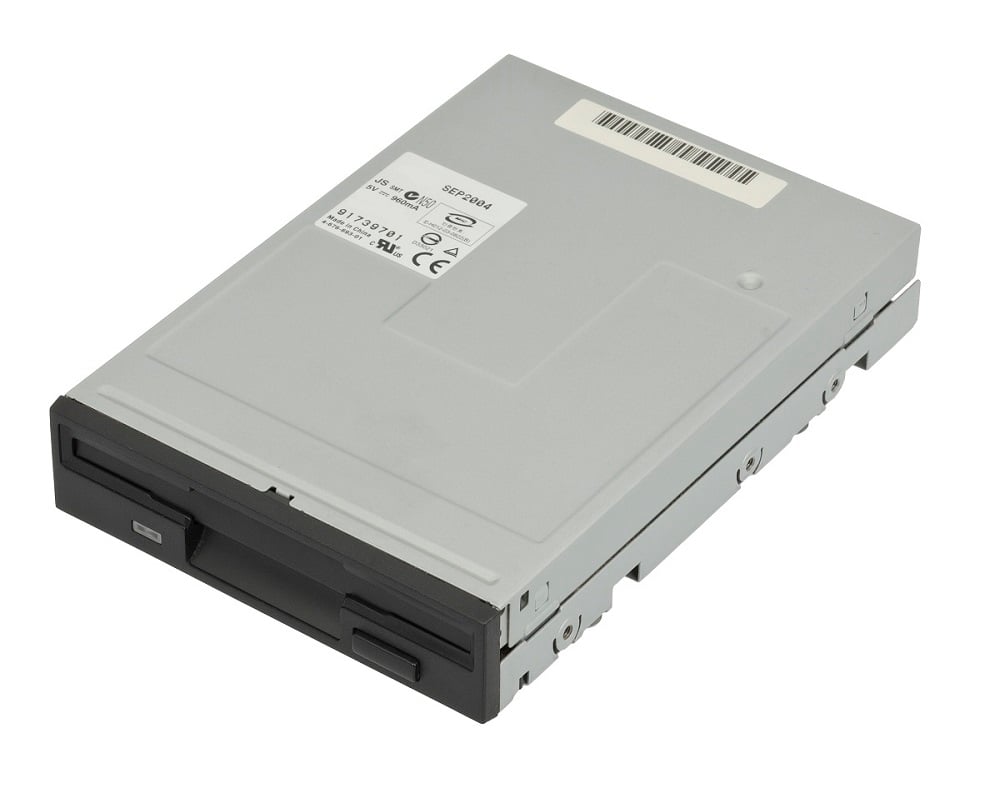
The HP 1.44MB 3.5-inch floppy drive offers a simple and effective way to read and write data on traditional floppy disks. It fits into standard desktop computer bays and is commonly used in situations where legacy media access is needed, such as data recovery, archiving, or maintaining vintage equipment. |
General Information |
|
|---|---|
| Brand | HP |
| Part Number | 251629-001 |
Technical Information |
|
|---|---|
| Disc Diameter | 3.5-inch (90 mm) |
| Interface | 34-pin FDD ribbon connector (Shugart-compatible), 4-pin Molex power |
| Data Transfer Rate | ~500 Kbits/s (typical for 1.44MB HD 3.5" floppy) |
Physical Characteristics |
|
|---|---|
| Dimensions | 1.03 in x 4.02 in x 5.75 in (26.2 mm x 102 mm x 146 mm) |
| Weight | 5.00 |
| Condition | Refurbished |
Miscellaneous |
|
|---|---|
| Eco Friendly | Yes |
| Assembly Required | Yes |
| Compliance Standards | WEEE, RoHS, cURus, CE, FCC, CCC, UL, TUV, cULus, CSA, cUL |
Product Description |
|---|
This HP 1.44MB 3.5-inch floppy drive reads and writes data on standard floppy disks, providing a dependable way to access legacy media. It's often found in older computer setups where floppy disks remain in use for archival or specialized purposes. Built for environments that require access to vintage storage, it suits IT professionals, archivists, and hobbyists working with legacy systems. Its straightforward design makes it easy to replace or add to compatible desktop machines. Key Features
This floppy drive is typically deployed in older office environments, archival labs, and computer repair shops. It plays a key role when accessing or transferring data stored on floppy disks, bridging the gap between old media and current systems. |
Use Cases |
|---|
The HP 1.44MB 3.5-inch floppy drive is primarily utilized in environments where access to legacy data or hardware remains critical. It serves IT professionals, archivists, and technicians working with vintage systems or specialized industrial equipment that depend on floppy media for software or data interchange. How It's Used:
This floppy drive ensures operational continuity by enabling reliable reading and writing of legacy media where newer storage technologies are incompatible. Its use supports specialized workflows that demand access to historical or proprietary data without disrupting established infrastructure. |
 Shipping Options
 International Delivery
Requires a UPS, FedEx, or DHL account. Customers may arrange pickup from our US warehouse.
International Delivery
Requires a UPS, FedEx, or DHL account. Customers may arrange pickup from our US warehouse.
 Payment Methods
We accept Visa, Mastercard, AMEX, Discover, and Wire Transfer.
Payment Methods
We accept Visa, Mastercard, AMEX, Discover, and Wire Transfer.
 Purchase Orders
We process purchase orders for government agencies, enterprises, data centers, and SMBs.
Purchase Orders
We process purchase orders for government agencies, enterprises, data centers, and SMBs.