Subscribe To Our Newsletter!
Subscribe to the newsletter to stay up to date with the latest news and most useful
Newsletter
↑
Back to Top



Product Overview |
|---|
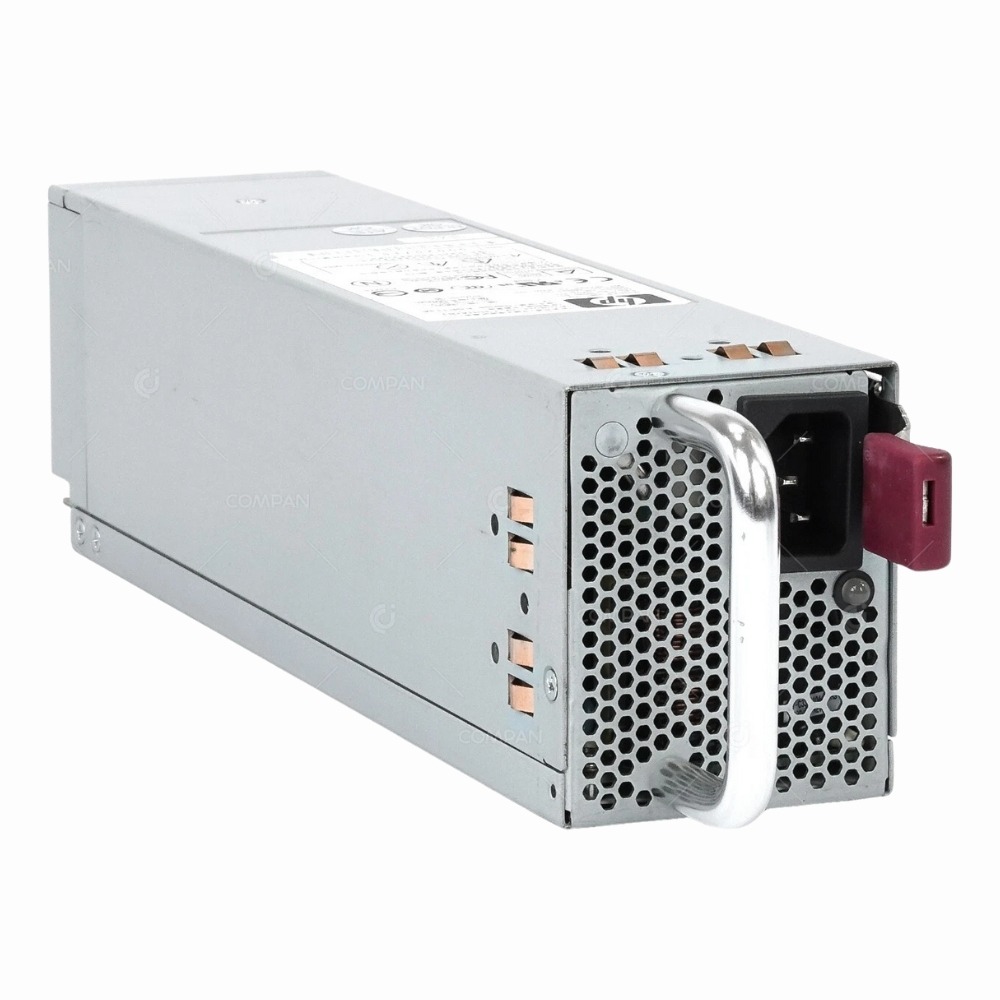
The HPE 400-watt hot-swap redundant power supply is designed to deliver steady and dependable power to ProLiant DL380 G2 and G3 servers. It fits directly into the server chassis and supports hot swapping, allowing technicians to replace or add power modules without stopping the server. This power supply is a core component in setups where uptime and redundancy are essential, playing a vital role in keeping enterprise servers running without interruption. |
General Information |
|
|---|---|
| Brand | HP |
| Part Number | 225011-001 |
| Product Type | Server Power Supply |
| Condition | Refurbished |
Technical Information |
|
|---|---|
| Input Voltage | 100-127V AC, 200-240V AC |
| Input Frequency | 50-60 Hz |
| Output | 12VDC |
| Max. Output Power | 400W |
| Hot Swappable | Yes |
| Redundant Support | Yes |
| Cooling Type | Active Fan |
| Modularity | Non-Modular |
| Number of Fans | 1 |
Compatibility |
|
|---|---|
| Form Factor | Proprietary |
| Compatible For | HPE ProLiant DL380 G2, HPE ProLiant DL380 G3 (SKU 225011-001) |
Physical Characteristics |
|
|---|---|
| Weight | 3.00 |
Product Description |
|---|
This 400-watt hot-swap redundant power supply provides reliable power backup for HPE ProLiant DL380 G2 and G3 servers. It is built to keep servers running smoothly by allowing a power supply swap without shutting down the system, making it ideal for environments where uptime is critical. Often found in data centers and enterprise IT setups, this power supply is used to maintain server availability and protect against power failures. IT administrators and system engineers commonly rely on it to ensure stable operation of mission-critical applications. Key Features
This power supply is typically deployed in enterprise server racks that demand constant power stability. Its role is crucial in environments that cannot afford interruptions, making it a practical choice for maintaining operational continuity in business-critical systems. |
 Shipping Options
 International Delivery
Requires a UPS, FedEx, or DHL account. Customers may arrange pickup from our US warehouse.
International Delivery
Requires a UPS, FedEx, or DHL account. Customers may arrange pickup from our US warehouse.
 Payment Methods
We accept Visa, Mastercard, AMEX, Discover, and Wire Transfer.
Payment Methods
We accept Visa, Mastercard, AMEX, Discover, and Wire Transfer.
 Purchase Orders
We process purchase orders for government agencies, enterprises, data centers, and SMBs.
Purchase Orders
We process purchase orders for government agencies, enterprises, data centers, and SMBs.