

Subscribe To Our Newsletter!
Subscribe to the newsletter to stay up to date with the latest news and most useful
Newsletter
↑
Back to Top



Product Overview |
|---|
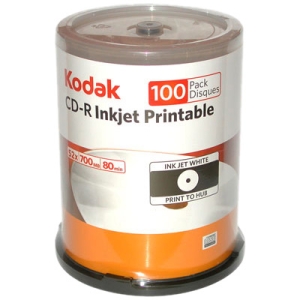
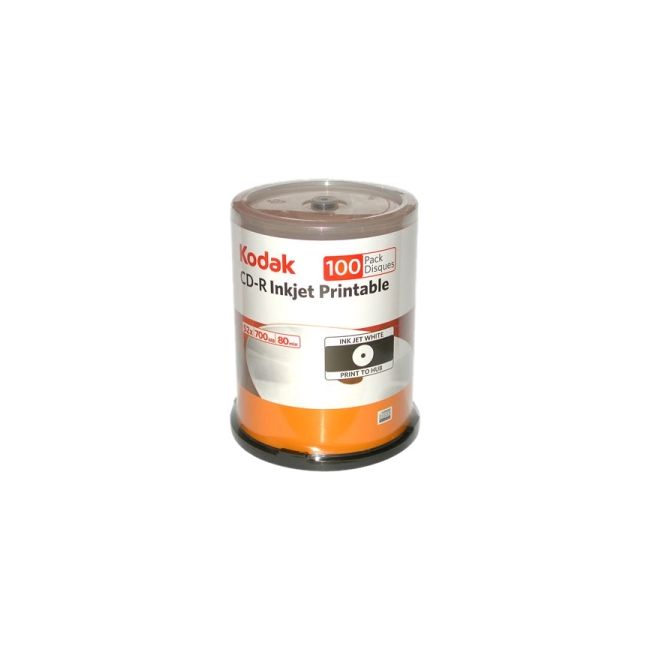
The Kodak CD-R 22300 is a straightforward recordable disc designed for everyday data and audio storage. It fits well in settings that require quick, reliable CD burning with customization options for labeling. Its balance of speed and capacity makes it a solid choice for a range of users from casual to professional. |
General Information |
|
|---|---|
| Brand | Kodak |
| Part Number | 22300 |
Technical Information |
|
|---|---|
| Disc Diameter | 120 mm |
| Data Transfer Rate | 52x (≈7.8 MB/s) |
Physical Characteristics |
|
|---|---|
| Weight | 5.00 |
| Condition | Refurbished |
Miscellaneous |
|
|---|---|
| Eco Friendly | Yes |
| Assembly Required | Yes |
| Compliance Standards | WEEE, RoHS, cURus, CE, FCC, CCC, UL, TUV, cULus, CSA, cUL |
Product Description |
|---|
This Kodak CD-R pack offers reliable recordable media ideal for storing music, data, or backups. It’s commonly used in offices, schools, and home studios where physical copies are needed. The discs support fast recording speeds and are built for compatibility with most CD burners. Key Features
These CDs are often found in environments where archiving or distribution of multimedia content is needed. Their printable tops offer a practical way to organize and identify each disc without extra labels. Ideal for users who prefer physical storage media over cloud or USB options. |
Use Cases |
|---|
The Kodak 22300 CD-R discs are ideal for environments where reliable physical data storage and distribution are necessary, such as small to medium business offices and multimedia production studios. These settings benefit most from the discs' compatibility with inkjet printable surfaces, enabling easy customization of data and audio content labeling. How It's Used:
By providing a reliable medium for data and audio storage with printable labeling options, the Kodak 22300 supports operational workflows that require clear media identification and physical data handling. This facilitates efficient management of distributed content and enhances scalability in environments relying on optical media. |
 Shipping Options
 International Delivery
Requires a UPS, FedEx, or DHL account. Customers may arrange pickup from our US warehouse.
International Delivery
Requires a UPS, FedEx, or DHL account. Customers may arrange pickup from our US warehouse.
 Payment Methods
We accept Visa, Mastercard, AMEX, Discover, and Wire Transfer.
Payment Methods
We accept Visa, Mastercard, AMEX, Discover, and Wire Transfer.
 Purchase Orders
We process purchase orders for government agencies, enterprises, data centers, and SMBs.
Purchase Orders
We process purchase orders for government agencies, enterprises, data centers, and SMBs.