

Subscribe To Our Newsletter!
Subscribe to the newsletter to stay up to date with the latest news and most useful
Newsletter
↑
Back to Top



Product Overview |
|---|
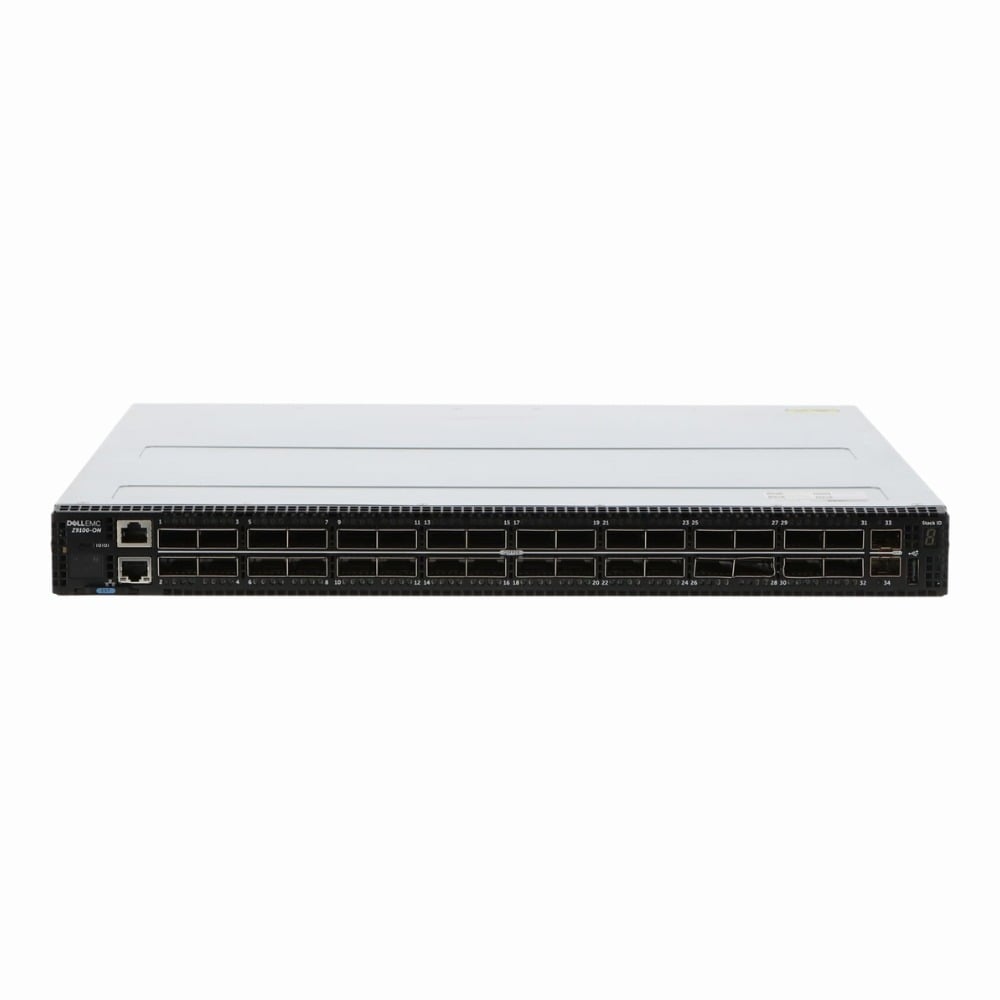
The Dell 210-AESY Z9100-ON switch delivers high-speed 100GbE connectivity ideal for data centers and enterprise networks. It offers a combination of numerous 100GbE ports along with SFP+ options to fit varied infrastructure needs, providing a solid backbone for demanding networking tasks. |
General Information |
|
|---|---|
| Brand | Dell |
| Part Number | 210-AESY |
| Condition | Refurbished |
Technical Information |
|
|---|---|
| Switch Ports | 34 |
| Number of Ports | 32-Ports |
| Port Type | 100G QSFP28, SFP+ |
| Port Speed | 100Gbps,10Gbps |
| UpLink Ports | 2 |
| POE Support | No |
| VLAN Support | Yes |
| Stackable | No |
| Layer Support | Layer 3 |
| Connector Type | QSFP28,SFP+ |
Performance |
|
|---|---|
| Jumbo Frame Support | Up To 9216 Bytes |
Management and Configuration |
|
|---|---|
| Routing Protocols | Static, OSPF, BGP, VRRP |
| Remote Protocols | Yes |
| Management Interfaces | Serial Console (RJ-45),USB Console |
| Management Type | CLI,SNMP |
| Remote Management Protocol | SSH,SNMP |
Physical Characteristics |
|
|---|---|
| Weight | 5.00 |
Product Description |
|---|
The Dell 210-AESY Z9100-ON switch is built for handling demanding data center workloads with its 32 high-capacity 100 Gigabit Ethernet ports and 2 SFP+ ports for additional 10GbE connections. It's commonly used in environments that require fast and reliable network performance, such as enterprise backbones and cloud infrastructures. Network administrators and IT professionals often rely on this switch to support robust data flow and low-latency communication across their infrastructure. Its design caters to large-scale deployments where performance and flexibility are critical. Key Features
This switch is typically found in data centers powering cloud services, telecommunications, and enterprise backbone networks. It provides the necessary throughput and reliability to keep modern infrastructures running efficiently without bottlenecks. By deploying this switch, organizations benefit from improved data handling capabilities and easier network scalability, helping maintain consistent performance as network needs evolve. |
Use Cases |
|---|
The Dell 210-AESY Z9100-ON switch is predominantly deployed in high-capacity data center environments where 100GbE connectivity is critical. It suits enterprise IT infrastructures requiring robust network backbones capable of handling large-scale virtualization and rapid data throughput. How It's Used:
This switch enhances operational efficiency by delivering scalable, high-speed interconnects that accommodate growing data demands. Its mix of 100GbE and SFP+ ports provides flexible integration options, enabling seamless scaling and optimized network performance in demanding enterprise and data center settings. |
 Shipping Options
 International Delivery
Requires a UPS, FedEx, or DHL account. Customers may arrange pickup from our US warehouse.
International Delivery
Requires a UPS, FedEx, or DHL account. Customers may arrange pickup from our US warehouse.
 Payment Methods
We accept Visa, Mastercard, AMEX, Discover, and Wire Transfer.
Payment Methods
We accept Visa, Mastercard, AMEX, Discover, and Wire Transfer.
 Purchase Orders
We process purchase orders for government agencies, enterprises, data centers, and SMBs.
Purchase Orders
We process purchase orders for government agencies, enterprises, data centers, and SMBs.