

Subscribe To Our Newsletter!
Subscribe to the newsletter to stay up to date with the latest news and most useful
Newsletter
↑
Back to Top



Product Overview |
|---|
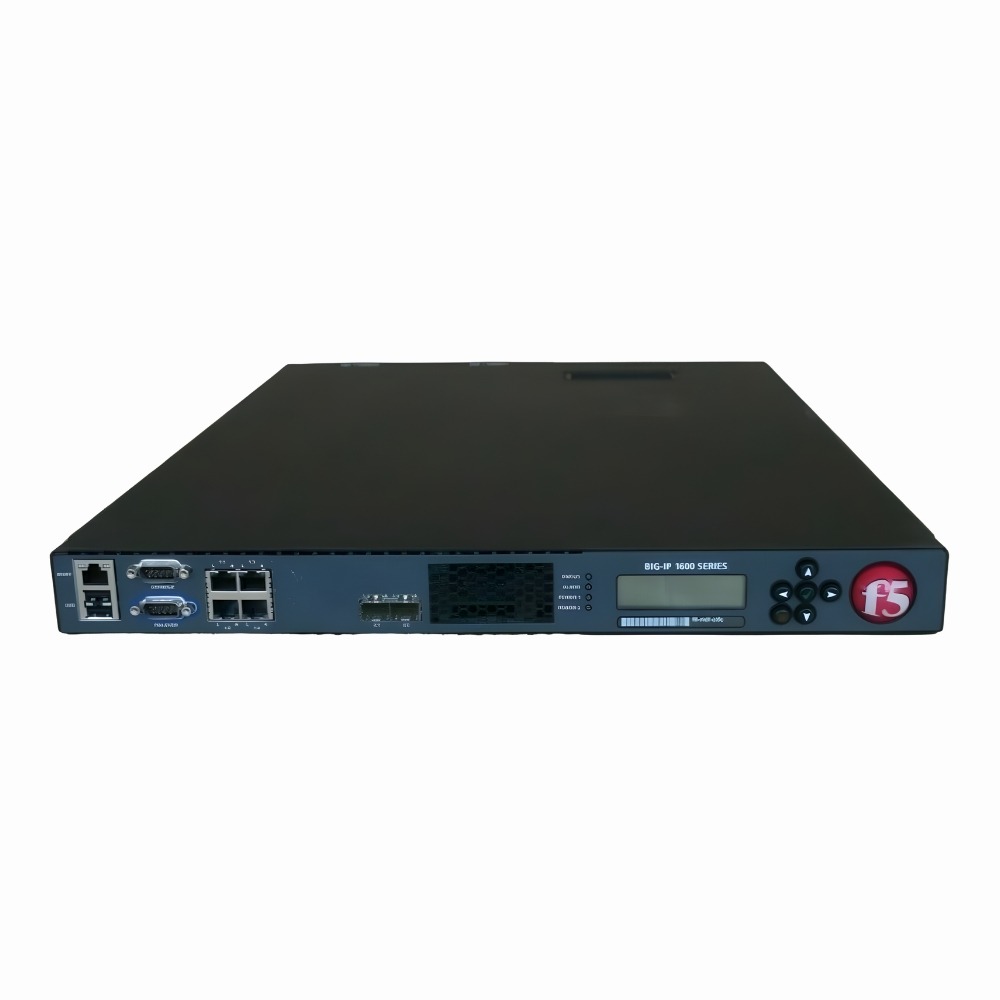
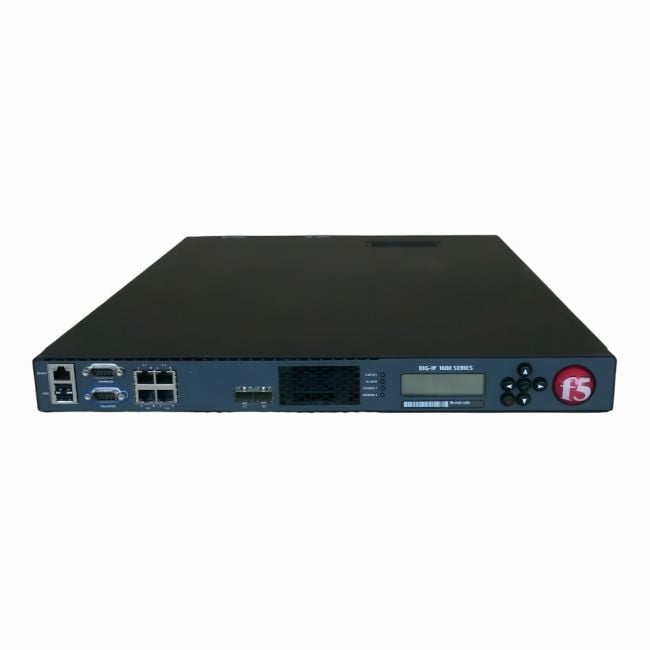
The F5 Networks BIG-IP 1600 Series local traffic manager handles distributing network traffic efficiently across multiple servers. It's suited for mid-sized setups aiming to improve application delivery and reliability without complex configurations. |
General Information |
|
|---|---|
| Brand | F5 Networks |
| Part Number | 200-0294-22 |
| Condition | Refurbished |
Technical Information |
|
|---|---|
| Form Factor | Rack-Mountable |
| Mount Type | 1U Rack |
| Number of Ports | 6-Ports |
| Port Type | 1000Base-X, SFP |
| Port Speed | 1 Gbps full-duplex |
| UpLink Ports | 2 × SFP ports |
| Switch Forwarding Rate | 1 Gbps |
| DRAM | 4 GB |
| Flash Memory | 320 GB |
| VLAN Support | Yes |
| Layer Support | Layer 4 |
| Connector Type | RJ‑45 (ports, console, failover), SFP, USB (×2), RJ‑45 management |
Management and Configuration |
|
|---|---|
| Routing Protocols | RIP, OSPF, BGP |
| Remote Protocols | Always-On Management via BMC/IPMI, SSH/serial console |
| Management Interfaces | CLI (tmsh), Web UI, SNMP, iControl API, console, USB, AOM menus |
| Security Features | SSL offload, DoS/DDoS hardware mitigation, firewall, FIPS (optional) |
| Management Type | Web GUI (HTTPS), Command Line Interface (CLI/SSH), iControl REST API, SNMP |
| Remote Management Protocol | HTTPS, SSH, SNMP, REST (iControl) |
| Routing Protocol | Static Routing |
Physical Characteristics |
|
|---|---|
| Dimensions | 1.75″ × 17″ × 21″ |
| Weight | 20.00 |
Product Description |
|---|
The F5 Networks BIG-IP 1600 Series is a local traffic manager built to distribute application traffic effectively across multiple servers. It's commonly found in data centers and corporate networks where managing traffic loads and maintaining application uptime is crucial. Network administrators and IT teams rely on this load balancer to enhance application performance and reliability. Key Features
This device is typically deployed in environments where application availability and speed are priorities, such as corporate intranets or hosting facilities. It plays a key role in keeping services responsive while easing network strain. |
Use Cases |
|---|
The F5 Networks BIG-IP 1600 Series is commonly deployed in mid-sized enterprise environments and data centers that require efficient load balancing and application delivery optimization. IT teams managing business-critical applications and services benefit from its ability to handle traffic distribution with minimal complexity. How It's Used:
This local traffic manager contributes to operational efficiency by streamlining traffic flow and reducing bottlenecks in mid-sized deployments. Its scalability and connectivity features support evolving workloads and enable consistent application performance across diverse network environments. |
 Shipping Options
 International Delivery
Requires a UPS, FedEx, or DHL account. Customers may arrange pickup from our US warehouse.
International Delivery
Requires a UPS, FedEx, or DHL account. Customers may arrange pickup from our US warehouse.
 Payment Methods
We accept Visa, Mastercard, AMEX, Discover, and Wire Transfer.
Payment Methods
We accept Visa, Mastercard, AMEX, Discover, and Wire Transfer.
 Purchase Orders
We process purchase orders for government agencies, enterprises, data centers, and SMBs.
Purchase Orders
We process purchase orders for government agencies, enterprises, data centers, and SMBs.