

Subscribe To Our Newsletter!
Subscribe to the newsletter to stay up to date with the latest news and most useful
Newsletter
↑
Back to Top



Product Overview |
|---|
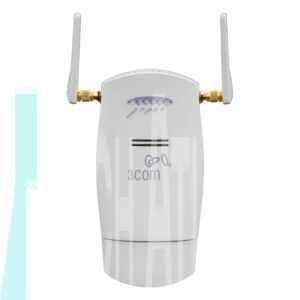
The HP WL400 IEEE 11Mbit/s Wireless LAN Access Point facilitates wireless network connectivity through a single RJ-45 Ethernet port. It supports the IEEE 802.11 standard with data rates up to 11 Mbit/s, making it suitable for environments requiring basic wireless networking capabilities. |
General Information |
|
|---|---|
| Brand | HP |
Technical Information |
|
|---|---|
| Frequency Bands | 2.4 GHz |
| Data Rate | 11 Mbit/s |
| Interface | IEEE 802.11b |
| WiFi Standard | IEEE 802.11b |
| Security | WEP, 802.1X (RADIUS) |
| Antenna | External (detachable) |
| MIMO | No |
| Ethernet Port | 1 x RJ-45 (10/100Base-TX) |
| Compatibility | IEEE 802.11b clients |
| Operating Modes | Access Point |
| Management | Web-based GUI (HTTP), SNMP |
Physical Characteristics |
|
|---|---|
| Weight | 3.00 |
| Condition | Refurbished |
Miscellaneous |
|
|---|---|
| Assembly Required | No |
| Compliance Standards | CE, FCC |
Product Description |
|---|
The HP 161250-001 WL400 is a wireless LAN access point designed to provide wireless connectivity compliant with the IEEE 802.11 standard, supporting a data rate of 11 Mbit/s. This access point serves as a bridge between wired Ethernet networks and wireless clients. Typically deployed in office or enterprise environments, it enables network access for devices within wireless range. IT administrators and network engineers use such access points to extend network reach without requiring physical cabling. Key Features
This access point plays a practical role in enabling wireless network access in environments where mobility or flexible device placement is needed. It integrates wired and wireless segments to provide network connectivity for devices without wired Ethernet interfaces. |
Use Cases |
|---|
The HP WL400 access point is typically used in small to medium office settings where wireless connectivity is needed for mobile or stationary devices. It serves environments that require integration of wireless clients into existing wired networks. How It's Used:
By bridging wired and wireless networks, the device supports operational flexibility and device mobility while maintaining network integration. It addresses basic wireless networking needs without advanced feature sets. |
FAQ's |
|---|
|
 Shipping Options
 International Delivery
Requires a UPS, FedEx, or DHL account. Customers may arrange pickup from our US warehouse.
 Payment Methods
We accept Visa, Mastercard, AMEX, Discover, and Wire Transfer.
 Purchase Orders
We process purchase orders for government agencies, enterprises, data centers, and SMBs.