

Subscribe To Our Newsletter!
Subscribe to the newsletter to stay up to date with the latest news and most useful
Newsletter
↑
Back to Top



Product Overview |
|---|
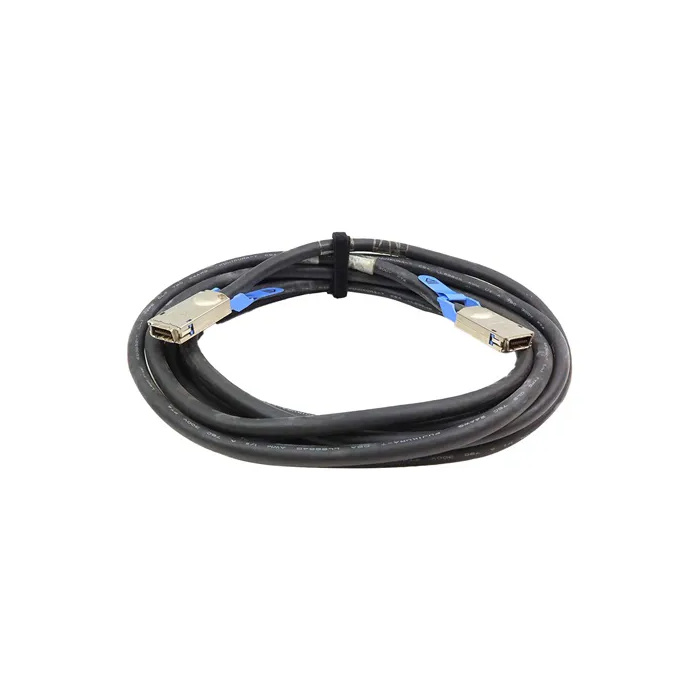
The NetApp 5M Cluster Fiber Cable is built to connect cluster nodes within NetApp storage arrays, offering a stable and reliable fiber optic link. It fits neatly into data center environments where maintaining fast, uninterrupted communication is essential for storage system operation. |
General Information |
|
|---|---|
| Brand | NetApp |
Technical Information |
|
|---|---|
| Cable Family | Fiber Optic |
| Cable Type | Fiber Patch Cable |
| Cable Length | 5M |
| product type | Duplex |
| Product Category | Cables |
Connectivity |
|
|---|---|
| Connector A | LC |
| Connector B | LC |
| Cable Connector Gender | Male to Male |
| Connector Type | LC |
Physical Characteristics |
|
|---|---|
| Weight | 3.00 |
| Condition | Refurbished |
Product Description |
|---|
The NetApp 5M Cluster Fiber Cable facilitates high-speed communication between cluster nodes, providing consistent and efficient data transfer. Often found in data centers and enterprise storage solutions, this cable supports robust network infrastructure needs. Engineered for storage administrators and IT professionals managing clustered storage arrays, the cable integrates seamlessly within NetApp environments to maintain optimal system performance. Key Features
This fiber cable plays a critical role in maintaining stable connectivity within clustered storage solutions. Its consistent performance and compatibility make it a dependable component in complex network setups. |
Use Cases |
|---|
This fiber cable is commonly deployed in data centers and enterprise storage clusters requiring high-speed inter-node communication. It particularly benefits storage engineers and infrastructure teams aiming for resilient and efficient data transfers. How It's Used:
By providing a consistent and high-quality fiber connection, this cable supports operational efficiency and scalability in clustered storage infrastructures. It helps maintain system reliability especially in demanding data center conditions. |
 Shipping Options
 International Delivery
Requires a UPS, FedEx, or DHL account. Customers may arrange pickup from our US warehouse.
International Delivery
Requires a UPS, FedEx, or DHL account. Customers may arrange pickup from our US warehouse.
 Payment Methods
We accept Visa, Mastercard, AMEX, Discover, and Wire Transfer.
Payment Methods
We accept Visa, Mastercard, AMEX, Discover, and Wire Transfer.
 Purchase Orders
We process purchase orders for government agencies, enterprises, data centers, and SMBs.
Purchase Orders
We process purchase orders for government agencies, enterprises, data centers, and SMBs.