

Subscribe To Our Newsletter!
Subscribe to the newsletter to stay up to date with the latest news and most useful
Newsletter
↑
Back to Top



| Product Overview |
|---|
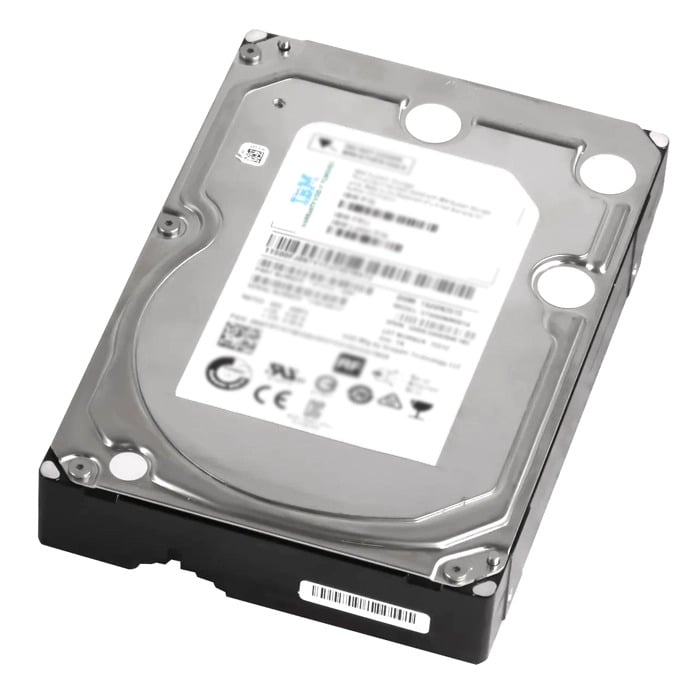
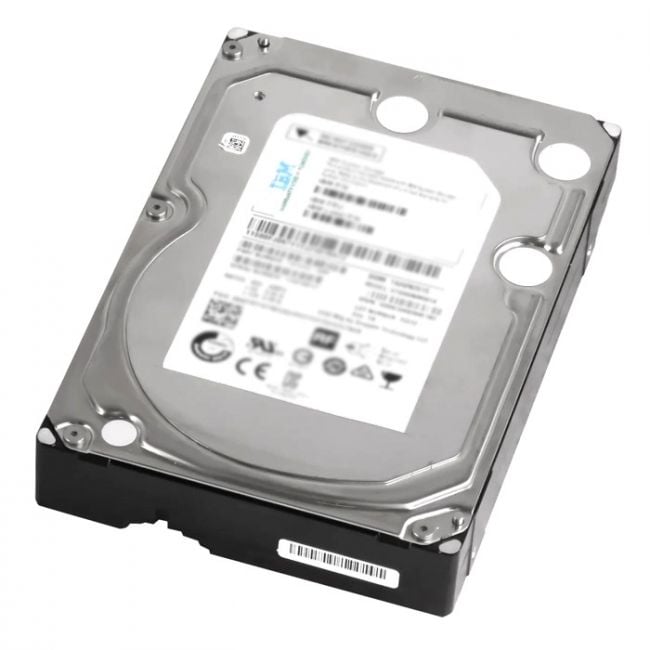
The IBM 18.2GB Ultra-160 SCSI 3.5-Inch Internal Hard Drive serves as a dependable storage component primarily for servers and workstations using SCSI technology. It fits standard internal drive slots and supports reliable data throughput thanks to its Ultra-160 interface, making it a practical choice for setups needing moderate capacity combined with stable performance. |
| General Information | |
|---|---|
| Brand | IBM |
| Part Number | 10P4834 |
| Technical Information | |
|---|---|
| Capacity | 18.4GB |
| Form Factor | 3.5-inch |
| Disk Format | Ultra-160 SCSI |
| Cache | 8MB |
| Spindle Speed | 10,000 RPM, Ultra-160 SCSI (160 MB/s) |
| Hot Pluggable | Yes |
| Hot Swappable | Yes |
| Hybrid Drive | No |
| Compatible For | Servers,Workstations,Enterprise |
| MTBF | 1,200,000 hours |
| Interfaces/Ports | |
|---|---|
| Interface | SCSI |
| Physical Characteristics | |
|---|---|
| Height | 1.028 in (26.1 mm) |
| Width | 4.0 in (101.6 mm) |
| Depth | 5.787 in (147 mm) |
| Dimensions | 1.028 x 4.0 x 5.787 in (26.1 x 101.6 x 147 mm) |
| Condition | Refurbished |
| Weight | 1.76 |
| Miscellaneous | |
|---|---|
| Compliance Standards | RoHS, CE, FCC, UL |
| Product Description |
|---|
This IBM 18.2GB Ultra-160 SCSI 3.5-Inch Internal Hard Drive provides solid performance for data storage needs. It is commonly used in servers and high-performance workstations where fast, dependable access to stored information is crucial. The drive is built to fit into standard 3.5-inch internal bays and connect via the Ultra-160 SCSI interface, which allows for efficient data transfer. It is often found in environments that require reliable storage solutions such as small to medium business servers, legacy systems, and specialized computing applications. IT professionals and system administrators benefit from its balance of capacity and speed. Key Features
This hard drive typically appears in data centers or office server racks where legacy hardware remains in operation. Its role is to provide dependable storage without the need for the latest interfaces or large capacities, fitting well into existing infrastructure requiring steady performance. Users appreciate its straightforward installation and compatibility with many older systems, ensuring that crucial operations have an efficient storage backbone without complexity. |
 Shipping Options
 International Delivery
Requires a UPS, FedEx, or DHL account. Customers may arrange pickup from our US warehouse.
International Delivery
Requires a UPS, FedEx, or DHL account. Customers may arrange pickup from our US warehouse.
 Payment Methods
We accept Visa, Mastercard, AMEX, Discover, and Wire Transfer.
Payment Methods
We accept Visa, Mastercard, AMEX, Discover, and Wire Transfer.
 Purchase Orders
We process purchase orders for government agencies, enterprises, data centers, and SMBs.
Purchase Orders
We process purchase orders for government agencies, enterprises, data centers, and SMBs.