

Subscribe To Our Newsletter!
Subscribe to the newsletter to stay up to date with the latest news and most useful
Newsletter
↑
Back to Top



Product Overview |
|---|
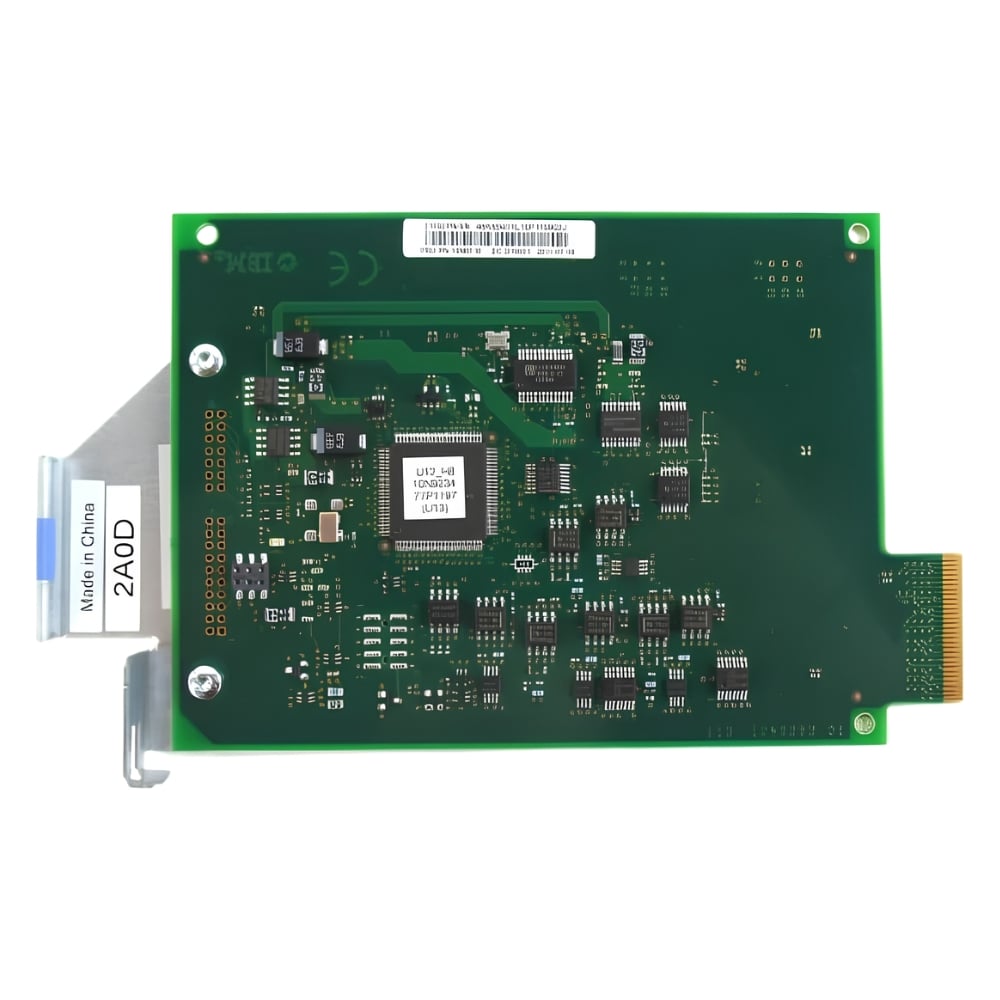
The 10N9718 - IBM 2AOD Thermal Management Card acts as a dedicated controller for monitoring and adjusting thermal conditions within IBM server environments. It fits into the server chassis to provide real-time temperature data and manage cooling components, ensuring the system runs within safe thresholds and maintains operational efficiency. |
General Information |
|
|---|---|
| Brand | IBM |
Technical Information |
|
|---|---|
| product type | Thermal Management Card |
| Product Category | Thermal Management |
| Compatibility | IBM servers |
Miscellaneous |
|
|---|---|
| Assembly Required | No |
Physical Characteristics |
|
|---|---|
| Form Factor | Card |
| Weight | 3.00 |
| Condition | Refurbished |
Product Description |
|---|
The 10N9718 - IBM 2AOD Thermal Management Card is designed to monitor and regulate the thermal environment inside IBM server systems. It is commonly found in enterprise-grade hardware setups where maintaining optimal temperature is critical for performance and reliability. IT professionals and system administrators typically rely on this component to ensure efficient cooling and prevent thermal-related failures. Key Features
This thermal management card plays a vital role in maintaining the overall functionality of IBM servers by controlling heat generation and dissipation. Its reliable performance contributes to stable operations and extends hardware longevity under demanding workloads. |
Use Cases |
|---|
The 10N9718 thermal management card is typically deployed in IBM enterprise server environments where reliable temperature control is essential. It benefits organizations that require consistent system uptime and efficient heat management in complex hardware setups. How It's Used:
By managing thermal conditions accurately, this card aids in maintaining system stability and performance. It helps reduce the risk of hardware failures and supports efficient cooling strategies across various IBM server deployments. |
 Shipping Options
 International Delivery
Requires a UPS, FedEx, or DHL account. Customers may arrange pickup from our US warehouse.
International Delivery
Requires a UPS, FedEx, or DHL account. Customers may arrange pickup from our US warehouse.
 Payment Methods
We accept Visa, Mastercard, AMEX, Discover, and Wire Transfer.
Payment Methods
We accept Visa, Mastercard, AMEX, Discover, and Wire Transfer.
 Purchase Orders
We process purchase orders for government agencies, enterprises, data centers, and SMBs.
Purchase Orders
We process purchase orders for government agencies, enterprises, data centers, and SMBs.