

Subscribe To Our Newsletter!
Subscribe to the newsletter to stay up to date with the latest news and most useful
Newsletter
↑
Back to Top



Product Overview |
|---|
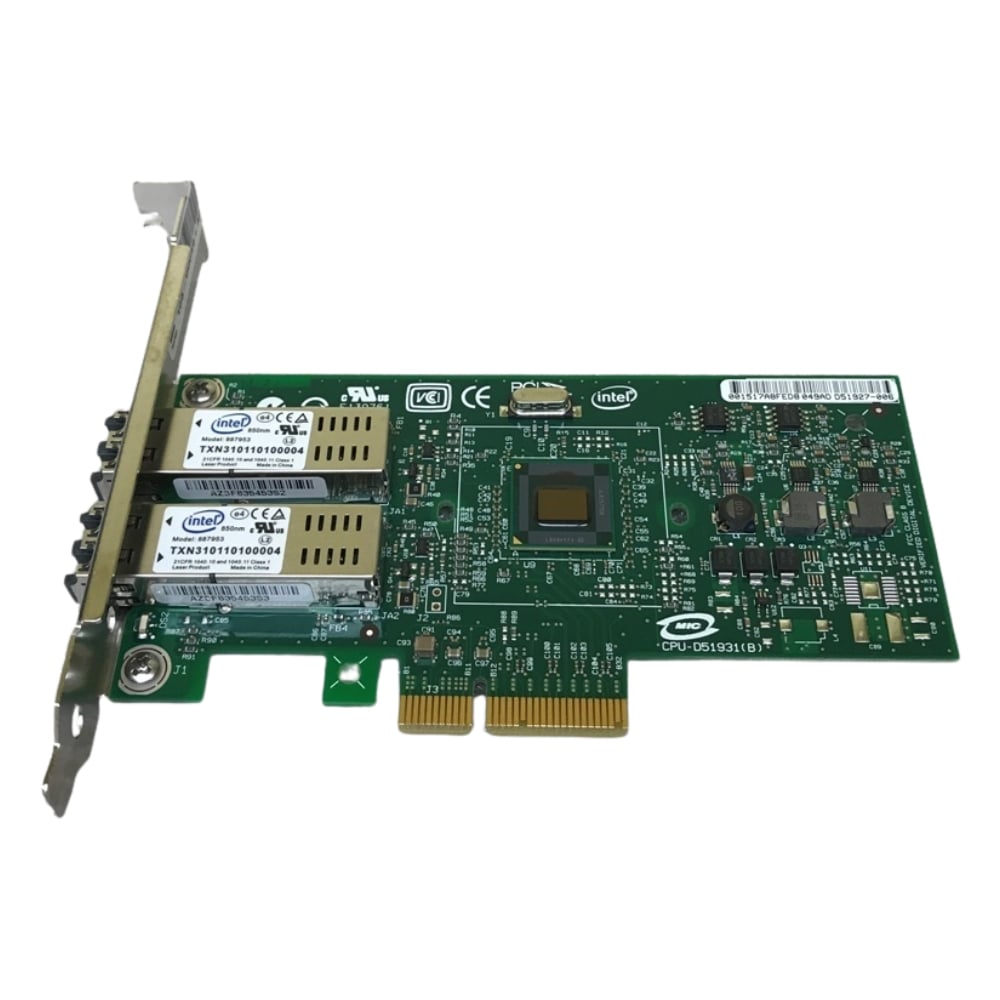
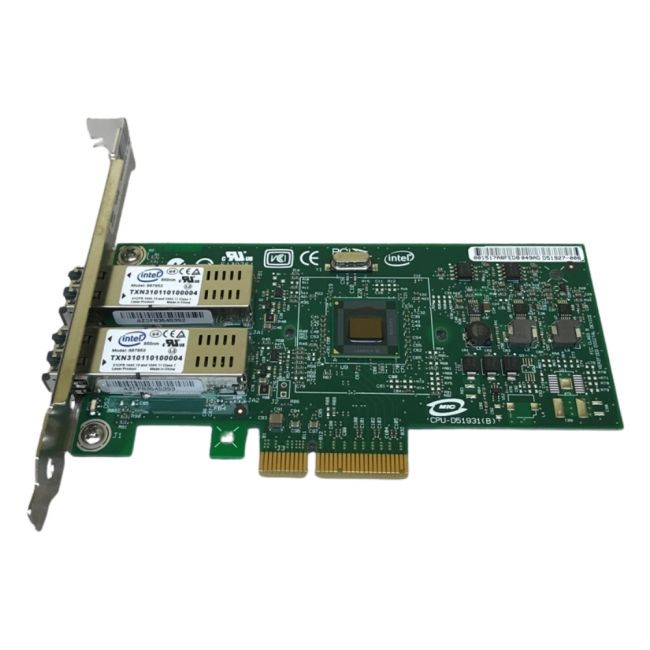
The 106-00049+AO - NetApp 2 x Ports GbE SFP Optical PCI-e Adapter enables dual optical Gigabit Ethernet connections through a PCI-e interface, fitting well within storage and network equipment setups. It balances flexibility and performance by supporting various SFP modules and ensuring consistent data transfer rates in fiber-based networks. |
General Information |
|
|---|---|
| Brand | NetApp |
Technical Information |
|
|---|---|
| Product Type | Network Interface Card |
| Data Rate (Speed) | 1GbE |
| Data Center Bridging | No |
| Interface (Bus) | PCIe 2.0 x4 |
| Number of Ports | 2-Port (Dual) |
| Offload Support | PXE Boot, Wake-on-LAN (WoL) |
Connectivity & Physical |
|
|---|---|
| Form Factor | Standard PCIe Card |
| Port Type | SFP |
| Cabling Type | Fiber Optic |
| Weight | 3.00 |
| Condition | Refurbished |
Miscellaneous |
|
|---|---|
| Assembly Required | No |
Product Description |
|---|
The 106-00049+AO is a dual-port GbE SFP optical adapter designed to provide efficient network connectivity. It is commonly found in data center and enterprise storage setups where reliable and flexible optical connections are required. This adapter is built for IT professionals and network administrators who need consistent network throughput with low latency. Key Features
This adapter plays a key role in maintaining network reliability within demanding environments. Its design emphasizes stable throughput and compatibility, making it a practical choice for ongoing data center operations. By facilitating efficient data flow, it supports the overall performance and dependability of the network infrastructure. |
Use Cases |
|---|
This adapter is typically deployed in environments that require reliable optical networking with flexible configuration options. It suits organizations managing storage clusters or enterprise IT systems where network stability and speed are crucial. Users who need to integrate optical connectivity into their infrastructure often rely on this adapter. How It's Used:
By integrating this adapter, IT infrastructure benefits from consistent network performance and flexible deployment options. It contributes to efficient data handling and supports the scalability requirements of evolving network environments. |
 Shipping Options
 International Delivery
Requires a UPS, FedEx, or DHL account. Customers may arrange pickup from our US warehouse.
International Delivery
Requires a UPS, FedEx, or DHL account. Customers may arrange pickup from our US warehouse.
 Payment Methods
We accept Visa, Mastercard, AMEX, Discover, and Wire Transfer.
Payment Methods
We accept Visa, Mastercard, AMEX, Discover, and Wire Transfer.
 Purchase Orders
We process purchase orders for government agencies, enterprises, data centers, and SMBs.
Purchase Orders
We process purchase orders for government agencies, enterprises, data centers, and SMBs.