

Subscribe To Our Newsletter!
Subscribe to the newsletter to stay up to date with the latest news and most useful
Newsletter
↑
Back to Top



Product Overview |
|---|
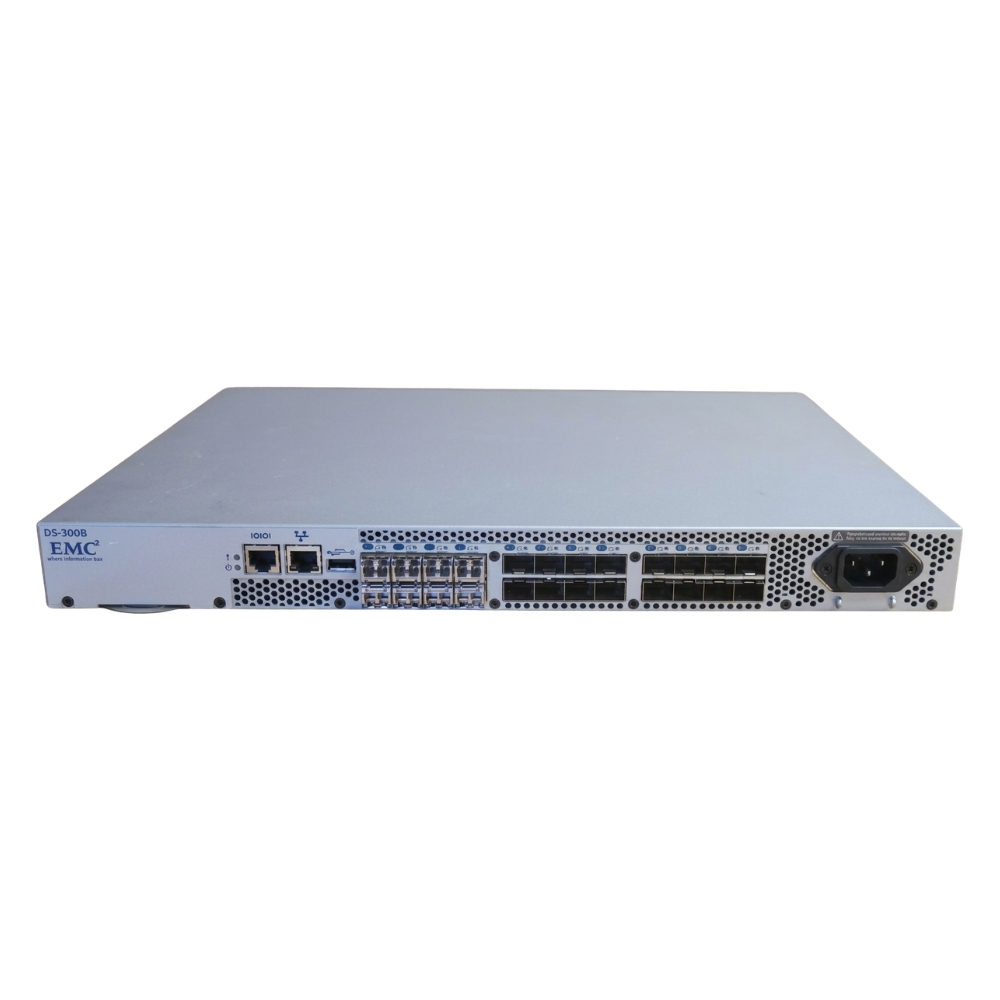
The 100-652-541/24 EMC DS-300B switch manages data flow across storage networks with its 24 ports, including 8 active ports. It fits into storage architectures needing reliable and scalable switching, maintaining smooth connectivity between storage components and hosts. |
General Information |
|
|---|---|
| Brand | EMC |
| Condition | Refurbished |
Technical Information |
|
|---|---|
| Switch Type | Managed Switch |
| Form Factor | Rack-Mountable |
| Mount Type | 1U Rack |
| Switch Ports | 8 |
| Number of Ports | 24-Ports |
| POE Support | No |
| VLAN Support | No |
| Stackable | No |
Physical Characteristics |
|
|---|---|
| Weight | 3.00 |
Miscellaneous |
|
|---|---|
| Assembly Required | No |
Product Description |
|---|
The 100-652-541/24 EMC DS-300B switch is built for managing and routing data within storage area networks. Often found in data center infrastructure, it facilitates efficient communication between storage devices and servers. Typically used by IT professionals managing complex storage systems, this switch helps balance load and maintain smooth data flow. It is commonly deployed in environments where reliability and consistent performance are critical. Key Features
This switch plays a vital role in maintaining network stability and data integrity in storage systems. Its design supports efficient asset management by balancing connectivity and performance needs. Overall, it delivers dependable operation tailored to storage networking demands, ensuring consistent performance and system responsiveness. |
Use Cases |
|---|
This product is typically utilized in data center storage environments where centralized management of storage devices is necessary. It serves environments where stable, high-performance switching supports critical data operations and storage scalability. How It's Used:
This switch contributes to operational efficiency by providing consistent network throughput and minimizing bottlenecks. It enhances scalability by accommodating growing storage needs without compromising performance. |
 Shipping Options
 International Delivery
Requires a UPS, FedEx, or DHL account. Customers may arrange pickup from our US warehouse.
International Delivery
Requires a UPS, FedEx, or DHL account. Customers may arrange pickup from our US warehouse.
 Payment Methods
We accept Visa, Mastercard, AMEX, Discover, and Wire Transfer.
Payment Methods
We accept Visa, Mastercard, AMEX, Discover, and Wire Transfer.
 Purchase Orders
We process purchase orders for government agencies, enterprises, data centers, and SMBs.
Purchase Orders
We process purchase orders for government agencies, enterprises, data centers, and SMBs.