

Subscribe To Our Newsletter!
Subscribe to the newsletter to stay up to date with the latest news and most useful
Newsletter
↑
Back to Top



Product Overview |
|---|
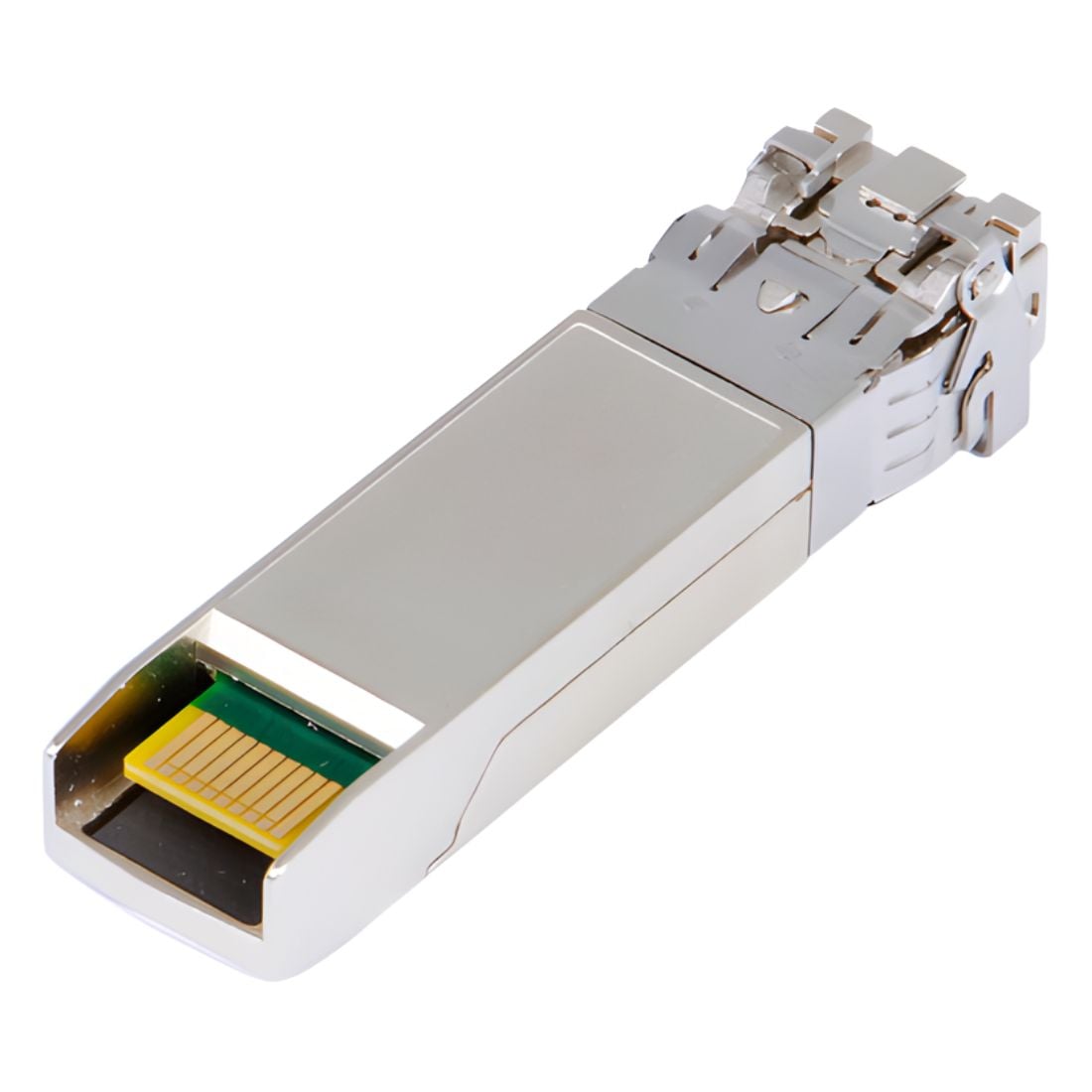
The Cisco 100GBASE CWDM4 LITE QSFP Transceiver enables high-speed 100 Gigabit Ethernet connections over single-mode fiber, commonly used in data center and enterprise networks. It fits into QSFP ports on Cisco equipment and supports distances up to 2 kilometers using CWDM technology, combining four separate lanes for efficient data transmission. This transceiver balances performance and power efficiency, making it suitable for dense network environments where reliable, scalable connectivity is necessary. |
General Information |
|
|---|---|
| Brand | Cisco |
| Part Number | 10-3220-02 |
Technical Information |
|
|---|---|
| Form Factor | QSFP28 |
| Media | SMF |
| Type | 4 x LAN WDM EML |
| Protocols | 100GBASE-CWDM4 |
| Connector | LC Duplex |
Physical Characteristics |
|
|---|---|
| Weight | 3.00 |
| Condition | Refurbished |
Product Description |
|---|
This Cisco 100GBASE CWDM4 LITE QSFP transceiver is designed to enable high-speed data transfer over optical fiber in data centers and enterprise networks. It’s built for transmitting 100 Gigabit Ethernet signals using coarse wavelength division multiplexing (CWDM) technology, which allows four separate data lanes to be sent over a single fiber strand. Often found in core and aggregation layers of high-performance networks, this module is typically used by network engineers and IT teams who need reliable, scalable connectivity between switches and routers. Its compact QSFP form factor makes it easy to install in Cisco equipment that supports 100G links. Key Features
This transceiver is commonly deployed in data centers, cloud infrastructure, and large enterprise networks where high bandwidth and low latency are critical. It helps maintain fast, stable connections between network devices without the need for excessive cabling. The module supports scalable growth as network demands increase over time, making it a practical choice for evolving environments. |
 Shipping Options
 International Delivery
Requires a UPS, FedEx, or DHL account. Customers may arrange pickup from our US warehouse.
International Delivery
Requires a UPS, FedEx, or DHL account. Customers may arrange pickup from our US warehouse.
 Payment Methods
We accept Visa, Mastercard, AMEX, Discover, and Wire Transfer.
Payment Methods
We accept Visa, Mastercard, AMEX, Discover, and Wire Transfer.
 Purchase Orders
We process purchase orders for government agencies, enterprises, data centers, and SMBs.
Purchase Orders
We process purchase orders for government agencies, enterprises, data centers, and SMBs.