

Subscribe To Our Newsletter!
Subscribe to the newsletter to stay up to date with the latest news and most useful
Newsletter
↑
Back to Top



Product Overview |
|---|
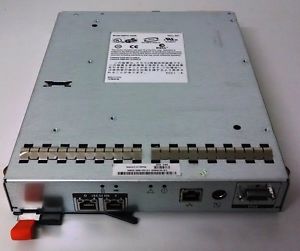
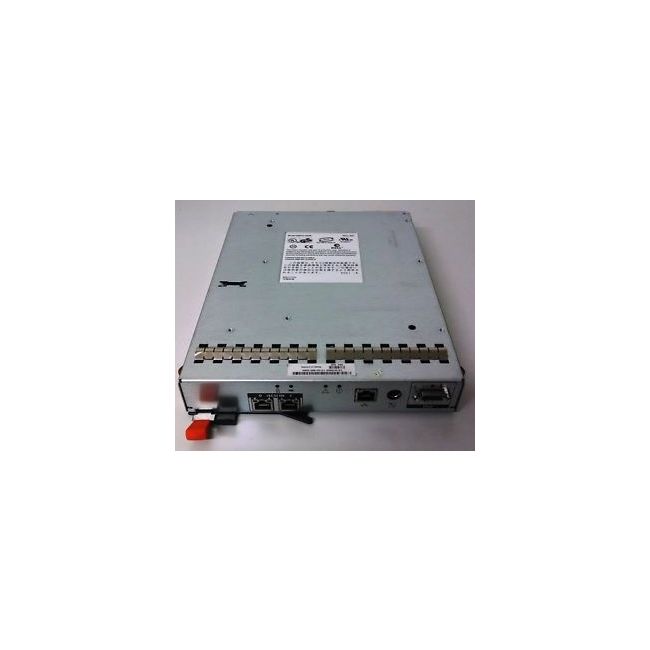
The Dell PowerVault MD3000i iSCSI RAID Controller acts as the central hub for managing RAID storage over IP networks. It fits within enterprise storage systems that require reliable data protection and simplified networked storage access, making it a practical choice for environments transitioning to IP-based storage solutions. |
General Information |
|
|---|---|
| Brand | Dell |
| Part Number | 0CM669 |
Technical Specification |
|
|---|---|
| Chipset | LSI-based RAID/SAS controller (Dell/LSI OEM) |
| Host Interface | iSCSI (Gigabit Ethernet) |
| Data Rate | 1 Gbps per port (Gigabit Ethernet) |
| RAID Levels | 0,1,5,6,10,50 |
| Cache | 512 MB battery-backed write cache per controller |
| Ports | Up to 8 host Ethernet ports (typically 4 per controller) |
| Connectivity | Ethernet (iSCSI) over RJ-45; supports MPIO and VLAN |
| External Interface | RJ-45 10/100/1000Base-T Gigabit Ethernet |
Physical Characteristics |
|
|---|---|
| Form Factor | 2U rack-mount |
| Dimensions | 3.43 in x 17.26 in x 25.59 in (8.71 cm x 43.82 cm x 65.02 cm) |
| Weight | 5.00 |
| Condition | Refurbished |
Product Description |
|---|
The Dell PowerVault MD3000i iSCSI RAID Controller manages data storage with robust RAID capabilities, providing reliable and secure access over IP networks. It's built for use in storage arrays where high availability and data integrity are crucial. Often found in data centers and enterprise IT setups, this controller helps organizations streamline their storage infrastructure by enabling flexible and scalable networked storage solutions. IT professionals and system administrators benefit from its ability to integrate storage with existing IP networks effectively. Key Features
This controller is typically deployed in environments where shared storage is essential, such as virtualized servers and database management systems. It plays a key role in maintaining continuous data availability and improving storage efficiency without needing dedicated Fibre Channel infrastructure. |
Use Cases |
|---|
The Dell MD3000i iSCSI RAID Controller is typically deployed in enterprise and mid-sized data centers where centralized, reliable storage management over IP networks is critical. IT professionals managing virtualized workloads or clustered applications benefit from its ability to provide scalable, protected storage accessible via standard Ethernet infrastructure. How It's Used:
By leveraging iSCSI protocol and RAID protection, this controller enhances storage efficiency and scalability in complex IT infrastructures. It streamlines storage network management while maintaining data integrity, supporting evolving enterprise demands for flexible and robust storage solutions. |
 Shipping Options
 International Delivery
Requires a UPS, FedEx, or DHL account. Customers may arrange pickup from our US warehouse.
International Delivery
Requires a UPS, FedEx, or DHL account. Customers may arrange pickup from our US warehouse.
 Payment Methods
We accept Visa, Mastercard, AMEX, Discover, and Wire Transfer.
Payment Methods
We accept Visa, Mastercard, AMEX, Discover, and Wire Transfer.
 Purchase Orders
We process purchase orders for government agencies, enterprises, data centers, and SMBs.
Purchase Orders
We process purchase orders for government agencies, enterprises, data centers, and SMBs.