

Subscribe To Our Newsletter!
Subscribe to the newsletter to stay up to date with the latest news and most useful
Newsletter
↑
Back to Top



Product Overview |
|---|
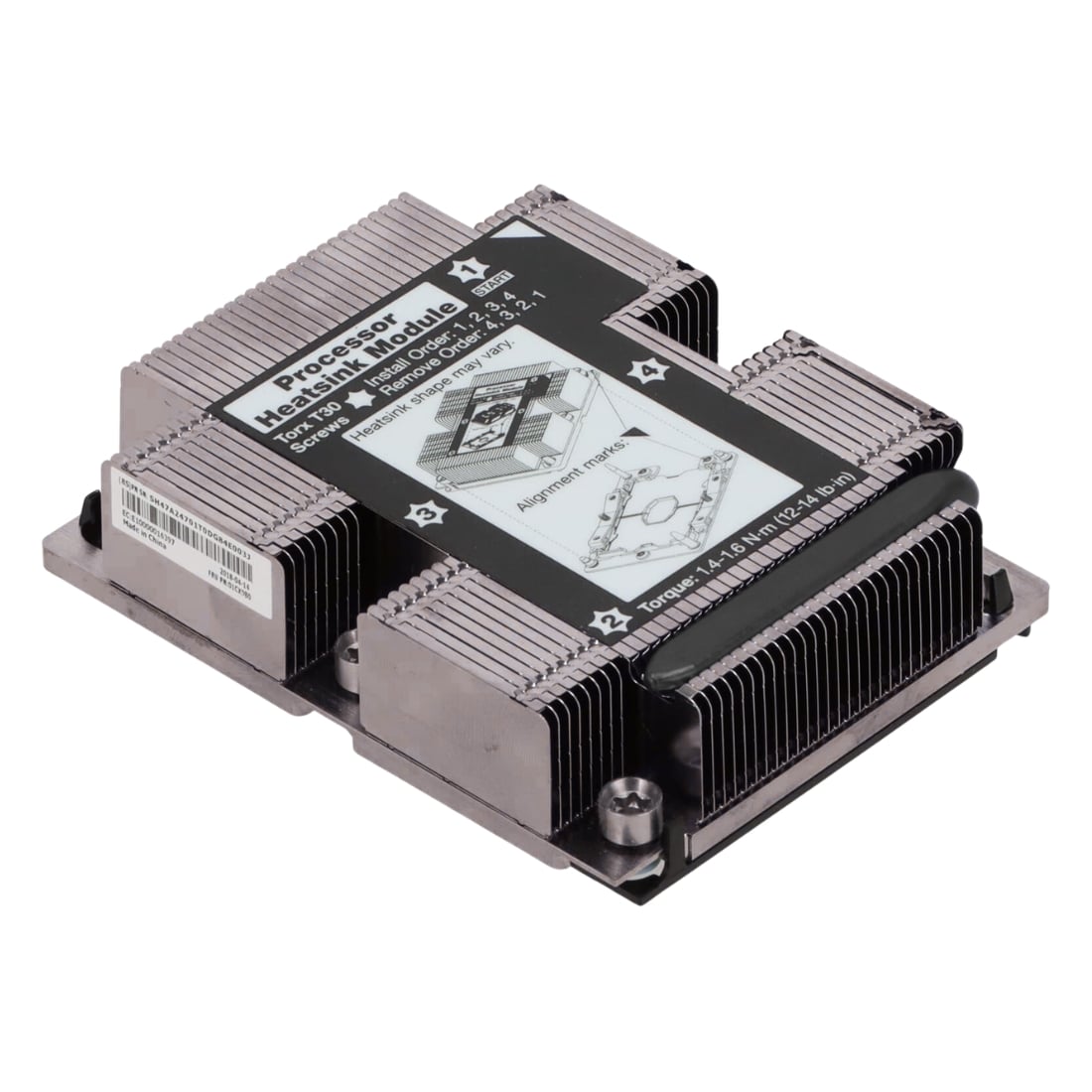
The Lenovo 165-watts 3U 3x Heatpipes Performance HeatSink is a cooling component designed specifically for ThinkSystem SR550, SR650, and SR590 servers. It efficiently dissipates heat generated by the processor using three heatpipes within a 3U form factor, making it suitable for enterprise server deployments where thermal management is essential. |
General Information |
|
|---|---|
| Brand | Lenovo |
| Part Number | 01KP652 |
| Alternate Part Number | 01KP652-12-CT |
Technical Specification |
|
|---|---|
| Component Type | CPU Heatsink |
| Cooling Method | Passive |
| Size | 165W cooling capacity |
| Material | Aluminum heatsink with copper heatpipes |
| Compatibility | Lenovo ThinkSystem SR550, SR650, SR590 |
| Airflow Direction | Front to Back |
Physical Characteristics |
|
|---|---|
| Form Factor | 3U |
| Condition | Refurbished |
Miscellaneous |
|
|---|---|
| Assembly Required | Yes |
| Eco Friendly | Yes |
| Compliance Standards | WEEE, RoHS, cURus, CE, FCC, CCC, UL, TUV, cULus, CSA, cUL |
Product Description |
|---|
This 165-watt performance heat sink is built for Lenovo's ThinkSystem SR550, SR650, and SR590 servers. It effectively manages heat dissipation, ensuring stable operations during demanding processing tasks. Often found in data centers and enterprise environments, it supports maintaining optimal server temperatures to prevent overheating. The heat sink is commonly used in rack-mounted servers that require reliable cooling solutions to sustain performance and hardware longevity. IT professionals and system administrators benefit from its robust design to keep server environments running smoothly. Key Features
This heat sink is typically deployed in enterprise server racks where workload demands generate significant heat. Its role is critical in maintaining system stability and preventing thermal throttling during extended processing periods. By using this heat sink, organizations can expect more consistent server performance and reduced risk of hardware failure caused by overheating. |
 Shipping Options
 International Delivery
Requires a UPS, FedEx, or DHL account. Customers may arrange pickup from our US warehouse.
International Delivery
Requires a UPS, FedEx, or DHL account. Customers may arrange pickup from our US warehouse.
 Payment Methods
We accept Visa, Mastercard, AMEX, Discover, and Wire Transfer.
Payment Methods
We accept Visa, Mastercard, AMEX, Discover, and Wire Transfer.
 Purchase Orders
We process purchase orders for government agencies, enterprises, data centers, and SMBs.
Purchase Orders
We process purchase orders for government agencies, enterprises, data centers, and SMBs.