Subscribe To Our Newsletter!
Subscribe to the newsletter to stay up to date with the latest news and most useful
Newsletter
↑
Back to Top



Product Overview |
|---|
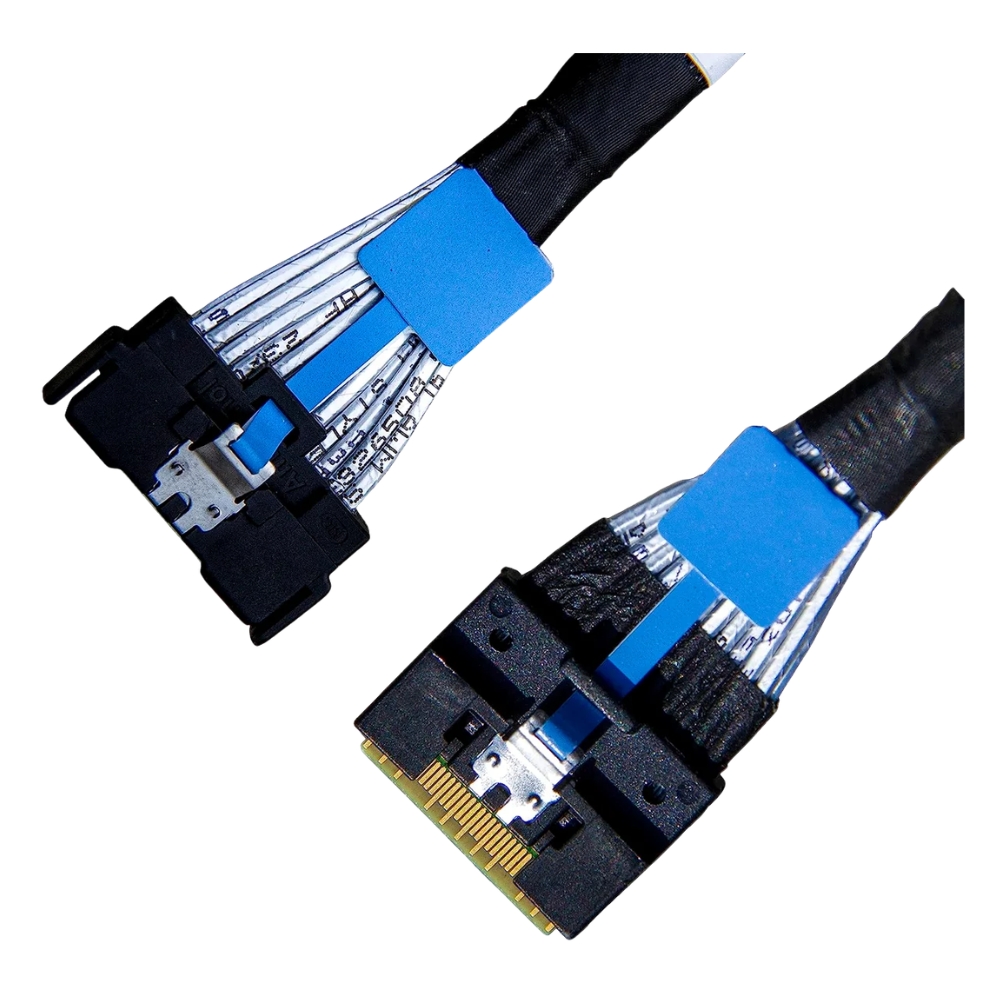
The Lenovo 730mm PCIe Gen4 Slim x8 to MCIO x8 signal cable connects PCIe Gen4 Slim interfaces to MCIO x8 ports within Lenovo servers and workstations. It facilitates high-speed data transfer inside compact setups, ensuring reliability and signal quality in demanding computing environments. |
General Information |
|
|---|---|
| Brand | Lenovo |
| Part Number | 00YE473 |
| Alternate Part Number | 00YE473-12-CT |
Technical Information |
|
|---|---|
| Cable Family | Storage |
| Data Rate | PCIe Gen4 x8 (16 GT/s per lane; aggregate up to 128 GT/s raw) |
| Cable Length | 730 mm |
| Product Category | Data Cables |
Connectivity |
|
|---|---|
| Connector Type | PCIe Gen4 Slim x8 to MCIO x8 |
Physical Characteristics |
|
|---|---|
| Form Factor | Slim x8 to MCIO x8 |
| Weight | 3.00 |
| Condition | Refurbished |
Product Description |
|---|
This Lenovo 730mm PCIe Gen4 Slim x8 to MCIO x8 signal cable facilitates a reliable connection between PCIe Gen4 Slim interfaces and MCIO x8 ports. It's commonly used inside servers or high-performance workstations where fast, low-latency data transfer is essential. IT professionals and system builders often rely on this cable to maintain signal integrity in compact configurations. Key Features
This cable is typically found inside Lenovo servers and specialized workstations, where internal cabling options need to meet rigorous performance standards. It plays a key role in enabling efficient communication between PCIe devices and system backplanes, aiding in smooth data flow and system reliability. |
Use Cases |
|---|
The 00YE473 signal cable is essential for connecting PCIe Gen4 devices within Lenovo systems where space and performance are critical. How It's Used:
This cable is a practical component for IT professionals managing Lenovo hardware, ensuring seamless integration and optimal data throughput in various high-performance computing scenarios. |
 Shipping Options
 International Delivery
Requires a UPS, FedEx, or DHL account. Customers may arrange pickup from our US warehouse.
International Delivery
Requires a UPS, FedEx, or DHL account. Customers may arrange pickup from our US warehouse.
 Payment Methods
We accept Visa, Mastercard, AMEX, Discover, and Wire Transfer.
Payment Methods
We accept Visa, Mastercard, AMEX, Discover, and Wire Transfer.
 Purchase Orders
We process purchase orders for government agencies, enterprises, data centers, and SMBs.
Purchase Orders
We process purchase orders for government agencies, enterprises, data centers, and SMBs.