Subscribe To Our Newsletter!
Subscribe to the newsletter to stay up to date with the latest news and most useful
Newsletter
↑
Back to Top



Product Overview |
|---|
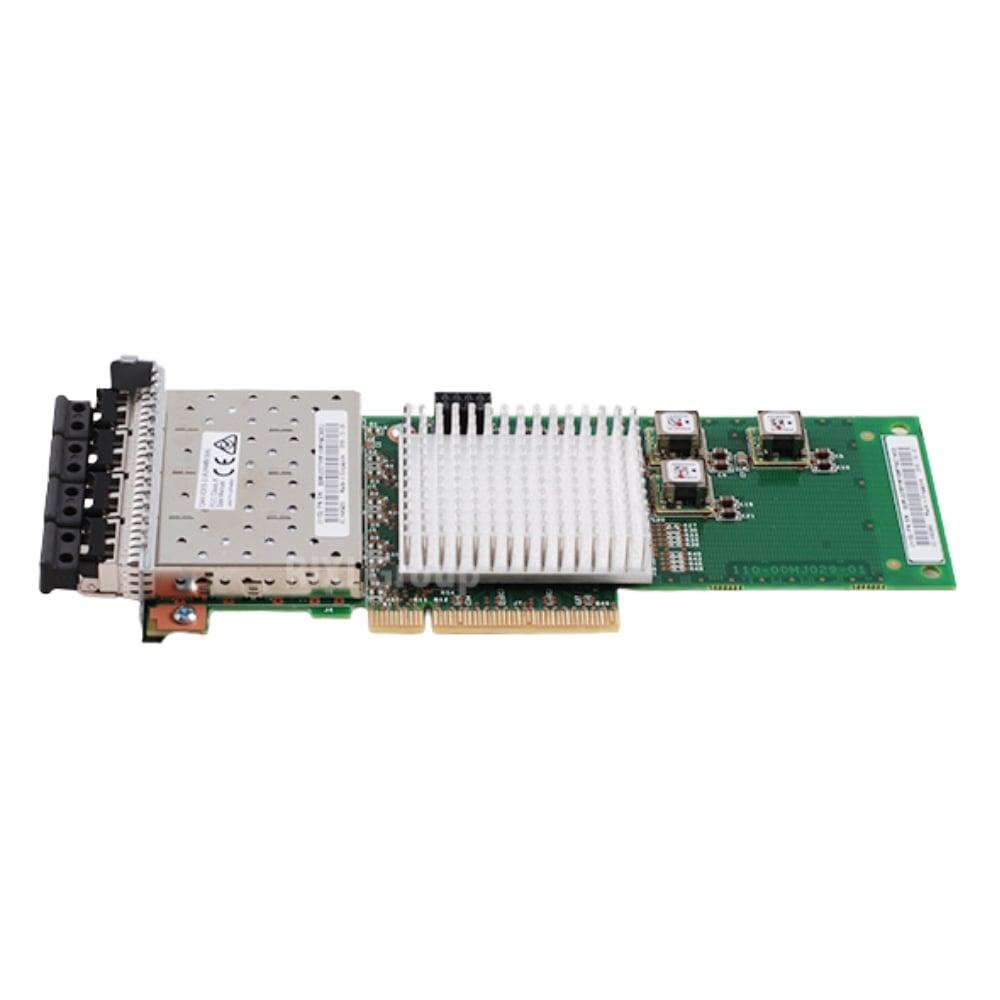
The 00NC503 - IBM 4 x Ports 10Gb/s Fibre Channel Network Adapter offers a solid solution for connecting servers to storage networks with multiple high-speed ports. It fits well into existing IBM server setups, providing the necessary bandwidth and protocol support to maintain effective SAN operations. |
General Information |
|
|---|---|
| Brand | IBM |
Technical Information |
|
|---|---|
| Protocol | Fibre Channel (FC) |
| Port Count | 4-Port (Quad) |
| Connector Type | SFP+ (LC) |
Physical Characteristics |
|
|---|---|
| Weight | 3.00 |
| Condition | Refurbished |
Miscellaneous |
|
|---|---|
| Assembly Required | No |
Product Description |
|---|
The 00NC503 is a network adapter designed to deliver high-performance Fibre Channel connectivity with four 10Gb/s ports. It commonly appears in storage area networks where rapid and reliable data access is critical. Built for IT professionals managing enterprise storage infrastructure, it facilitates robust and scalable network links essential for demanding workloads. Key Features
This adapter plays a vital role in maintaining consistent data flow and network stability within storage clusters and virtualization environments. Its reliable performance supports ongoing operations without bottlenecks, fitting naturally into enterprise IT ecosystems focused on dependable storage access. |
Use Cases |
|---|
This network adapter is primarily deployed within enterprise data centers where high-throughput storage connectivity is essential. It suits environments requiring scalable and reliable storage networking solutions to support virtualization and database workloads. How It's Used:
By providing consistent performance and multi-port connectivity, this adapter helps maintain efficient data flows and scalable storage networking setups. It contributes to the operational resilience and throughput required in complex IT infrastructures. |
 Shipping Options
 International Delivery
Requires a UPS, FedEx, or DHL account. Customers may arrange pickup from our US warehouse.
International Delivery
Requires a UPS, FedEx, or DHL account. Customers may arrange pickup from our US warehouse.
 Payment Methods
We accept Visa, Mastercard, AMEX, Discover, and Wire Transfer.
Payment Methods
We accept Visa, Mastercard, AMEX, Discover, and Wire Transfer.
 Purchase Orders
We process purchase orders for government agencies, enterprises, data centers, and SMBs.
Purchase Orders
We process purchase orders for government agencies, enterprises, data centers, and SMBs.