

Subscribe To Our Newsletter!
Subscribe to the newsletter to stay up to date with the latest news and most useful
Newsletter
↑
Back to Top



Product Overview |
|---|
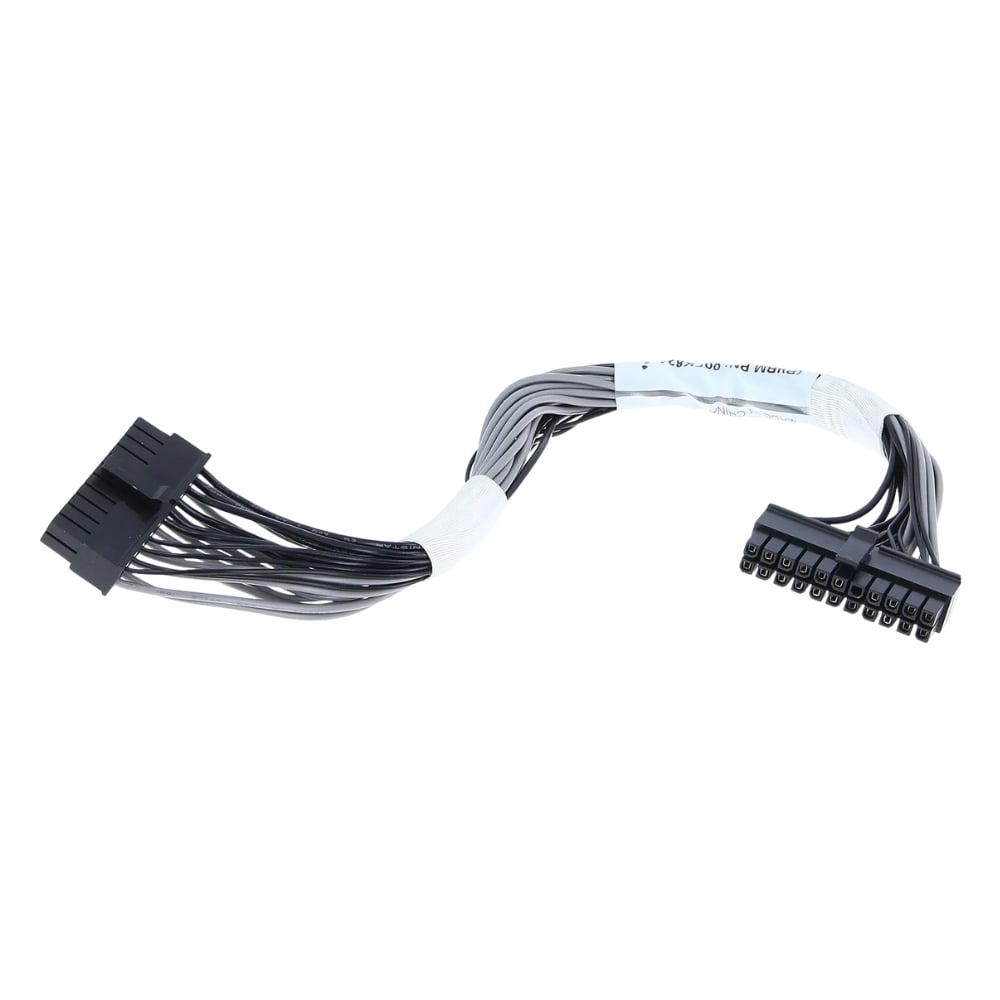
The IBM Cable for 4 Hard Drive Configuration is a practical accessory that connects multiple hard drives within IBM server setups. It fits seamlessly into systems requiring expanded storage capabilities, ensuring reliable data transfer and stable drive operation without adding complexity to the installation. |
General Information |
|
|---|---|
| Brand | IBM |
| Part Number | 00AL343 |
| Alternate Part Number | 00AL343-12-CT |
Technical Information |
|
|---|---|
| Cable Family | Storage |
| Standard | SAS 6Gb/s |
| Data Rate | 6Gb/s |
| Product Category | Cable |
Connectivity |
|
|---|---|
| Connector A | SAS SFF-8087 |
| Connector B | SATA 7-Pin |
| Cable Connector Gender | Male to Male |
| Connector Type | Mini-SAS (SFF-8087) to 4 x SATA (7-pin) |
Physical Characteristics |
|
|---|---|
| Weight | 3.00 |
| Condition | Refurbished |
Product Description |
|---|
This IBM cable enables the connection of four hard drives within a single system, facilitating expanded storage configurations. It's commonly found in enterprise servers and storage arrays that require multiple drives to operate simultaneously. Built for IT professionals and system administrators, this cable supports efficient data flow between drives and the host system, making it a practical choice for maintaining or upgrading server storage. Often used in data centers or high-availability environments, it helps manage multiple disk drives without compromising performance. Key Features
This cable is typically deployed in IBM server environments where the need for multiple drives is critical for storage capacity and redundancy. Its role in maintaining smooth communication between drives and servers makes it a key component in managing complex storage solutions. |
Use Cases |
|---|
This IBM cable is essential for expanding and organizing storage solutions in enterprise settings. How It's Used:
By integrating the 00AL343 cable, organizations can streamline their storage infrastructure and improve overall system reliability. |
 Shipping Options
 International Delivery
Requires a UPS, FedEx, or DHL account. Customers may arrange pickup from our US warehouse.
International Delivery
Requires a UPS, FedEx, or DHL account. Customers may arrange pickup from our US warehouse.
 Payment Methods
We accept Visa, Mastercard, AMEX, Discover, and Wire Transfer.
Payment Methods
We accept Visa, Mastercard, AMEX, Discover, and Wire Transfer.
 Purchase Orders
We process purchase orders for government agencies, enterprises, data centers, and SMBs.
Purchase Orders
We process purchase orders for government agencies, enterprises, data centers, and SMBs.